The Untamed Supporting Characters Fans Remember
The Untamed supporting characters are one reason the drama feels much larger than the journey of its two leads. Every clan has people carrying private grief, inherited expectations, unfinished loyalties, and truths that cannot stay buried. Some appear for only part of the story, yet their choices change how we understand justice, family, courage, and survival.
Calling them “supporting” describes their place in the narrative, not the size of their emotional impact. Wen Ning challenges the frightening identity others force upon him. Nie Huaisang turns underestimation into strategy. The younger cultivators suggest that inherited hatred does not have to become destiny. Yi City offers a devastating story of idealism and deception, while Mianmian and Qin Su reveal very different costs of living inside powerful institutions. These ten roles deserve closer attention because they show consequences the main characters cannot carry alone. On rewatch, the edges of the frame begin to look less like background and more like the place where the drama keeps many of its hardest questions.
1. Wen Ning — Gentle Courage Behind a Fearsome Reputation
The Person Behind the Ghost General
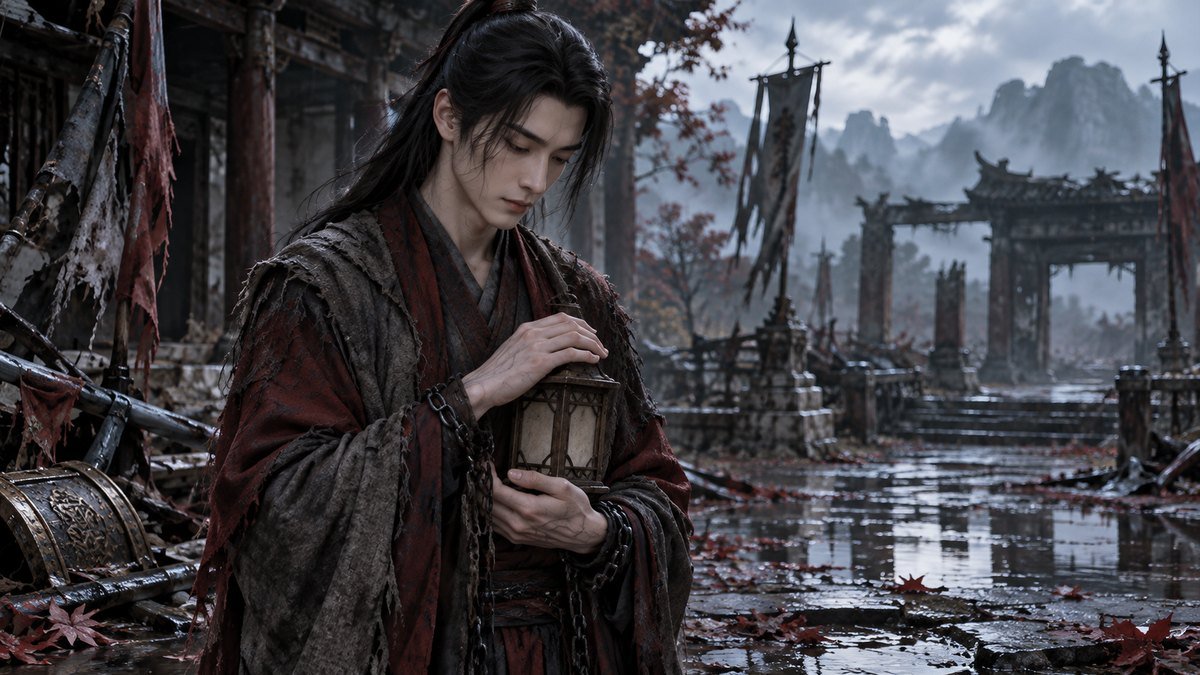
Wen Ning’s reputation arrives before his personality. To the cultivation world, the Ghost General is a weapon: powerful, unnatural, and useful as evidence against Wei Wuxian. The label reduces him to fear. Yet the person viewers meet is shy, attentive, and deeply concerned about causing harm. That contrast is not a trick. It is the foundation of his character.
His supernatural strength makes the mismatch more painful. People react to what his body can do and overlook the careful moral awareness inside it. He can be frightening in battle without becoming monstrous in spirit. A broader look at The Untamed Character Analysis: 12 Hidden Insights helps show why the drama repeatedly separates public reputation from private character. Wen Ning may be the clearest example of that divide.
Loyalty That Still Has a Voice
His devotion to Wen Qing and Wei Wuxian is often described as loyalty, but loyalty does not erase his agency. Wen Ning remembers kindness and responds to it. He also reaches moments when staying gentle requires speaking a truth other people would prefer to avoid. His quiet manner makes those moments more powerful because he does not seek control of the room.
Wen Ning’s story asks whether goodness must look commanding to count as courage. His answer is no. He protects, endures, and eventually helps a younger generation face a past built from secrecy. The Ghost General becomes memorable because the title never contains the man. Nie Huaisang presents almost the opposite puzzle: a seemingly harmless man may be far more dangerous than his reputation suggests.
His presence also changes the meaning of power. The cultivation world often treats strength as something that should be ranked, controlled, or claimed by a clan. Wen Ning’s strength cannot be separated from the history of what was done to him, yet he continues to make recognizably human choices. Viewers are invited to look past the spectacle of force and ask who is being allowed to speak. That question follows the drama far beyond his individual scenes.
2. Nie Huaisang — The Power of Being Underestimated
The Fan and the Mask
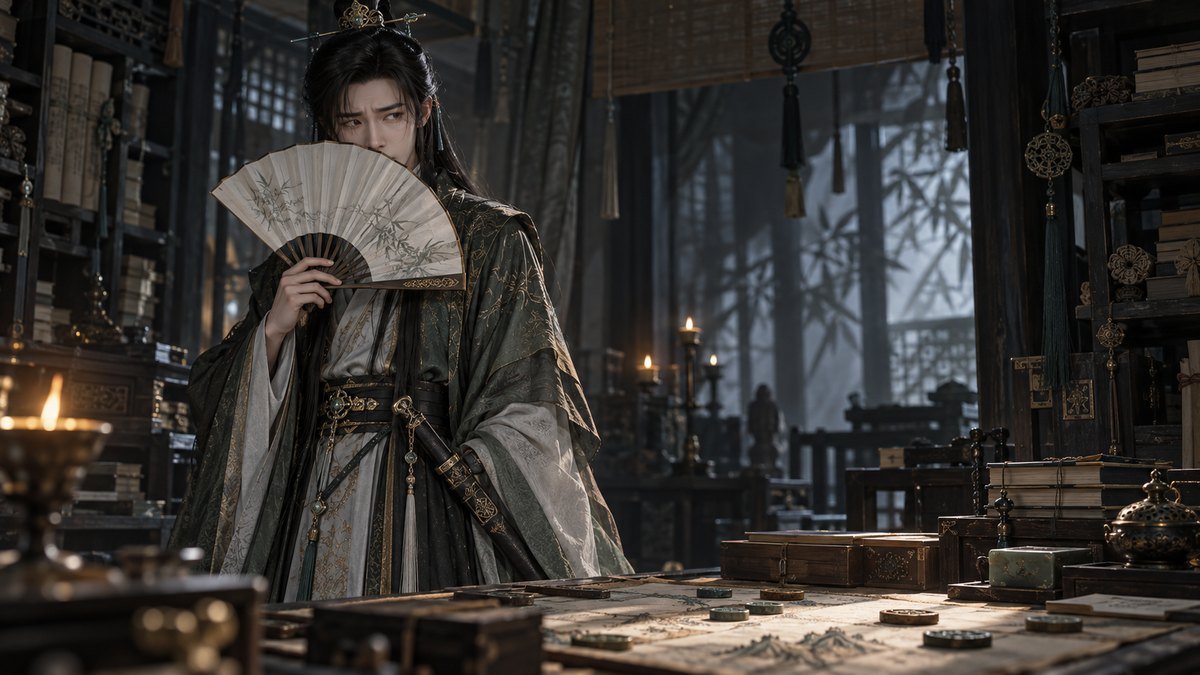
For much of the drama, Nie Huaisang appears to be a source of nervous humor. He avoids responsibility, complains about cultivation, hides behind his fan, and lets more decisive people take charge. That performance fits the expectations others already hold. Because nobody considers him formidable, few people watch him closely.
Rewatching changes the texture of his scenes. His uncertainty may still contain genuine fear, but it also protects an observant mind. The fan becomes a perfect symbol: it conceals his expression while allowing him to look. His apparent incompetence gives him room to survive after the world he trusted is shattered. The mystery examined in The Untamed Plot Analysis: 12 Shocking Twists becomes much richer when viewers notice how carefully the drama controls what Nie Huaisang seems to know.
Justice, Revenge, and the Cost of Indirect Action
The ending strongly invites viewers to reconsider his role in bringing hidden crimes to light, although some details remain a matter of interpretation. That ambiguity suits him. Nie Huaisang does not become a straightforward hero simply because his grief has a legitimate cause. His methods rely on other people taking risks, following clues, and entering danger without full knowledge of the design around them.
He therefore complicates the idea of justice. If direct power is unavailable, is manipulation the only weapon left? The drama never offers an easy answer. Nie Huaisang earns attention because he turns a secondary role into a moral afterimage. Once viewers suspect the mask, every earlier laugh carries a second meaning. The juniors offer a more hopeful transformation: instead of hiding inside inherited expectations, they gradually learn to move beyond them.
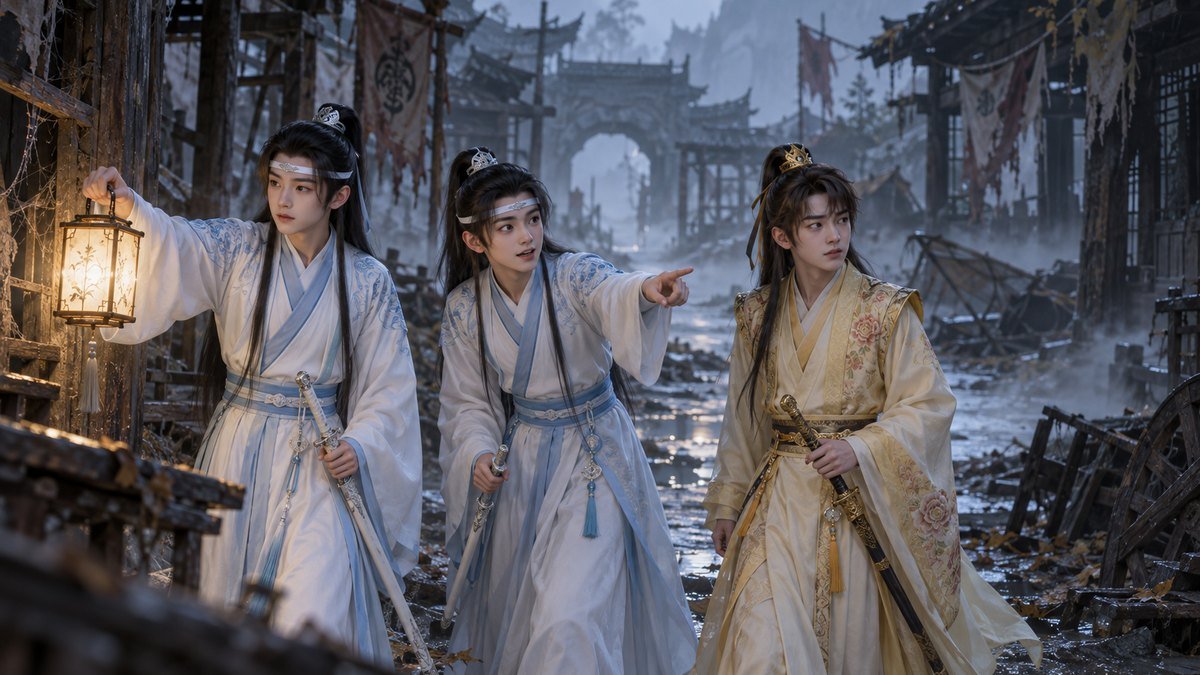
3. Lan Sizhui, Lan Jingyi, and Jin Ling — A Generation Learning Better
Three Different Responses to Inheritance
Lan Sizhui, Lan Jingyi, and Jin Ling arrive with visibly different temperaments. Sizhui is patient and compassionate, Jingyi speaks with impulsive honesty, and Jin Ling protects loneliness with pride and anger. Their clan identities matter, but none of the boys is merely a miniature version of the adults who raised him.
Sizhui listens before judging. Jingyi’s bluntness can break through the excessive caution of his elders. Jin Ling carries the heaviest emotional inheritance: family loss, conflicting stories, and pressure to prove himself worthy. Together they show how the divisions described in The Untamed Clans Explained: Rivalries, Loyalty, and Tragedy pass into the next generation without becoming permanent instructions.
Friendship Built Through Shared Danger
Their investigations force them to rely on people their clans might once have treated as enemies or embarrassments. Yi City is especially important because curiosity becomes responsibility. The approved scene reference, Wei Ying Leads the Juniors Into Yi City and Discovers Xiao Xingchen’s Body!, highlights how the younger cultivators enter a mystery whose emotional history is far older than they are.
Shared danger does not instantly erase conflict, but it creates experience that rumor cannot replace. The juniors learn by watching Wei Wuxian solve problems and Lan Wangji offer protection without demanding obedience. Their growing trust suggests that the cultivation world can change through relationships built in the present. That hope matters precisely because Yi City shows what happens when trust is manipulated until it collapses.
Sizhui gives this hope an especially deep emotional layer. His kindness is not presented as ignorance of suffering; it has survived a childhood shaped by loss and incomplete memory. Jingyi turns rigid rules into lively debate, while Jin Ling slowly discovers that anger cannot answer every question his family left behind. The three boys do not erase the older generation’s damage. They make a different response imaginable, which is more convincing than a sudden promise that every clan conflict has ended.
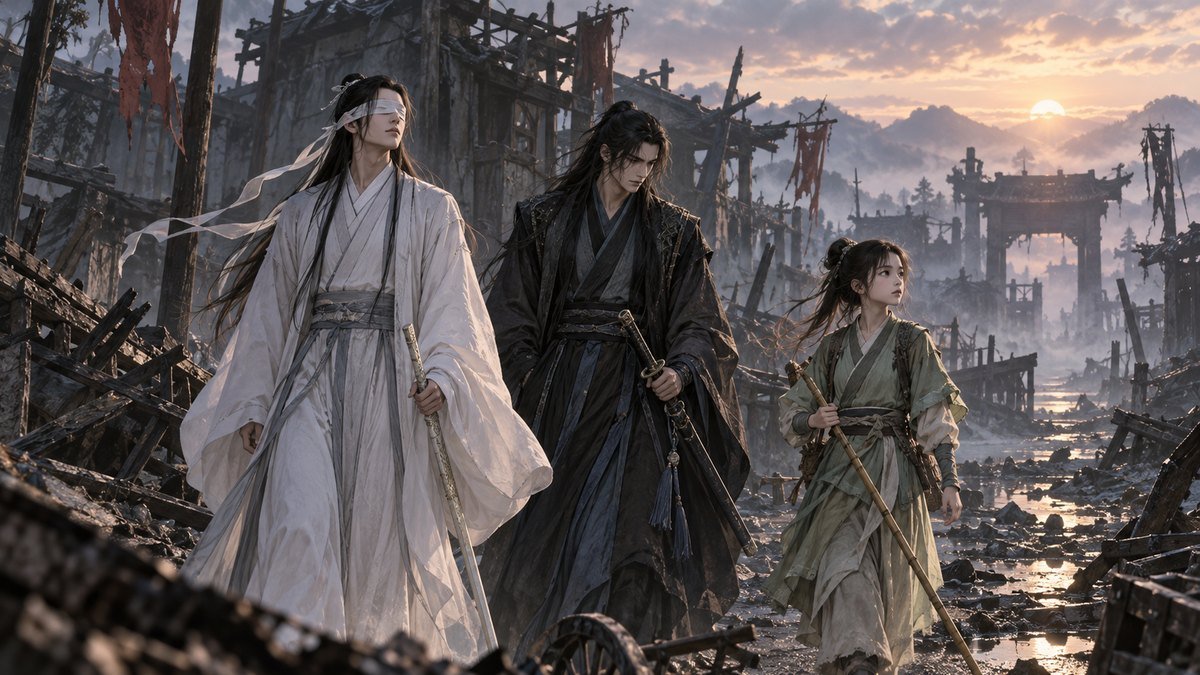
4. Xiao Xingchen, Song Lan, and A-Qing — The Yi City Tragedy in Three Voices
Idealism and Estrangement
Xiao Xingchen and Song Lan imagine cultivation beyond the interests of established clans. Their friendship carries a vision of helping people without becoming trapped by inherited rivalries. Yet idealism alone cannot protect them from violence, guilt, or deception. When suffering separates them, the words exchanged in pain become part of the tragedy that follows.
Xiao Xingchen’s desire to do good remains sincere, but he acts without crucial knowledge. Song Lan understands the danger too late to repair what has already broken. Their story resembles the larger drama in compressed form: good people can be isolated, false appearances can govern reality, and love does not automatically create honest communication. That is why the arc feels complete enough to haunt viewers as its own tragedy.
A-Qing Refuses to Be Only a Witness
A-Qing enters the story without clan authority or celebrated cultivation. She survives through quick thinking and careful observation. Being underestimated gives her access to truths, but it does not make her safe. Her real courage appears when she tries to transform what she knows into a warning.
She keeps the arc from becoming only a story about two men and the person who destroys them. Through A-Qing, the audience experiences fear, disbelief, loyalty, and the desperate effort to preserve evidence. The characters in The Untamed Characters Who Deserved Better: 8 Tragic Fates stay with fans because loss exposes unrealized possibility; few embody that feeling more sharply than this trio.
Each of the three also holds a different relationship to truth. Xiao Xingchen acts from a reality that has been deliberately falsified. Song Lan carries knowledge he struggles to communicate before violence intervenes. A-Qing sees enough to understand the danger but lacks the power to make others listen in time. Their tragedy grows from that imbalance, not from a belief that kindness itself is foolish. The arc mourns what deception can do to people who were trying, however imperfectly, to live by trust.
5. Mianmian and Qin Su — What Moral Independence Costs Women
Mianmian Walks Away
Luo Qingyang, usually called Mianmian, has one of the clearest acts of moral independence in the drama. When powerful people repeat accusations against Wei Wuxian, she refuses to let collective agreement replace truth. Speaking is risky, but leaving the Jin clan is even more decisive. She gives up the protection of belonging rather than make herself complicit.
Her later life matters because departure does not destroy her. Mianmian creates a future outside the system that demanded silence, offering a rare alternative to revenge, martyrdom, or submission. Her story is brief, yet it widens the range of possible responses to corrupt authority. She demonstrates that walking away can be an ethical action rather than a failure to endure.
Qin Su Is Denied an Informed Choice
Qin Su stands on the other side of institutional power. She appears secure within Lanling Jin, but the knowledge governing her marriage and family has been withheld from her. Secrecy removes her ability to make an informed choice. When truth finally arrives, it comes in a form designed to wound and destabilize.
Her suffering is often discussed mainly as part of Jin Guangyao’s downfall. Centering Qin Su changes the question. What does it mean when everyone else decides what a woman is allowed to know about her own life? The contrast between her and Mianmian enriches the The Untamed Relationship Analysis: 7 Powerful Insights: one woman escapes by acting on her values, while the other is trapped because essential truth never reaches her in time.
6. Why Supporting Roles Make the Cultivation World Feel Real
Consequences Need More Than One Point of View
These ten characters give major events a human scale. Wen Ning shows what collective punishment does to a gentle person marked by a feared name. Nie Huaisang demonstrates how grief can become strategy. The juniors reveal what inherited conflict looks like to people who did not create it. Yi City turns broad themes of deception and responsibility into intimate catastrophe, while Mianmian and Qin Su expose the cost of institutional control.
Without those perspectives, the drama’s moral conflicts would remain abstract. Supporting roles show who absorbs the consequences after powerful people make decisions. They also preserve stories that official clan narratives might prefer to simplify or erase. That density is part of The Untamed Worldbuilding Explained: Why Fans Still Obsess: the world feels inhabited because even brief characters seem to have lives extending beyond the main plot.
Limited Screen Time Can Create Lasting Questions
Memorability does not automatically prove that every character received enough development. Sometimes mystery creates productive space for interpretation; sometimes it leaves viewers wishing the drama had given a person more interior life. Nie Huaisang benefits from withheld information because uncertainty is central to his design. Qin Su suffers when the story keeps her experience secondary even as her pain becomes crucial evidence.
That difference gives fandom discussion its energy. Rewatchers shift their attention, notice reactions at the edge of scenes, and imagine conversations the drama never shows. The Untamed supporting characters reward that attention because they are not interchangeable functions. Each changes the emotional meaning of the world, even when the camera moves away.
Frequently Asked Questions
Who are the most important supporting characters in The Untamed?
Wen Ning, Nie Huaisang, the junior disciples, and the Yi City trio have especially strong effects on the plot and themes. Mianmian and Qin Su also reveal crucial moral and institutional tensions. Importance depends on whether viewers prioritize mystery, emotional impact, or worldbuilding.
Why is Wen Ning called the Ghost General?
The title reflects Wen Ning’s fearsome reputation after he becomes a powerful fierce corpse connected to Wei Wuxian. It describes how the cultivation world sees his strength, but it does not capture his gentle personality, loyalty, or moral awareness.
Is Nie Huaisang secretly responsible for the final mystery?
The drama strongly encourages viewers to infer that Nie Huaisang guided important events and clues, but it leaves parts of his plan unstated. That uncertainty is intentional and keeps debate focused on how much he arranged, anticipated, or merely used once events began moving.
Why are the junior disciples so popular with fans?
Lan Sizhui, Lan Jingyi, and Jin Ling combine humor, conflict, vulnerability, and hope. They inherit the consequences of earlier clan wars but gradually build trust across those divisions. Their friendships suggest that the next generation can learn without repeating every failure.
Why does the Yi City arc feel like a separate tragedy?
Yi City has its own central relationships, mystery, emotional climax, and aftermath. Xiao Xingchen, Song Lan, and A-Qing embody themes already present in the larger drama—misunderstanding, deception, loyalty, and irreversible loss—within a concentrated story that can stand almost independently.
Which of The Untamed supporting characters deserved more screen time?
Answers vary, but Qin Su, Mianmian, A-Qing, and Nie Huaisang often invite more questions than the drama resolves. Their limited perspectives leave viewers wanting fuller motives, relationships, and consequences rather than simply more scenes for their own sake.
Conclusion — The Story Is Larger Because They Are There
The ensemble gives The Untamed its sense of consequence. Wen Ning turns a feared title into a lesson about personhood. Nie Huaisang makes underestimation dangerous. Sizhui, Jingyi, and Jin Ling carry history without surrendering completely to it. Xiao Xingchen, Song Lan, and A-Qing transform a side journey into one of the drama’s deepest wounds. Mianmian and Qin Su reveal how truth, silence, and belonging shape a woman’s choices.
That is why The Untamed supporting characters remain so vivid. They do not merely help the leads reach the next plot point. They complicate the meaning of every victory by showing who survives it, who pays for it, and who remembers a different version of the truth. Their limited screen time often becomes an invitation to look again.
On a second or third viewing, attention naturally drifts toward the edge of the frame. A nervous gesture, a guarded expression, or an unexpected refusal can change the whole scene. If you enjoy character-focused fandom essays, you can support future work through Ko-fi. Which supporting character made the story feel most complete to you?
Fan-Favorite Collectibles & Gifts