Healing Moments in The Untamed Fans Rewatch for Comfort
Healing Moments in The Untamed Begin with Being Seen
1. Lan Wangji recognizes Wei Wuxian at Dafan Mountain
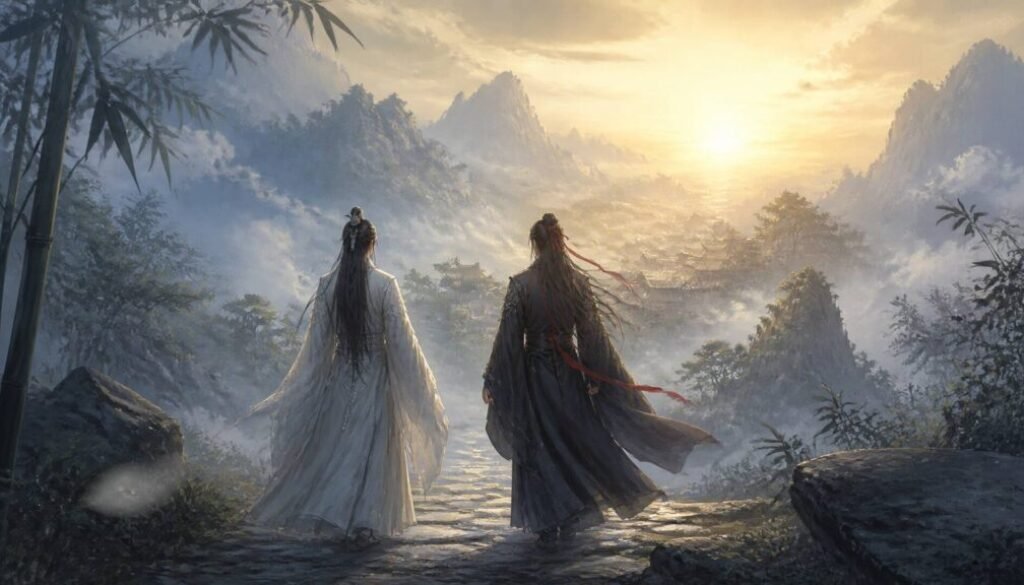
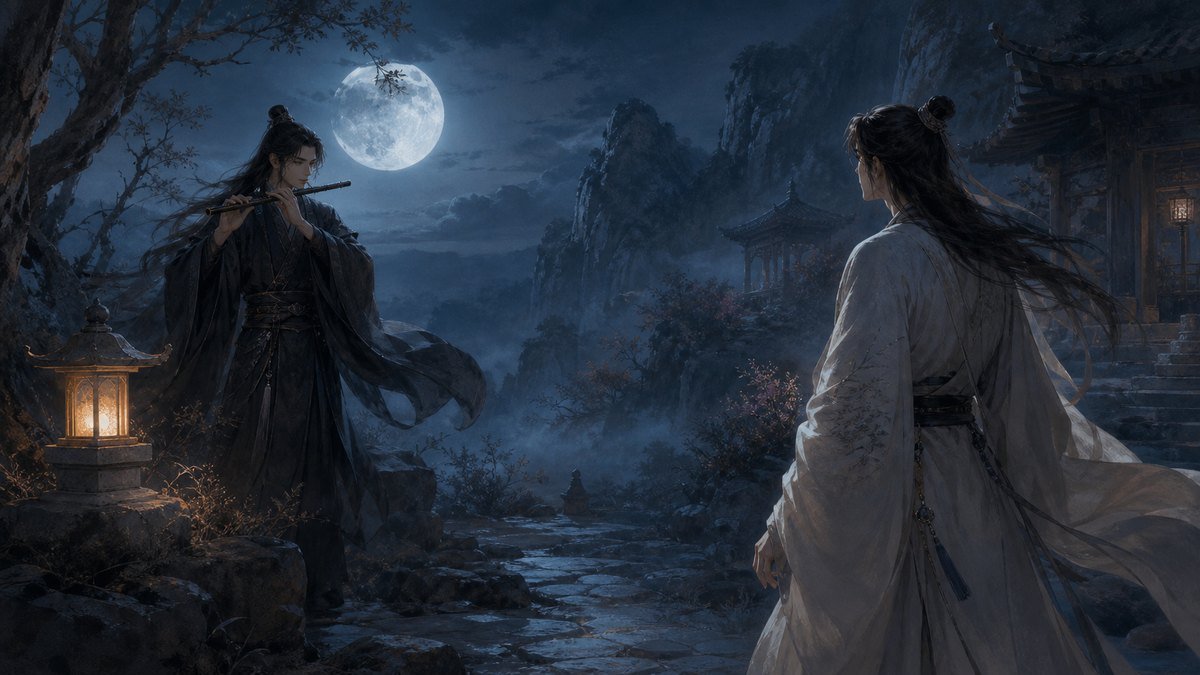
Wei Wuxian’s return begins in disguise, surrounded by people who do not know the history behind his quick smile or guarded improvisation. Then he plays the melody that belongs to one of the deepest bonds in the story, and Lan Wangji recognizes him. The comfort of the scene comes from its certainty. Wei Wuxian may have changed his face, his name, and the shape of his life, but he has not become unknowable.
On rewatch, the moment feels even warmer because the audience understands what recognition costs. Lan Wangji does not respond with suspicion or demand proof. He simply knows. A common fan reading sees this as the emotional opposite of the judgments that once defined Wei Wuxian in the cultivation world: where others reduce him to reputation, Lan Wangji attends to the person. The scene becomes one of the most quietly powerful The Untamed comforting scenes because it promises that genuine connection can survive time, death, and misunderstanding.
The drama’s larger emotional architecture rests on that promise. As explored in WangXian Relationship Timeline: From Rivals to Soulmates, their bond grows through recognition long before it becomes easy companionship. Here, recognition becomes rescue without turning Wei Wuxian into someone helpless. Lan Wangji gives him the dignity of being known and the freedom to decide what happens next.
2. The melody “WangXian” becomes a path home
The melody does more than reveal identity. It connects two lives across their longest silence. Music in The Untamed often carries what speech cannot: memory, protection, grief, and devotion. When Wei Wuxian plays it, he is reaching into a private history without yet knowing exactly how that history will answer him. Lan Wangji’s recognition turns the song into a path home.
Viewers who return to the scene may notice how little explanation it needs. The emotional meaning sits in the pause between sound and response. That restraint is central to many WangXian healing moments. Their relationship rarely depends on grand declarations; it grows through attention so precise that a few notes can say, “I remember you.” For a closer look at the song’s role, WangXian lyrics Meaning and Music Explained traces why the melody remains inseparable from the pair’s emotional legacy.
Recognition opens the door, but healing requires more than being found. It also requires a place where the returned person can breathe without performing innocence. That is what the Cloud Recesses slowly provides.
Recognition repairs the loneliness beneath the disguise
Both scenes answer the same fear from different directions. Dafan Mountain says that Wei Wuxian can still be recognized; the melody says that what connected him to Lan Wangji was never lost. Neither moment requires him to defend every past decision before receiving care. That order matters. Emotional safety comes first, making honest conversation possible later.
Something viewers may notice on rewatch is how recognition changes the energy around Wei Wuxian. He begins the return alert and evasive, ready to improvise his way out of danger. Lan Wangji’s certainty interrupts that pattern. For once, concealment does not leave him alone. The scenes establish the article’s central idea: healing begins when another person sees beyond the story the world has imposed on you.
Recognition also changes the audience’s relationship to the return. Instead of asking whether Wei Wuxian can successfully hide, viewers begin asking whether he will allow himself to be known again. That shift turns suspense into emotional possibility. Lan Wangji cannot undo the years of absence, but his response makes one thing clear: Wei Wuxian’s place in his memory was never conditional on public approval. The reassurance is intimate, yet it reaches beyond the pair. Anyone who has feared becoming unrecognizable after hardship can understand why this moment feels like a hand extended across the dark.
Cloud Recesses Turns Safety into Everyday Comfort
3. Emperor’s Smile waits in Lan Wangji’s room
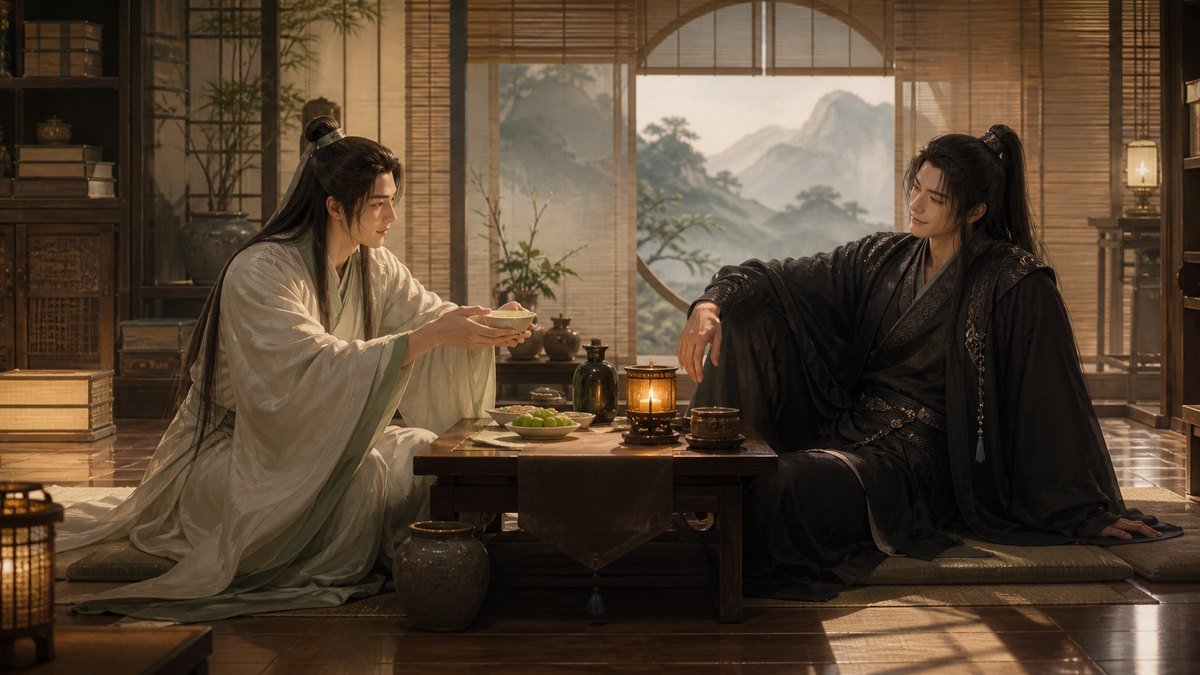
Among the sweetest details in the series is the wine hidden beneath the floorboards of the Jingshi. Emperor’s Smile once represented Wei Wuxian’s playful defiance of Cloud Recesses rules. Later, its presence in Lan Wangji’s private space becomes something gentler: proof that memory has been preserved, not punished. Lan Wangji has made room for a part of Wei Wuxian that the rules once tried to exclude.
The gesture matters because it is practical. He does not merely say that Wei Wuxian is welcome; he anticipates what will make him feel at ease. A possible interpretation is that the wine transforms the Jingshi from Lan Wangji’s solitary refuge into a shared emotional home. Comfort lives in preparation. Someone thought of what you might need before you arrived.
This small domestic surprise also reveals how far their dynamic has traveled. Early friction between discipline and spontaneity has matured into mutual accommodation. Lan Wangji Wei Wuxian Relationship: From Rivals to Soulmates offers a wider view of that progression, while this scene captures it in a single object: a forbidden drink lovingly kept close.
4. Lan Wangji’s quiet care after Wei Wuxian drinks
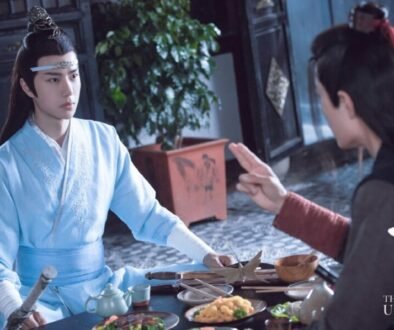
Drunken comedy gives the audience welcome relief, but the scene’s healing quality comes from what surrounds the laughter. Wei Wuxian can be silly, curious, and unguarded because Lan Wangji remains steady beside him. Nothing about the care feels transactional. There is no lecture waiting at the end of the evening and no suggestion that affection must be earned through perfect behavior.
These lighter exchanges are among the best moments in The Untamed because they restore parts of Wei Wuxian that tragedy seemed to take away. His mischief returns without the desperate edge it sometimes carried in the past. Lan Wangji, meanwhile, reveals a tenderness that has always existed beneath restraint. Their shared space allows both characters to become more fully themselves.
Fans often discuss the pair through epic loyalty, yet domestic gentleness is just as important. The Untamed Relationship Analysis: 7 Powerful Insights examines the larger relationship patterns, but scenes like this make those patterns emotionally believable. Healing does not always arrive as a dramatic rescue. Sometimes it looks like staying nearby while someone laughs, rests, and finally feels safe enough to be ridiculous.
The Jingshi becomes a home built through accommodation
Cloud Recesses once felt like a place where Wei Wuxian’s energy had to be contained. In the later timeline, the Jingshi changes that emotional meaning. Its comfort does not come from abandoning Lan traditions; it comes from Lan Wangji quietly adapting his private world so that Wei Wuxian can enter it without shrinking himself.
A possible fan interpretation is that this is the mature answer to their youthful clashes. Discipline and spontaneity no longer need to defeat each other. The hidden wine, patient care, and shared quiet show two people learning how difference can become intimacy. These heartwarming details give the audience a vision of home based not on sameness, but on the willingness to make room.
The visual modesty of these scenes strengthens their effect. No crowd needs to witness the care, and no social reward follows it. The Jingshi is private, so every accommodation feels chosen for Wei Wuxian rather than performed for reputation. That privacy lets the audience imagine healing as a daily practice: remembering a preference, softening a rule, offering rest, and allowing laughter to disturb the silence. In a story where public judgment causes enormous harm, private kindness becomes quietly radical.
Once safety becomes ordinary, the story can show another form of comfort: the freedom to laugh again even while difficult work continues.
Laughter Returns Without Denying the Pain
5. Wei Wuxian, Lan Wangji, and the juniors share the road
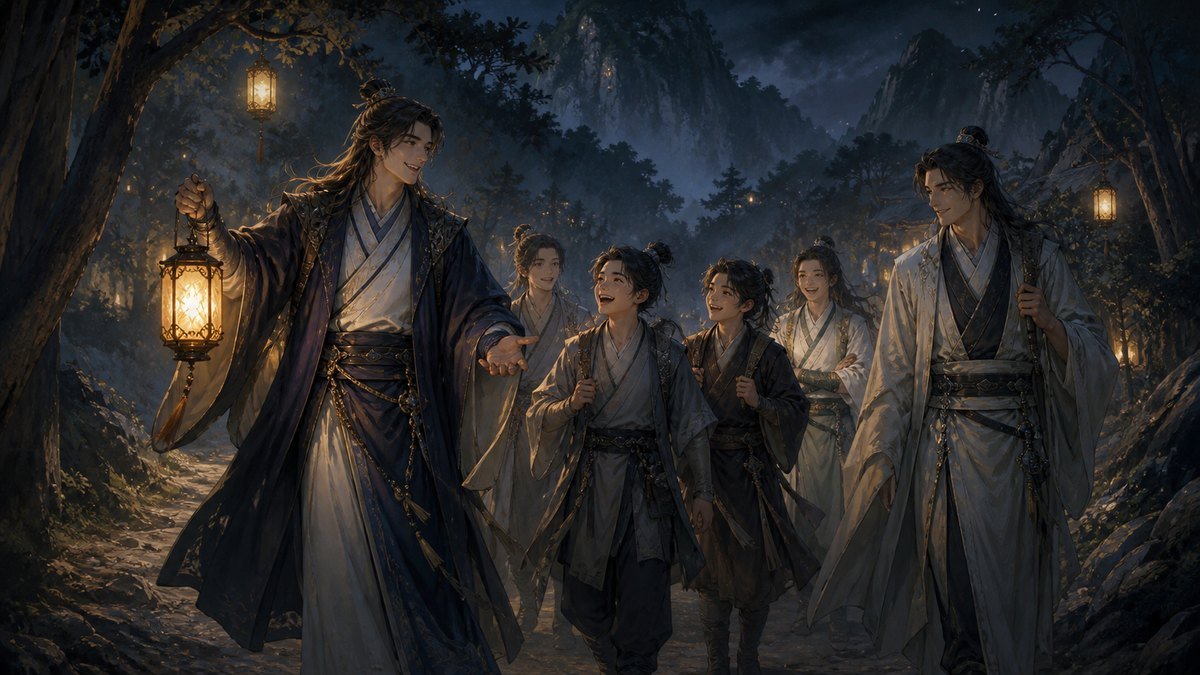
The night hunts with the younger cultivators give the later story a warmer rhythm. Wei Wuxian is no longer isolated as a feared figure from the past. He becomes a teacher, an exasperating elder, and an unexpected source of reassurance. The juniors ask questions, make mistakes, and respond to him as a living person rather than a cautionary legend.
The healing lies in this change of scale. Wei Wuxian cannot rewrite what happened, but he can help create a kinder future. He guides without demanding obedience for its own sake and protects without preventing the juniors from thinking. Their growing trust lets viewers imagine a cultivation world less trapped by inherited prejudice.
Lan Sizhui’s presence adds another layer of warmth. Even before every truth is spoken, there is an ease between him and Wei Wuxian that suggests care can leave traces stronger than trauma. Viewers interested in how the younger and older generations illuminate one another may enjoy The Untamed Characters: Who’s Who in the Hit Drama, which places these relationships within the broader ensemble.
6. The Yi City survivors are met with companionship
Yi City is one of the drama’s darkest stretches, so the camaraderie around the junior disciples matters. Fear does not vanish, but it is shared. Wei Wuxian uses humor and quick thinking to steady the group, while Lan Wangji’s presence provides a calm center. Together, they turn panic into cooperation.
This is not a cheerful scene in the conventional sense. Its comfort comes from watching people refuse to face terror alone. The young cultivators learn that courage can include listening, admitting uncertainty, and relying on others. Wei Wuxian, who once carried impossible burdens in isolation, now works beside someone who understands his methods and supports his choices.
That contrast is one reason these The Untamed emotional moments become more affecting on rewatch. Earlier pain gives later partnership its depth. The Untamed Character Analysis: 12 Hidden Insights explores how the ensemble’s choices reveal character, and Yi City shows this especially well: companionship is not an escape from darkness but the light people carry into it together.
Teaching lets Wei Wuxian turn survival into generosity
The juniors do more than make the later story livelier. They give Wei Wuxian a way to pass forward what experience taught him without passing forward its bitterness. He treats questions as opportunities rather than challenges to authority, and his unconventional thinking becomes useful knowledge instead of evidence against him.
That role is healing for the audience too. The man once blamed for corrupting the cultivation world helps its next generation become more observant, compassionate, and willing to cooperate. His influence is no longer confined to controversy. Through teaching, he participates in a future that can learn from the failures of the past. Laughter matters here because it signals that growth does not have to be solemn to be real.
Lan Wangji’s partnership completes the picture. He does not compete with Wei Wuxian for authority or undermine his unusual methods. Their different strengths create a steadier environment for the juniors: one brings improvisation and emotional ease, the other calm precision and protection. Watching them cooperate offers relief because the relationship has moved beyond the misunderstandings of youth. The road remains dangerous, but it no longer demands solitary heroism. Shared responsibility makes room for humor, and humor makes courage feel human.
The juniors create hope through community. The next scenes make that hope personal, returning Wei Wuxian to bonds that existed before the world learned to fear him.
Old Bonds Offer Wei Wuxian a Gentler Return
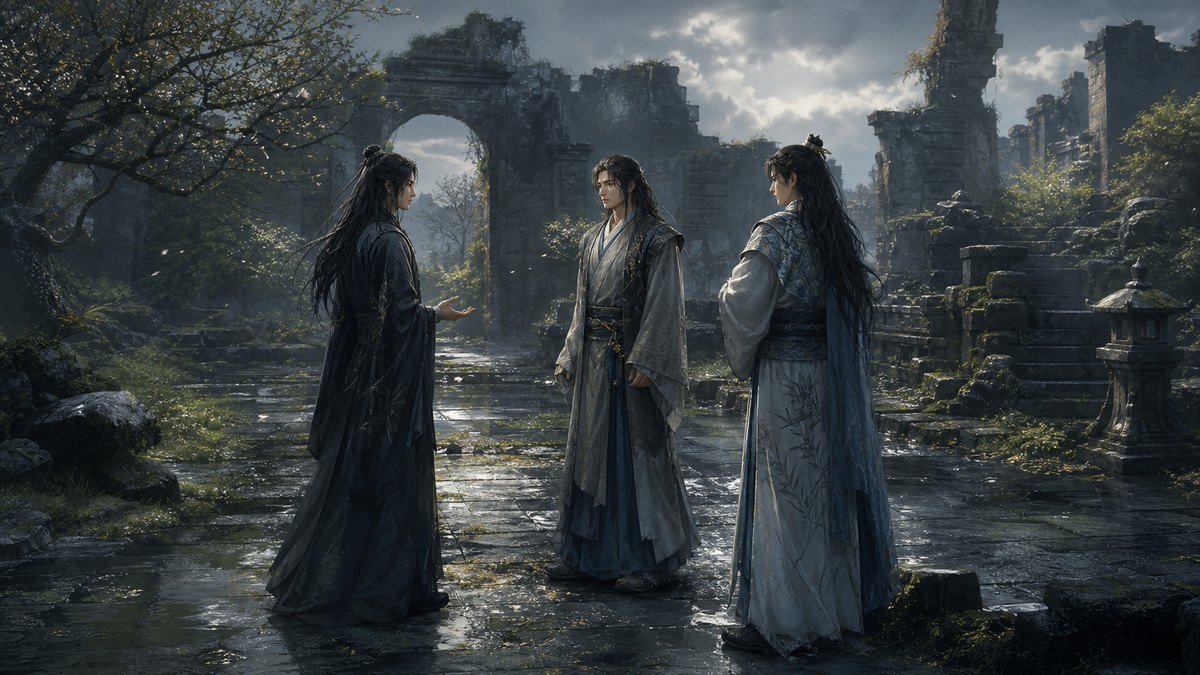
7. Wen Ning’s reunion restores trust without judgment
Wen Ning and Wei Wuxian share a history marked by protection, debt, grief, and loyalty. Their reunion carries pain, but it also offers immediate emotional relief. Wen Ning does not need a public explanation of who Wei Wuxian truly is. His loyalty comes from lived knowledge rather than rumor.
That makes their scenes deeply reassuring. Wei Wuxian spends so much of the story being misread that Wen Ning’s trust feels like a place to rest. At the same time, their bond is not presented as simple hero worship. Wen Ning has his own courage and moral clarity. He chooses loyalty because Wei Wuxian once treated him and his family as people when powerful institutions would not.
A viewer may read their reunion as the return of ethical memory. The world can rewrite events, but the people who experienced compassion remember its truth. Wei Wuxian Character Study: 7 Traits of Mo Dao Zu Shi’s Hero considers the qualities behind his choices, while Wen Ning’s continued faith shows how those choices shaped another life.
8. Wen Ning reveals the truth of the golden core
The golden-core revelation is painful rather than soothing on the surface. Yet it creates a kind of healing because a hidden sacrifice finally becomes visible. Jiang Cheng’s anger has long rested partly on an incomplete understanding of what Wei Wuxian gave up. When Wen Ning speaks, the silence protecting that misunderstanding breaks.
No immediate reconciliation follows, and that restraint matters. Healing is not portrayed as instant forgiveness or the erasure of resentment. Instead, truth opens a space where old certainties can no longer remain untouched. Wei Wuxian’s sacrifice is acknowledged even though he never sought applause for it.
For viewers, the scene can be cathartic because it restores moral complexity to a relationship damaged by grief. Jiang Cheng is forced to reconsider the story he has told himself, while Wei Wuxian is momentarily released from carrying the truth alone. Wei Wuxian Personality Evolution: From Joy to Strength provides further context for the endurance behind that silence.
Healing can begin before reconciliation is possible
Wen Ning’s loyalty and the golden-core truth offer two different forms of witness. One says, “I remember your compassion.” The other says, “Your sacrifice happened, even if the person most affected did not know.” Together they restore parts of Wei Wuxian’s story that rumor and resentment had buried.
The drama wisely stops short of making truth a magical cure. Jiang Cheng and Wei Wuxian carry years of incompatible grief, and disclosure cannot return them to youth. Still, the revelation changes what can honestly be believed. Sometimes healing begins at that modest threshold: not with a repaired relationship, but with the end of a false story that kept everyone trapped.
Wen Ning is essential because he speaks from a position the cultivation world repeatedly tried to silence. His testimony is not polished for political convenience; it comes from memory, gratitude, and anger at an injustice that has lasted too long. That directness can feel relieving to viewers who watched Wei Wuxian absorb blame while protecting other people’s dignity. Someone finally refuses the silence on his behalf. Even if the aftermath remains unresolved, the burden of knowledge is no longer his alone.
Truth cannot rebuild every broken bond, but it can end one kind of loneliness. From there, the drama moves toward its most tender reunion: a child of the Burial Mounds recognizing the family he thought he had lost.
Found Family Creates the Warmest Homecoming
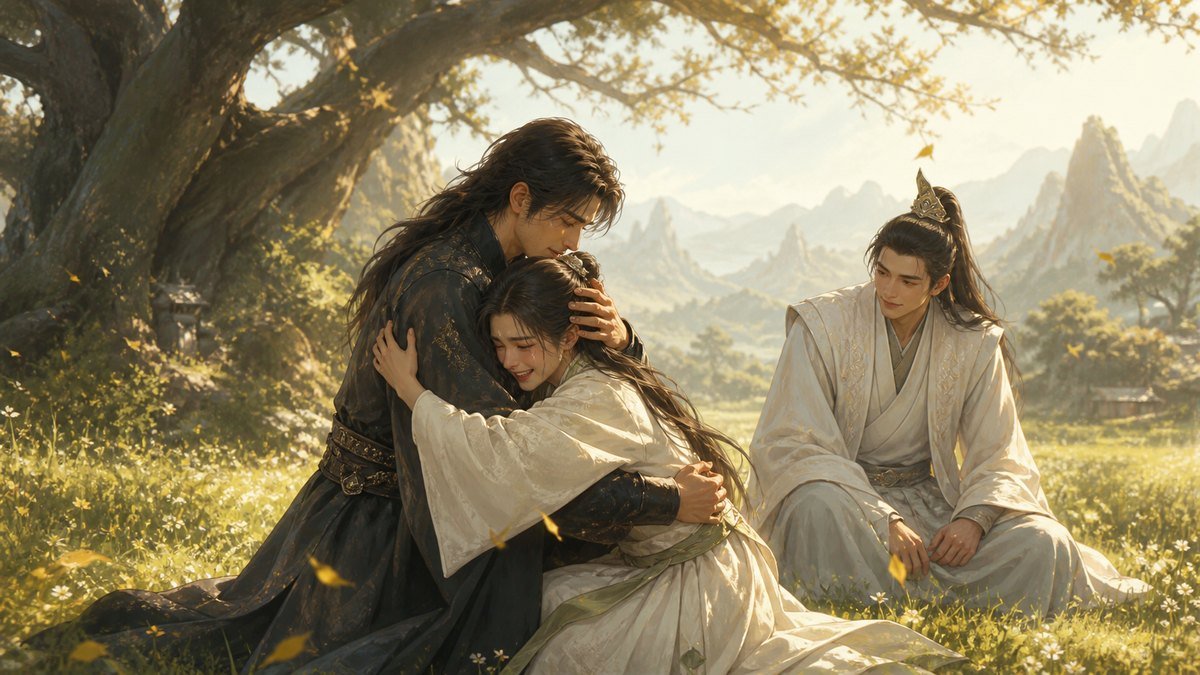
9. Lan Sizhui remembers A-Yuan
Lan Sizhui’s recovered memories bring together two versions of a life: the child protected in the Burial Mounds and the thoughtful young cultivator raised in Gusu. When he recognizes Wei Wuxian, the scene offers something rare in The Untamed—a piece of the past that survived and grew into goodness.
The emotional force comes from continuity. So much associated with the Burial Mounds was destroyed, condemned, or deliberately forgotten. Sizhui’s life proves that care given there was not meaningless. He carries forward the warmth of Wen Qing, Wen Ning, Wei Wuxian, and the community that tried to protect one another under impossible conditions.
His reunion with Wei Wuxian is one of the clearest healing moments in The Untamed because it answers grief with living evidence. Wei Wuxian could not save everyone, but the love of that fragile family reached the future. The scene never pretends this compensates for every loss. It offers something more honest: the knowledge that tenderness can outlast destruction.
The embrace that lets grief and joy exist together
Sizhui’s emotional response carries the openness that older characters often struggle to express. He can mourn what he lost and celebrate what he has found in the same breath. Wei Wuxian, usually quick to deflect pain with humor, receives affection that asks nothing from him except recognition.
A common fan reading sees Sizhui as the living bridge between Wei Wuxian and Lan Wangji’s separate years of care. One protected him in childhood; the other gave him safety, education, and a future. His identity holds both histories without forcing them to compete. The result is one of the most moving examples of found family in the drama.
That warmth also deepens the story’s legacy. Untamed Fandom Culture: 10 Reasons Fans Can’t Let Go explores why viewers remain attached to this world, and Sizhui’s reunion is part of the answer. It gives fans a form of hope grounded in character rather than wishful thinking: people can carry love forward even when history tries to erase where it began.
Sizhui embodies a future shaped by two kinds of care
Sizhui’s gentleness is not weakness, and his competence does not require emotional distance. Those qualities reflect the best of the people who protected him. From the Burial Mounds, his story carries the memory of a community built through mutual care. From Gusu, it carries stability, learning, and Lan Wangji’s steadfast guardianship.
His reunion therefore heals more than one relationship. It joins two chapters of his life and allows Wei Wuxian to see that the child he loved did not merely survive—he became someone capable of extending kindness to others. In a drama where inheritance often means receiving conflict, Sizhui represents another possibility: a younger generation can inherit tenderness and choose to deepen it.
The scene also gives Wei Wuxian a rare chance to receive the result of his own goodness. Much of his compassion produces consequences he never lives to see, or becomes distorted by the stories others tell about him. Sizhui stands before him as an answer that cannot be argued away. Care mattered. Protection mattered. The makeshift family at the Burial Mounds mattered. That recognition does not cancel grief, but it restores meaning to love that once seemed swallowed by loss.
Found family heals the past by preserving what was good. The final scene looks ahead, allowing devotion to become a choice made freely rather than a duty imposed by crisis.
Frequently Asked Questions
What are the most healing moments in The Untamed?
The most healing moments include Lan Wangji recognizing Wei Wuxian through their melody, the Emperor’s Smile hidden in the Jingshi, Wei Wuxian traveling with the juniors, Sizhui remembering A-Yuan, and the final reunion. Each scene offers a different comfort: recognition, safety, laughter, found family, or the freedom to return.
Why do fans find WangXian scenes so comforting?
WangXian scenes feel comforting because their bond is built through attentive actions rather than constant explanation. Lan Wangji remembers, protects, and makes space; Wei Wuxian brings warmth, honesty, and life into that space. Their devotion develops through repeated choices, which makes the quieter moments feel credible and deeply earned.
Is the ending of The Untamed happy?
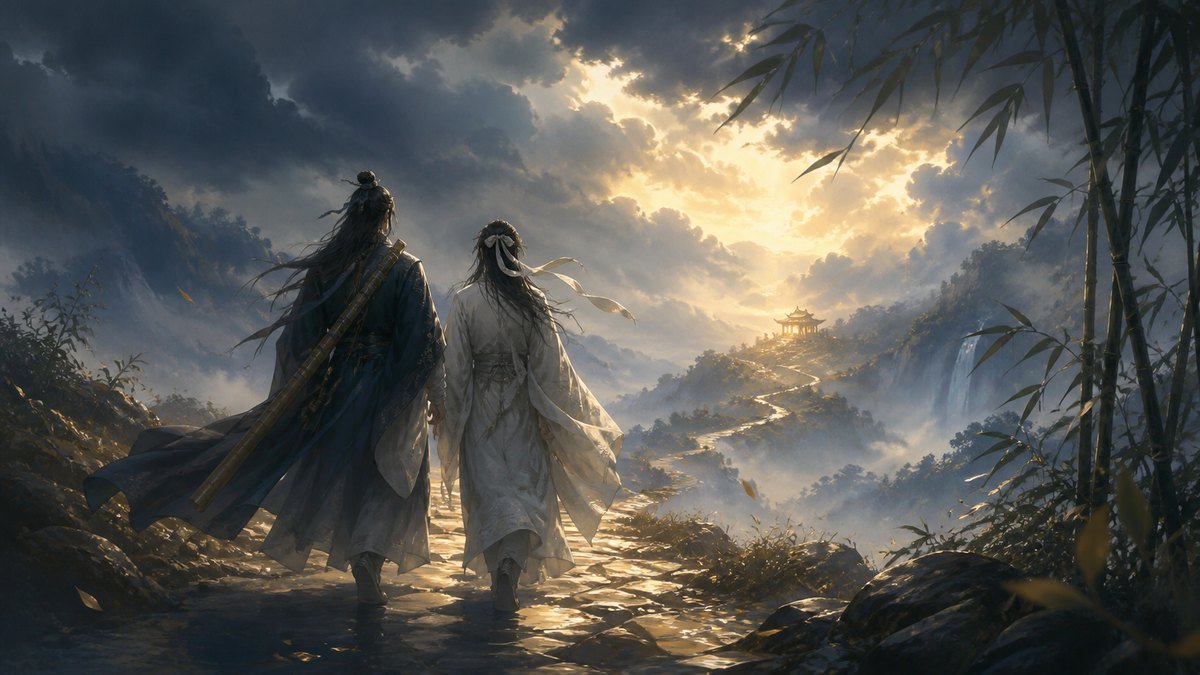
The ending is hopeful and emotionally reassuring. Wei Wuxian hears Lan Wangji call his name and turns with a smile, suggesting reunion without spelling out every detail of their future. Its openness lets viewers focus on trust, recognition, and possibility after a long journey shaped by loss.
Why is Lan Sizhui’s reunion with Wei Wuxian important?
Sizhui’s reunion proves that the care surrounding A-Yuan survived the destruction of the Burial Mounds. His life connects Wei Wuxian’s past compassion with Lan Wangji’s years of protection. That continuity makes the scene both joyful and bittersweet, turning found family into a living form of remembrance.
Which lighthearted scenes are best for a comfort rewatch?
The Cloud Recesses scenes with Emperor’s Smile, Wei Wuxian’s playful interactions with Lan Wangji, and the night hunts with the junior disciples are especially comforting. They restore humor and companionship after heavier storylines while still showing meaningful character growth and trust.
Do The Untamed’s comforting scenes ignore its tragedies?
No. Their emotional strength comes from acknowledging tragedy rather than escaping it. Reunions do not undo loss, and truth does not instantly repair every relationship. The drama offers healing through small, believable changes: someone is recognized, a burden is shared, a memory survives, or a person is welcomed home.
Conclusion — Comfort That Survives the Longest Night
The tenderness is powerful because the pain is real
The gentlest parts of The Untamed never ask viewers to forget what the characters endured. That is precisely why they work. Emperor’s Smile beneath the floorboards matters because Wei Wuxian once had no safe place to return to. Sizhui’s embrace matters because the Burial Mounds community was nearly erased. Lan Wangji’s final call matters because recognition has carried their bond across absence, danger, and silence.
These scenes offer comfort without pretending that every wound closes neatly. Jiang Cheng’s pain remains complicated. The Wen survivors cannot be restored. Wei Wuxian cannot reclaim the life he might have had. Yet the story refuses to make loss the only truth. Loyalty also leaves consequences. Kindness also changes lives. Memory can preserve love as powerfully as it preserves grief.
A rewatch becomes its own act of returning
That balance explains why the healing moments in The Untamed remain so rewatchable. Fans return knowing the tragedies ahead, but they also know where the shelters are. A melody will be remembered. Wine will be waiting. The juniors will bring noise and possibility. A-Yuan will survive. A familiar voice will call Wei Wuxian home.
Perhaps the drama’s most lasting reassurance is that being understood does not always require a perfect explanation. Sometimes it comes through a person who recognizes your music, protects your freedom, and keeps a place for the parts of you others tried to reject. The story’s legacy lives in that quiet promise: after the longest night, tenderness can still find you.
If these reflections brought you back to a scene you love, you can support more fandom writing through Ko-fi. Which moment from The Untamed feels most like comfort to you?
Fan-Favorite Collectibles & Gifts