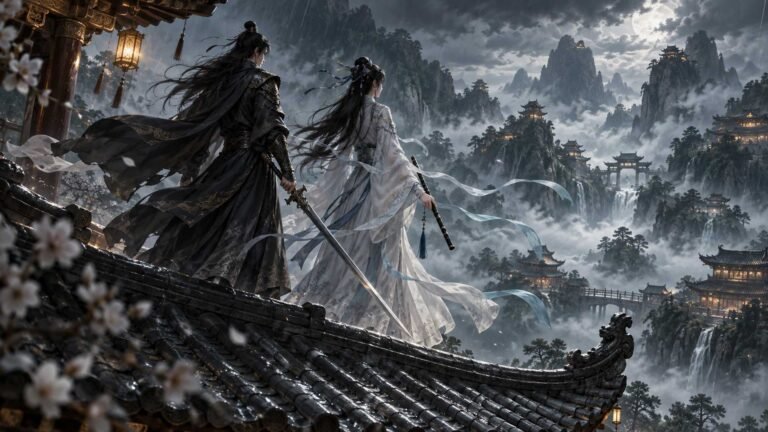
The Untamed Instruments: Music & Spiritual Power
Why The Untamed Instruments Have Spiritual Power
Music becomes powerful through trained intention. Breath, touch, rhythm, memory, and spiritual energy are joined in performance. A melody is therefore not simply a sequence of attractive notes. It is an organized action capable of calming agitation, guiding resentful energy, questioning spirits, or influencing another cultivator’s condition.
This system fits the drama’s larger cultivation world, where physical technique and inner discipline cannot be separated. A sword form reveals education and temperament; musical cultivation does the same through sound. The player must control body, energy, attention, and purpose. For broader context on these practices, The Untamed Worldbuilding Explained explains how spiritual training and clan culture support the story.
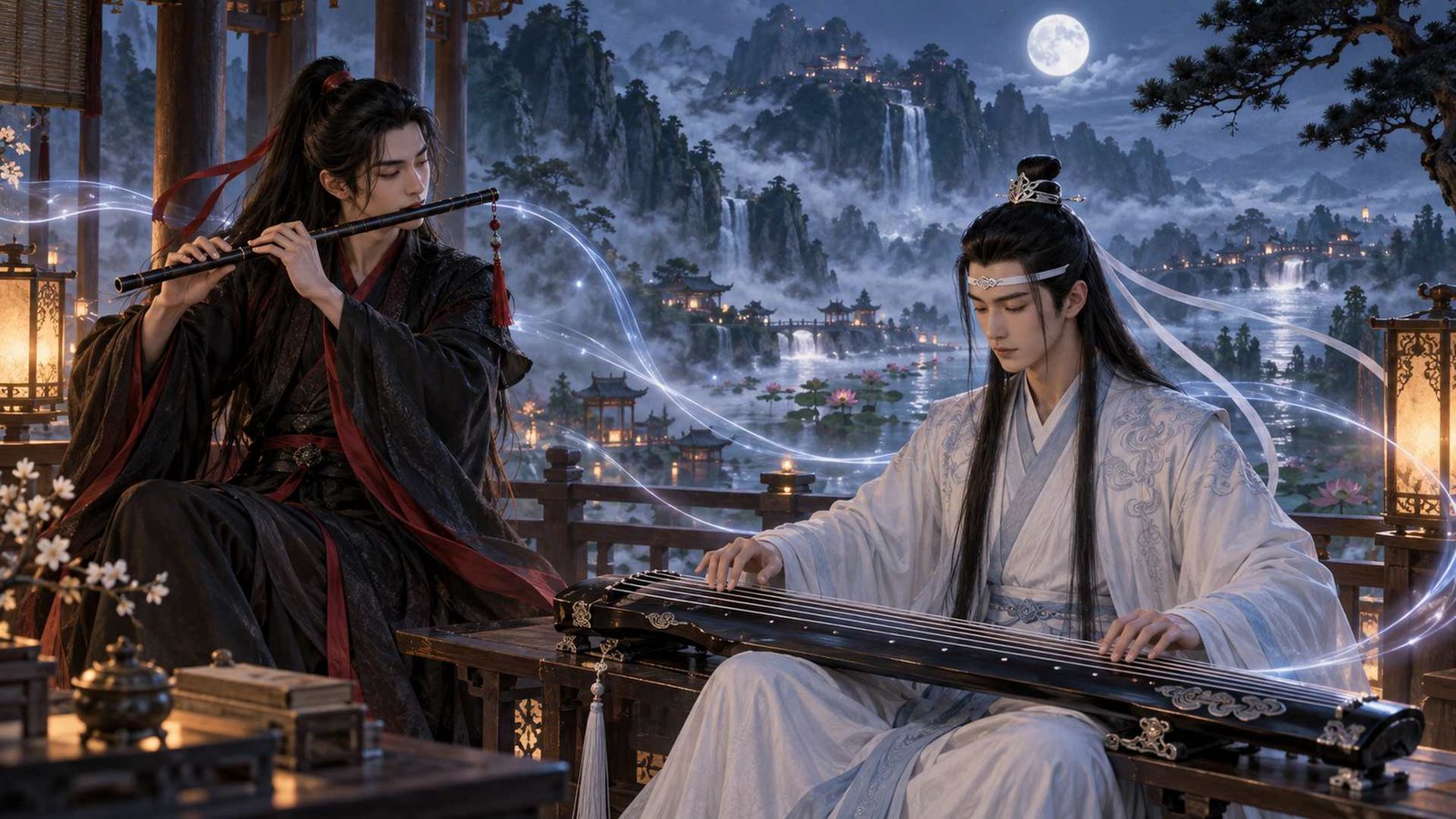
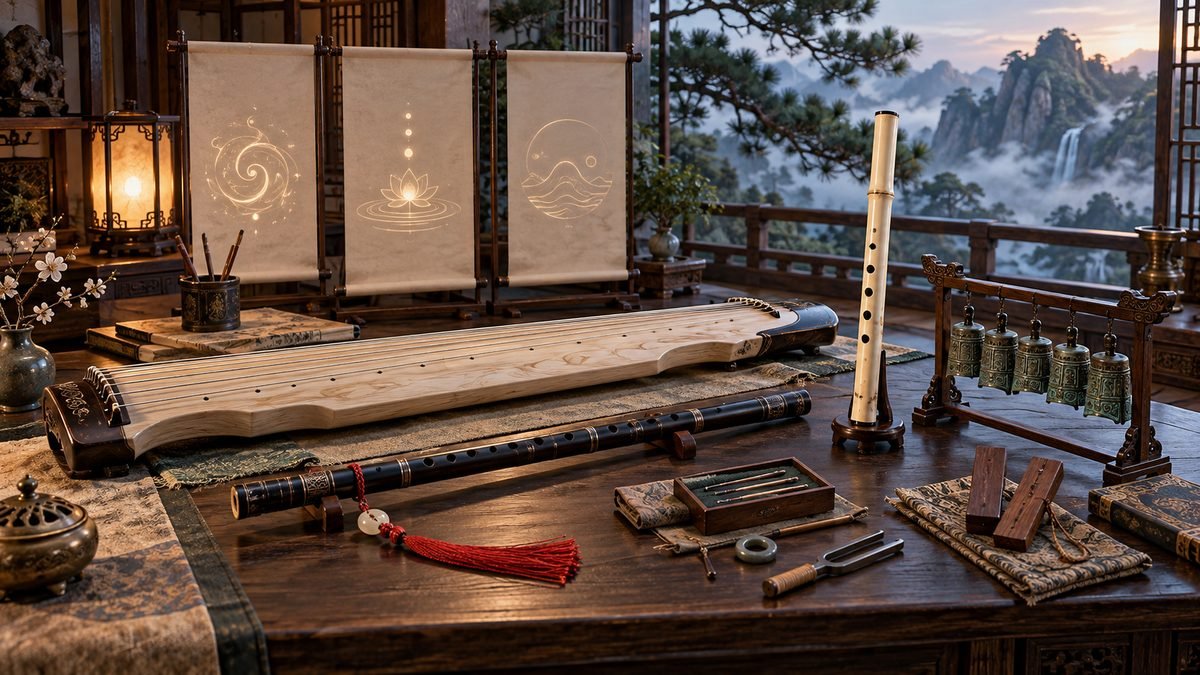
Different instruments emphasize different kinds of control. A flute begins with breath and can respond quickly to changing conditions. A guqin requires stillness, fine hand movement, and structured listening. A vertical xiao also uses breath, but its posture and tone create a more restrained social presence. These qualities do not determine morality, yet they help the drama express personality.
Music also travels across boundaries that ordinary speech cannot cross. It can reach spirits, preserve a private melody, or communicate intention during danger. Characters who are constrained by etiquette, reputation, grief, or political surveillance can still answer one another through sound.
The most important principle is that technique alone is not ethical. The same knowledge can heal, manipulate, protect, or destroy. A piece associated with calm can be altered. A feared instrument can be used in defense. The drama asks viewers to judge purpose, context, and responsibility rather than classify every orthodox sound as good and every unorthodox one as evil.
Performance also changes the physical staging of a scene. Sword combat sends bodies across space, while musical cultivation can make one still figure the center of a much larger conflict. A musician may sit behind the front line and still determine what happens beyond the frame. The contrast teaches viewers to treat listening, concentration, and interpretation as forms of action rather than pauses between action scenes.
Chenqing — Wei Wuxian’s Flute and the Sound of Improvisation
What Chenqing Represents
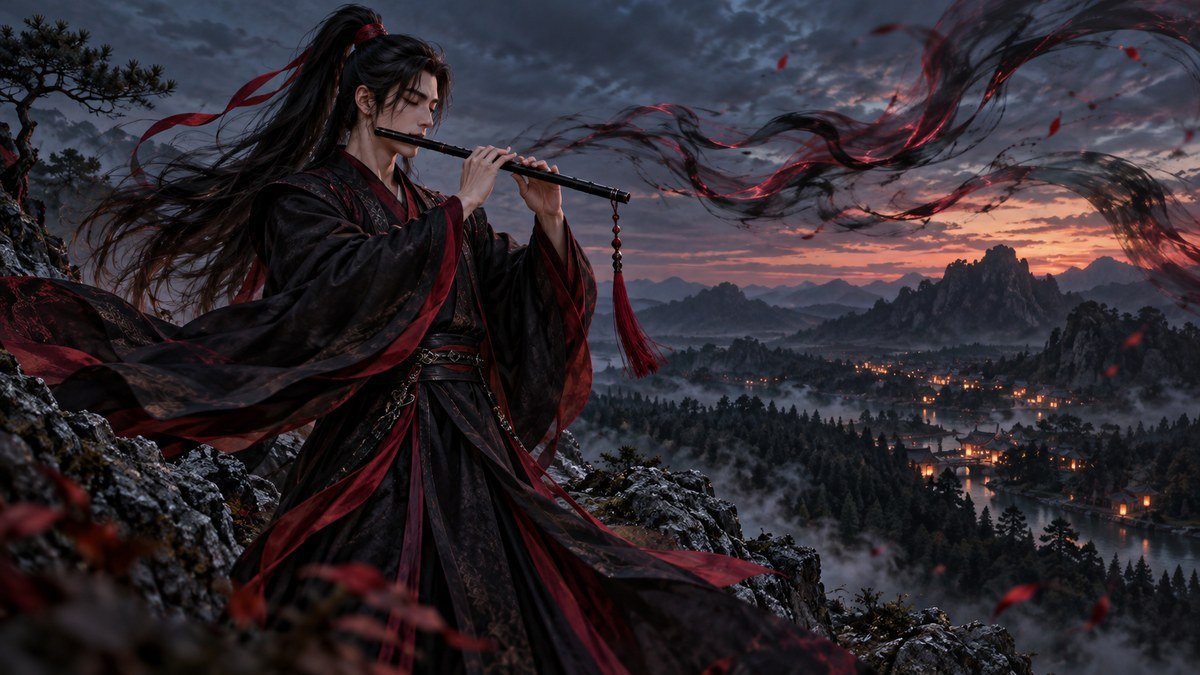
Among The Untamed instruments, Chenqing is the most immediately recognizable: a black bamboo transverse flute with a red tassel, visually linked to Wei Wuxian’s black robes and clearly visible red hair ribbon. It is compact, portable, and responsive to breath. Those qualities make it the ideal instrument for a cultivator whose path depends on adaptation.
The flute enters Wei Wuxian’s story after his relationship with orthodox sword cultivation has been broken by the loss of his golden core. He develops another way to act in the world rather than accept helplessness. Chenqing therefore represents invention under pressure. Its existence is not proof that he always desired a forbidden identity; it is evidence of survival.
Breath gives the instrument an intimate quality. The sound begins inside the body, becomes vibration, and moves outward to influence the environment. Wei Wuxian’s performance often feels immediate and responsive. He can change direction, call, interrupt, or improvise without the fixed posture associated with a guqin.
That flexibility becomes frightening to others. Chenqing’s sound announces the Yiling Patriarch and the power society has learned to fear. The instrument absorbs rumors about its owner until people treat it as if it possesses an independent moral character. Its black surface and red tassel make it easy to transform into an icon of danger.
Yet the drama repeatedly separates fear from judgment. Wei Wuxian can use unorthodox cultivation to protect vulnerable people, while respected cultivators can use orthodox tools to support injustice. Chenqing reveals the political problem of innovation: the cultivation world wants control over useful power but distrusts the person who created it outside institutional permission.
The flute remains a strong expression of Wei Wuxian’s personality—quick-thinking, musically gifted, defiant, compassionate, and willing to carry consequences alone. The Wei Wuxian Character Study explores how those traits shape both his heroism and his isolation.
Chenqing’s visual simplicity strengthens the symbolism. It lacks the monumental presence of a clan hall or an elaborate ceremonial object, yet it can change the course of a confrontation. That difference reflects Wei Wuxian’s position: politically isolated, materially mobile, and capable of producing consequences far larger than the object in his hand suggests.
Lan Wangji’s Guqin — Discipline, Inquiry, and Care
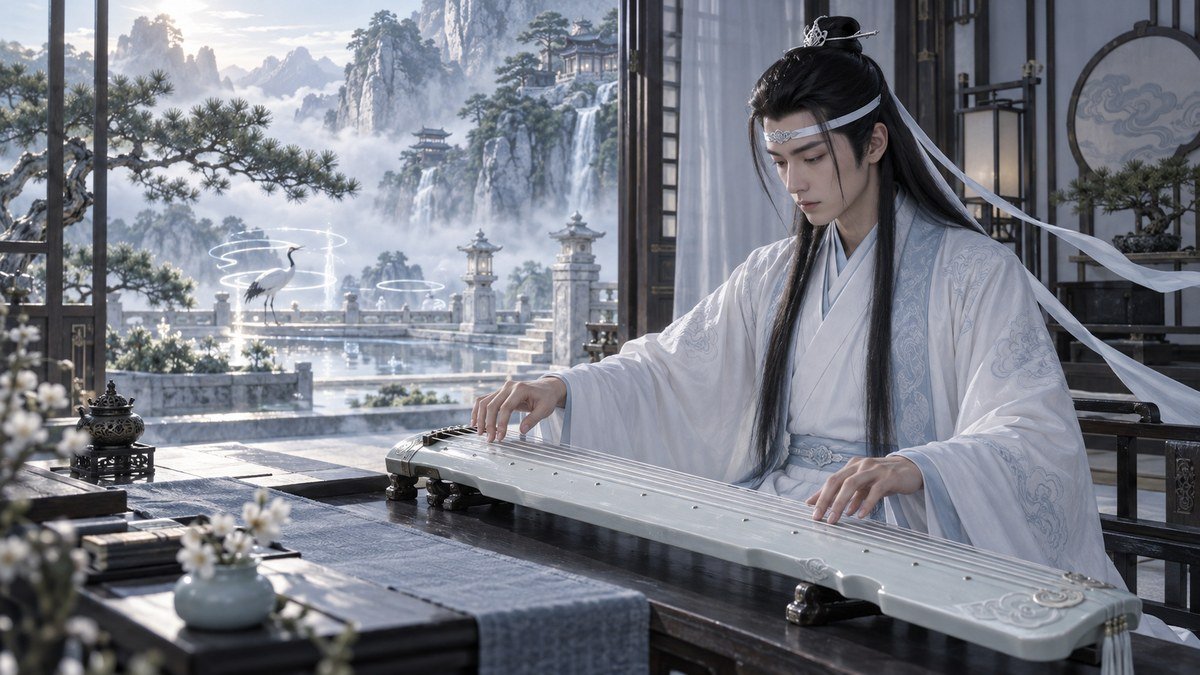
Lan Wangji’s pale seven-string guqin, commonly identified as Wangji, creates a very different visual rhythm. The instrument rests horizontally. The player sits or kneels with controlled posture. Small movements of the hands produce precise changes in tone. Stillness becomes a form of strength.
The guqin fits Gusu Lan culture, which values discipline, study, ritual, and musical cultivation. Its pale surface harmonizes with Lan Wangji’s white and pale-blue robes and his white cloud-pattern forehead ribbon, which must remain visibly centered across his forehead. Character, costume, instrument, and setting form one coherent visual language.
Inquiry is among the guqin’s most memorable functions. Through music, a trained cultivator can call to spirits and seek answers. The process is not ordinary conversation. It requires correct phrasing, attentive listening, and interpretation. Lan Wangji’s patience makes him especially suited to this practice.
The guqin is also associated with calming, protection, and care. Lan Wangji often expresses concern through action rather than open declaration. Playing becomes a way to stabilize another person, guard a space, or remain present when speech would be inadequate. His restraint does not indicate emotional emptiness; the instrument reveals how much attention exists beneath the surface.
Unlike Chenqing, the guqin is not easily carried through every battlefield. Its physical requirements create a protected zone around performance. When Lan Wangji plays, chaos briefly reorganizes itself around focus. That contrast gives his musical scenes emotional weight.
Discipline, however, is not the same as blind obedience. Lan Wangji’s growth involves learning to direct cultivated knowledge according to conscience. The guqin remains an orthodox instrument while its player becomes willing to question orthodox consensus. Lan Wangji Character Analysis traces this movement from exemplary rule-following to principled moral independence.
Liebing and the Lan Musical Tradition
What Liebing Reveals About Lan Xichen
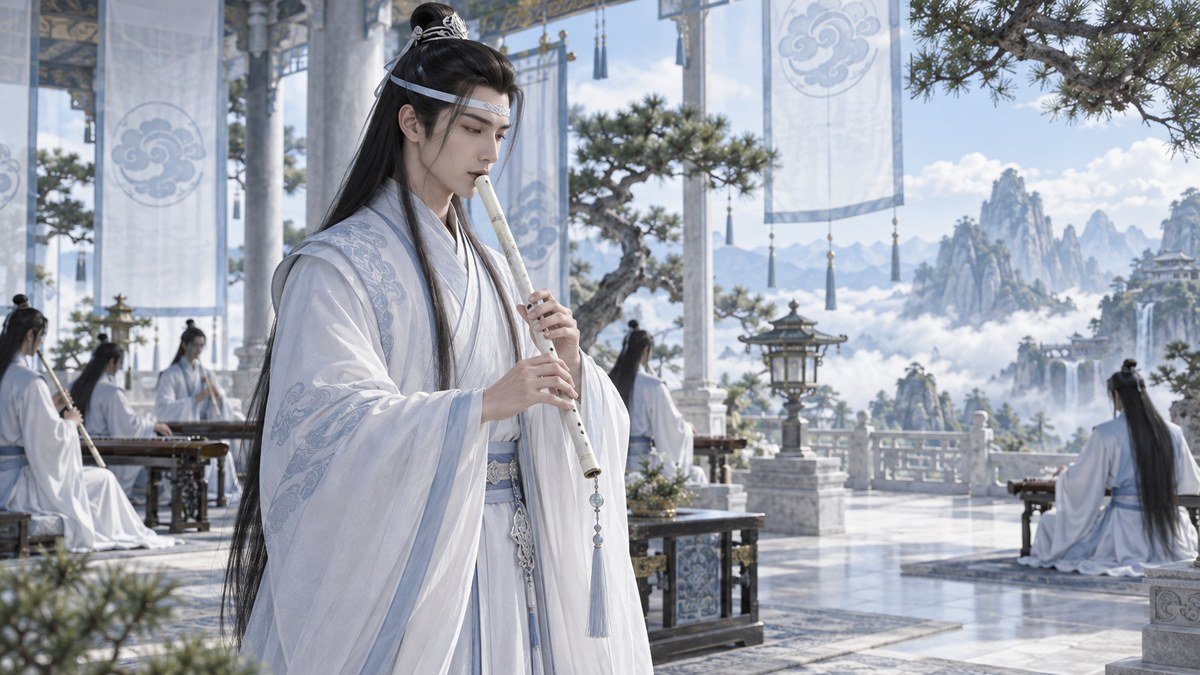
Among The Untamed instruments, Liebing brings a quieter authority. It is Lan Xichen’s xiao, a vertical end-blown flute. Its elegant form and restrained tone suit a clan leader known for courtesy, mediation, and the ability to make others feel heard. Like Chenqing, it depends on breath, but its visual posture is more formal and contained.
The contrast between the two flutes is revealing. Wei Wuxian’s transverse flute extends across the body and often appears in urgent, mobile performance. Lan Xichen’s xiao rises vertically, aligning with composed posture and ceremonial presence. Both transform breath into spiritual action, but the drama frames their social meanings differently.
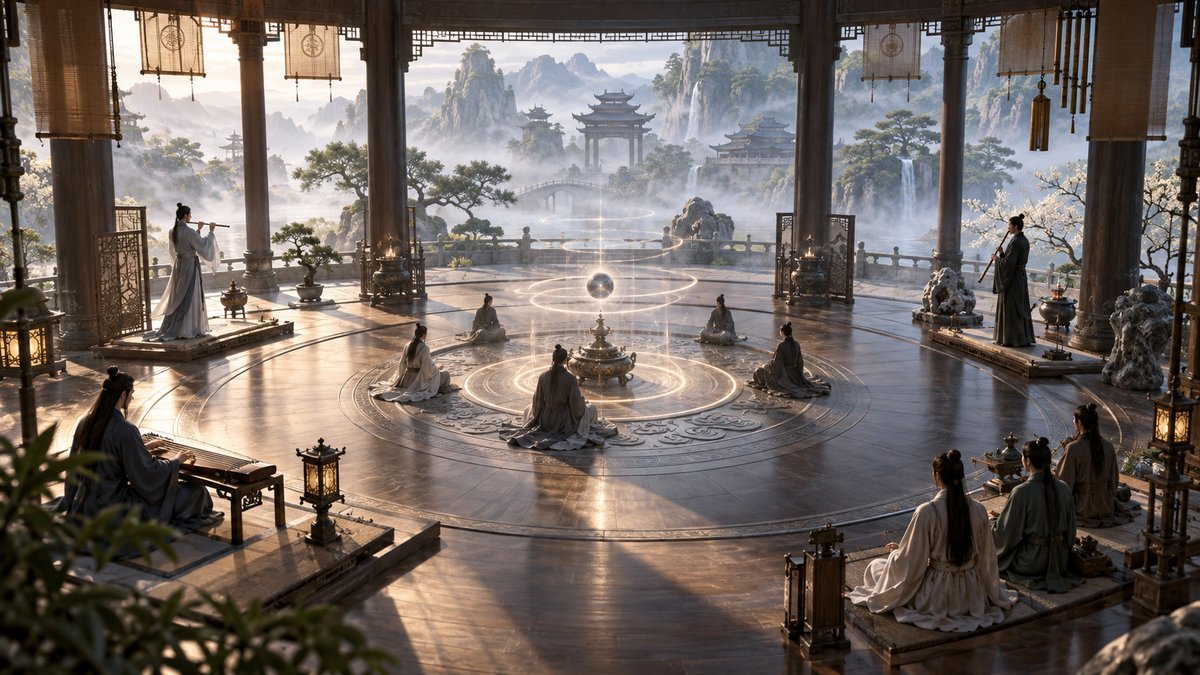
Liebing also expands the audience’s understanding of Gusu Lan musical cultivation. The clan’s knowledge is not limited to one guqin or one exceptional player. Music belongs to teaching, archives, ensemble discipline, ritual, and leadership. Instruments are part of a cultural system preserved across generations.
Lan Xichen’s relationship to music reflects his role as interpreter between people. His strength lies partly in harmony: he seeks agreement, recognizes emotional nuance, and often believes conversation can prevent conflict. Liebing’s breath-driven voice supports that outward, relational quality.
But a gift for harmony can create vulnerability. Someone who expects sincerity may not recognize carefully constructed deception. Musical knowledge can be shared, borrowed, and manipulated. The same openness that allows connection may also create access for someone with hidden intent.
Lan Wangji and Lan Xichen therefore embody different expressions of one tradition. The younger brother’s guqin scenes often emphasize inward constancy and private recognition. The elder brother’s xiao and ensemble associations emphasize social harmony and leadership. Their instruments help distinguish two forms of gentleness without weakening either character.
The brothers also demonstrate that clan tradition does not erase personality. Both receive related education, wear the same cultural symbols, and understand music as cultivation. Lan Wangji turns that inheritance toward exacting private loyalty; Lan Xichen turns it toward diplomacy and social trust. Instrument choice, posture, and performance setting allow the audience to feel the distinction before it is explained.
How The Untamed Instruments Can Heal or Harm
The Song of Clarity tradition demonstrates music used as disciplined spiritual care. Calming music can regulate dangerous energy and support a cultivator under strain. Such performance requires knowledge, accuracy, and trust. The listener must believe that the person playing intends healing.
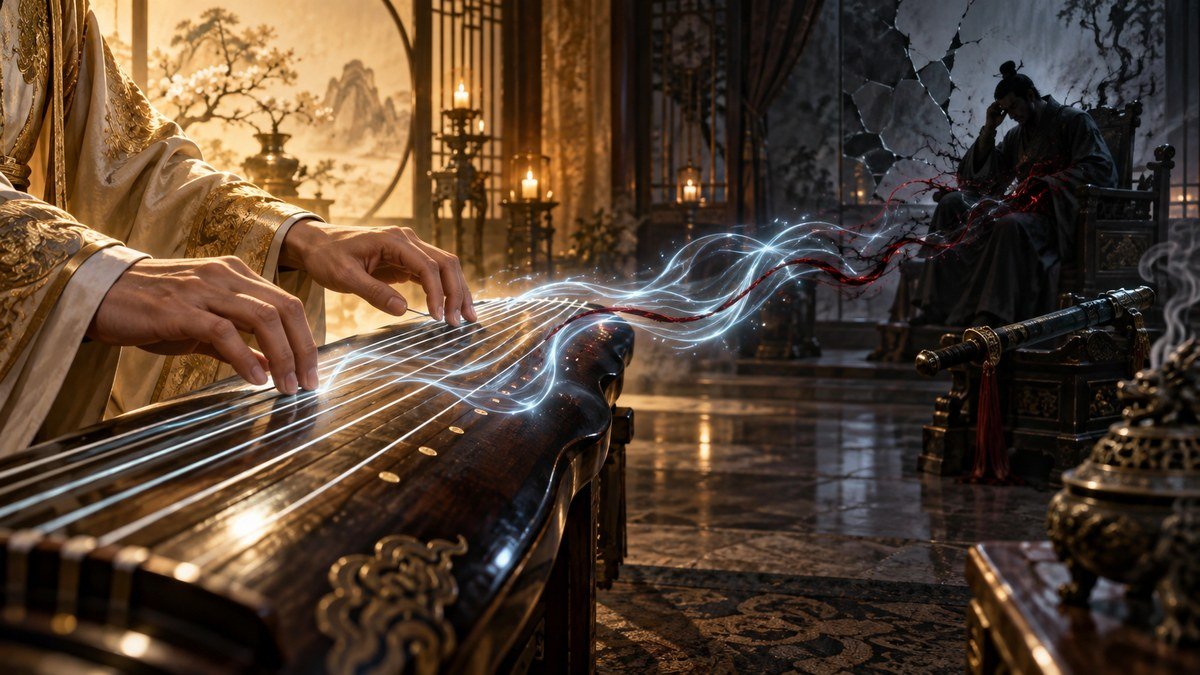
That trust creates an opening for manipulation. A melody can be altered gradually so that harmful notes or passages hide within something familiar. The victim hears the structure of care while receiving another effect. Music becomes dangerous not because sound is inherently deceptive, but because knowledge has been combined with access and concealed intention.
This idea is central to the tragedy surrounding Nie Mingjue, Lan Xichen, and Jin Guangyao. Nie Mingjue’s saber cultivation leaves him vulnerable to spiritual instability. Lan Xichen shares musical knowledge within a relationship he believes trustworthy. Jin Guangyao understands enough to exploit both the technique and the confidence surrounding it. The weapon is not an instrument alone; it is a trusted context.
The altered melody also dramatizes incomplete listening. A listener may recognize the familiar parts and fail to question the difference. A witness may hear skill and assume moral legitimacy. In political life, reputation works in the same way: familiar patterns encourage people to ignore small disruptions until consequences become irreversible.
Musical cultivation therefore demands ethical responsibility from performers, teachers, and listeners. Knowledge must be protected without becoming hoarded. Trust must be possible without becoming unquestioning. Technical mastery must remain accountable to purpose.
This is why the drama’s musical conflicts resist a simple orthodox-versus-unorthodox division. Chenqing can defend; refined guqin knowledge can be corrupted. The object and technique matter, but moral judgment belongs to the person choosing how to use them. Similar reversals appear throughout The Untamed Demonic Cultivation Explained: 9 Hidden Meanings.
The Untamed Instruments and the Shared Melody
Why the Shared Melody Matters
The melody associated with Wei Wuxian and Lan Wangji is the emotional center of the drama’s musical language. Viewers often connect it with “Wuji,” the title used for the live-action theme, while “Wangxian” is widely associated with the pair’s shared composition in the broader story tradition. Whatever label is used in discussion, its narrative function is clear: the melody belongs to recognition.
Lan Wangji creates and shares the tune within an experience that is private to the two of them. Years later, Wei Wuxian’s ability to play it becomes evidence stronger than appearance. A face and name can change; remembered music remains. Recognition occurs through listening rather than public identification.
This matters in a story dominated by rumor. Society repeatedly tells false or incomplete stories about Wei Wuxian. The shared melody carries no public consensus. Its authority comes from direct experience. Lan Wangji knows who is playing because he remembers what they heard together.
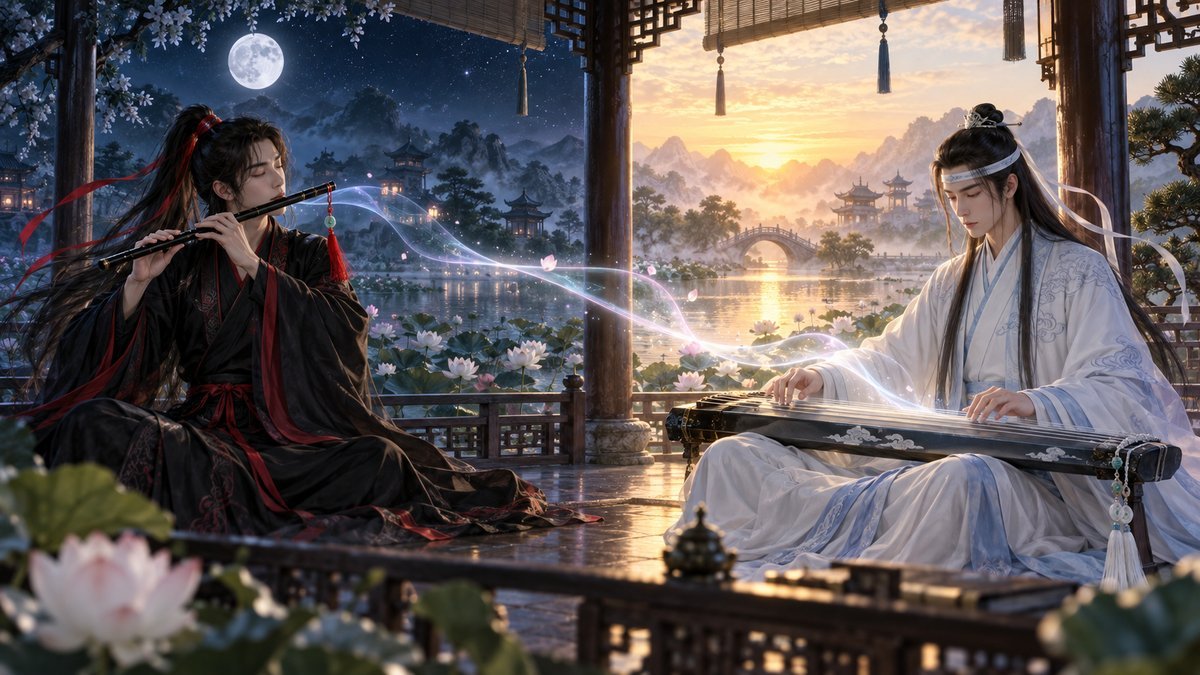
The tune also joins the two instrumental languages. A melody can move between flute and guqin, breath and strings, improvisation and disciplined form. Neither player must abandon his own musical voice. Harmony emerges through response.
Music can cross the drama’s nonlinear timeline more gracefully than explanation. A few notes connect youth, separation, death, return, and renewed trust. The audience hears earlier scenes inside later ones, just as the characters carry memory into the present.
This is the deepest meaning of The Untamed instruments: they make listening an ethical act. To recognize someone is to hear beyond reputation, appearance, and fear. The shared melody survives because one person remembers accurately and the other, even after loss, can answer.
The audience participates in that recognition. Once the tune has been established, even a brief fragment can summon an earlier relationship. The listener supplies the missing context, transforming repetition into memory. This is why the melody can remain emotionally powerful without appearing in full every time: the drama has taught us how to hear what is absent.
Frequently Asked Questions About The Untamed Instruments
What instruments are used in The Untamed?
The most important are transverse bamboo flutes, the seven-string guqin, and the vertical xiao. Percussion and ensemble instruments also appear in ceremonial or atmospheric contexts, but Chenqing, Lan Wangji’s guqin, and Liebing carry the strongest character associations.
What is Chenqing?
Chenqing is Wei Wuxian’s black bamboo flute, decorated with a red tassel. He uses it in unorthodox musical cultivation to direct resentful energy and communicate commands. It symbolizes adaptation, feared power, and the identity of the Yiling Patriarch.
What instrument does Lan Wangji play?
Lan Wangji plays the guqin, a horizontal seven-string Chinese zither associated in the story with Gusu Lan musical cultivation. His instrument is commonly identified as Wangji. He uses guqin techniques for Inquiry, calming, protection, and spiritual communication.
What is Liebing?
Liebing is Lan Xichen’s xiao, a vertical end-blown flute. Its elegant breath-driven sound suits his refined authority and emphasizes that Gusu Lan musical cultivation extends beyond the guqin.
What is Inquiry?
Inquiry is a musical cultivation technique used to communicate with spirits and seek answers. It requires disciplined performance and careful interpretation. Lan Wangji’s patience, accuracy, and willingness to listen make the technique especially meaningful for his character.
Can music both heal and harm in the drama?
Yes. Musical techniques can calm spiritual instability, communicate, protect, or heal, but knowledge can also be altered and weaponized. The difference depends on technique, intention, context, and the trust between performer and listener.
Is Wuji the same as Wangxian?
The names come from related but distinct adaptation contexts. “Wuji” is associated with the live-action drama’s central song, while “Wangxian” is widely used for the pair’s shared composition in the broader story tradition. Fans sometimes use them interchangeably when discussing the recognizable melody and its symbolism.
Conclusion
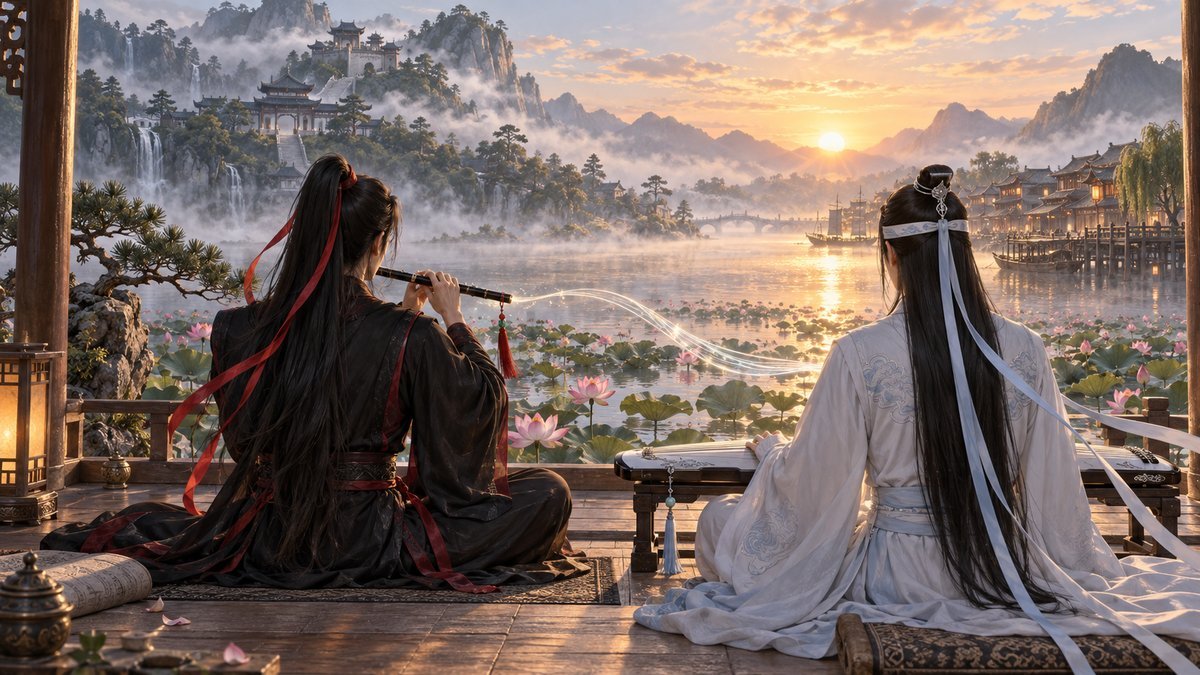
The Untamed instruments transform music into character and action. Chenqing turns breath and improvisation into survival, feared power, and defiant agency. Lan Wangji’s guqin turns stillness into Inquiry, protection, and care. Liebing reveals the outward, mediating side of Gusu Lan musical culture. Healing and distorted melodies show that knowledge gains moral meaning through intention.
The shared melody brings these ideas together. It survives time, death, changed appearance, and public falsehood because it is remembered by two people who truly listened. Flute and strings remain different, yet they can carry the same truth.
In a drama where characters are constantly judged by appearances, music offers another way of knowing. Sound cannot guarantee honesty, but attentive listening can recognize what society misses. If you enjoy detailed readings of the drama’s visual and musical language, you can support more essays through Ko-fi.
Fan-Favorite Collectibles & Gifts