The Untamed Color Symbolism: 10 Meanings
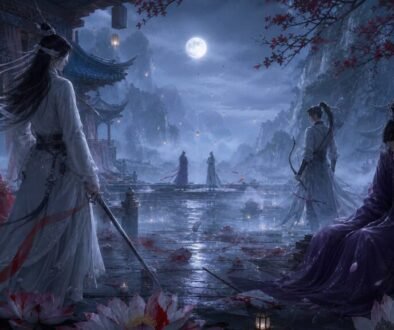
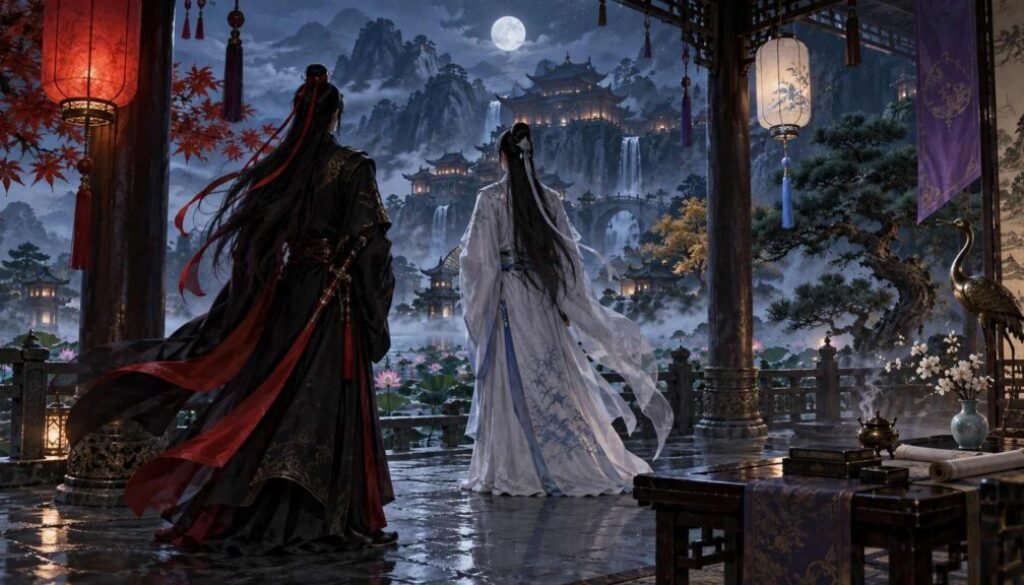
The Untamed color symbolism becomes visible before a character even speaks. A red ribbon moves through dark robes. White sleeves stand against a blue-gray landscape, while purple recalls a home shaped by love and conflict. Across costumes, lighting, settings, and memory, color helps shape how viewers experience the characters and their world.
This guide explores ten recurring visual meanings without treating the drama like a codebook. A color can carry several feelings, and its effect may change with context. Black does not always mean evil; white does not automatically prove innocence. The useful question is what a color helps us notice in a particular moment.
For fans, that approach makes rewatching richer. We can describe what the image shows, compare patterns, and then offer an interpretation without pretending it is the only possible answer. From WangXian’s striking contrast to the clan palettes and the warmth of lantern light, these colors keep emotion visible even when characters remain silent.
How to read The Untamed color symbolism
Color creates expectation before explanation
Color reaches the viewer quickly. Before a character speaks, a pale interior may feel restrained, a dark forest may feel uncertain, and a warm lantern may promise temporary safety. These reactions are not universal rules, but they shape the emotional doorway through which we enter a scene.
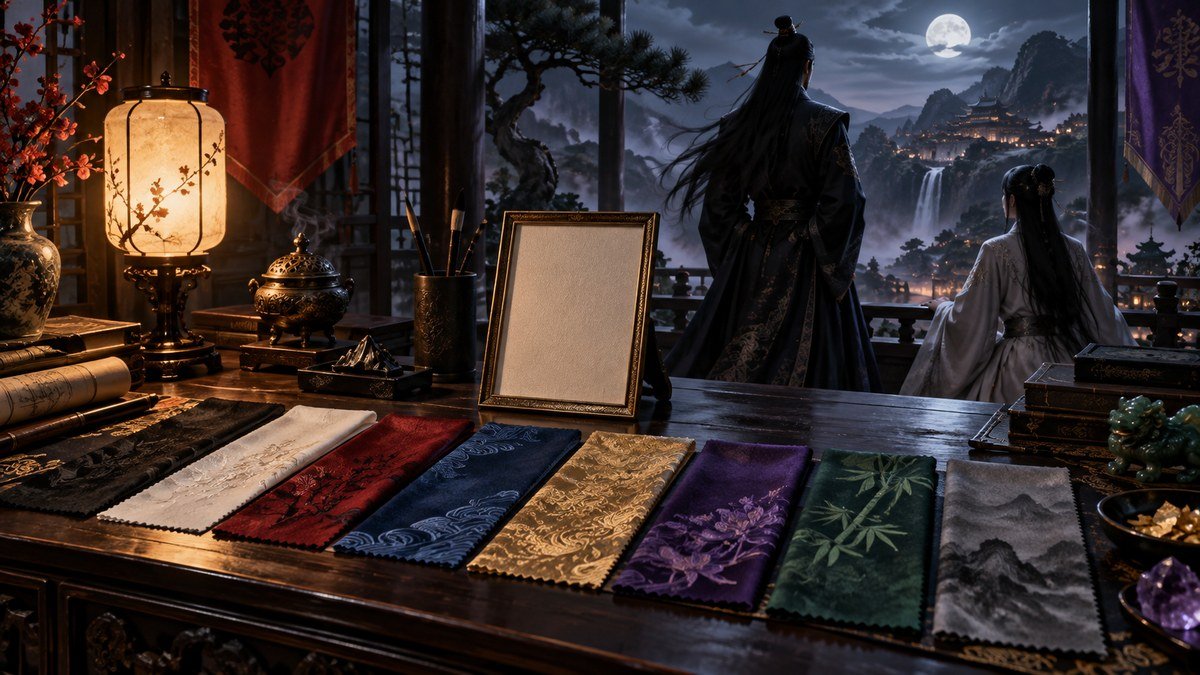
In The Untamed, clothing also lets viewers recognize affiliation and personality at a glance. Repeated palettes help a large cast remain visually organized while creating expectations about discipline, status, home, and danger. Once those expectations exist, the drama can confirm or complicate them.
The Untamed color symbolism begins with that relationship between repetition and change. A familiar white robe may feel distant in one setting and protective in another. The material has not become a different color; the surrounding story has changed what the viewer brings to it.
A palette is not a fixed dictionary
It is tempting to translate every color into one noun: white equals purity, black equals evil, red equals love. The drama becomes less interesting when read that way. Color is relational. Black appears darker beside white, gold becomes more imposing in formal spaces, and purple carries different weight when associated with home rather than confrontation.
A responsible interpretation starts with description. Identify the dominant colors, their placement, and the person or object carrying them. Then ask how the scene’s action affects the impression. Only after that should we propose a meaning.
Untamed Costume Design: 7 Hidden Details offers a costume-focused companion. Costume is one source of color, but fabric, makeup, props, architecture, and post-production grading all contribute to the final image.
Costume, set, and lighting work together
The same garment can look different under moonlight, candlelight, mist, or strong daylight. A pale robe may absorb cool blue tones at night and warmer cream tones indoors. That variation belongs to cinematography as much as costume design.
Set colors matter too. Cloud Recesses surrounds disciplined clothing with pale stone, blue accents, and ordered space. Lotus Pier places purple within water, wood, and warmer memories. The Burial Mounds mute the world, allowing small areas of warmth or green life to attract attention.
Fans can therefore ask three questions during a rewatch: what color belongs to the costume, what color comes from the location, and what color comes from light? Separating those layers prevents overconfident claims while revealing how carefully the final emotional atmosphere is built.
Meanings 1–2 — White and black resist simple morality
Meaning 1: White suggests discipline, distance, and clarity
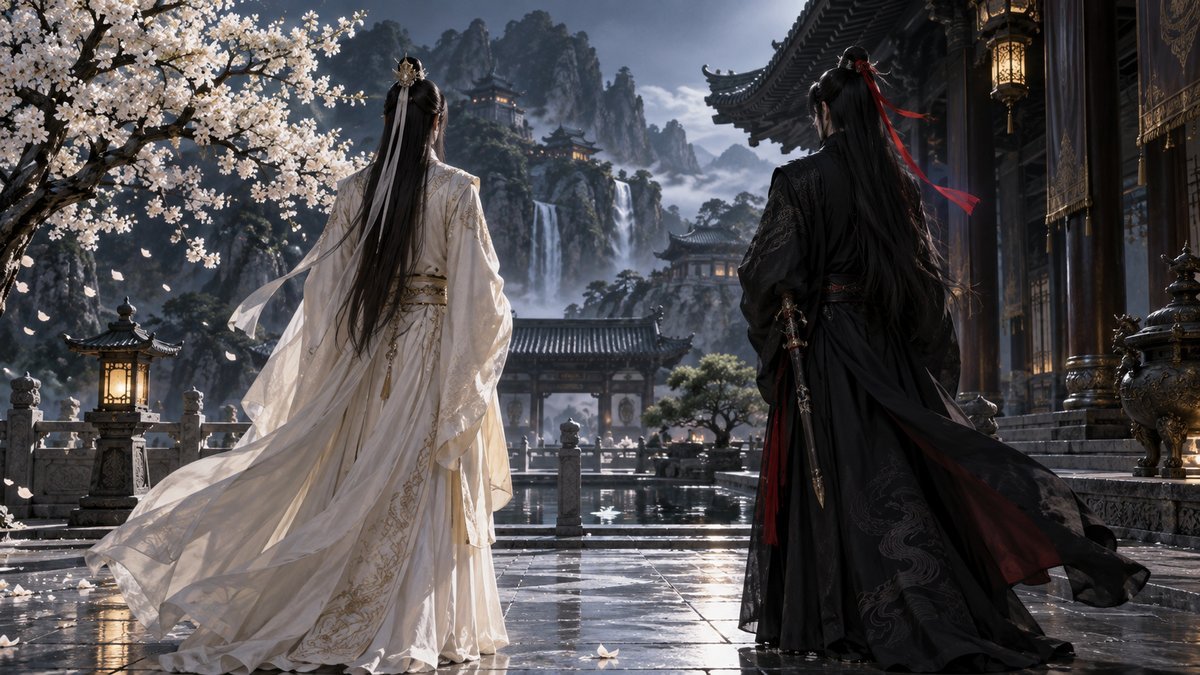
Lan clothing makes white and pale blue immediately recognizable. The palette supports order, restraint, and an ideal of clarity. Against quiet architecture, those colors can make Lan Wangji appear composed even when his emotions are difficult to read.
Yet white is not emotionally empty. In close or softer scenes, it can feel gentle, protective, and unexpectedly warm. The shift shows why symbolism depends on situation. Discipline may create distance from strangers while becoming steadiness for someone trusted.
Lan Wangji Character Analysis: 10 Powerful Traits provides context for the behavior that gives the palette meaning. Color alone does not prove what he feels; posture, choice, and relationship complete the picture.
Meaning 2: Black carries freedom, danger, and misjudgment
Wei Wuxian’s darker appearance is one of the drama’s most memorable visual transformations. Black can signal separation from conventional structures and make his silhouette feel freer, sharper, or more dangerous. It also reflects the way others choose to see him.
That last point matters. The story repeatedly questions public judgment, so black should not be reduced to moral corruption. A dark costume may express burden, defiance, grief, and independence at once. Viewers who accept the world’s simple verdict miss the character’s continuing compassion.
Wei Wuxian Character Study: 7 Traits of Mo Dao Zu Shi’s Hero helps separate visible reputation from demonstrated character. His palette becomes emotionally powerful because the image invites suspicion while the story asks us to keep looking.
Contrast makes WangXian visible in one frame
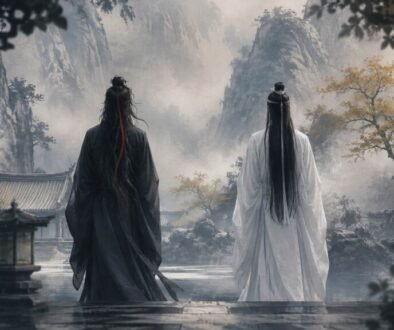
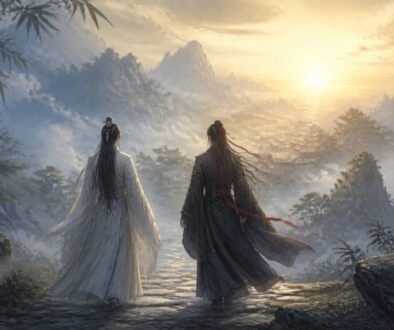
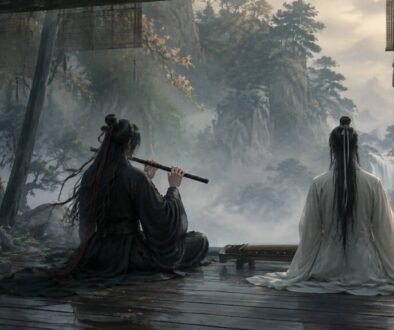
When black and white share a frame, the pair becomes visually distinct even at a distance. Their contrast gives the eye an immediate relationship to follow. One figure may move while the other remains still; dark fabric may absorb the background while pale fabric catches light.
A common fan reading sees this contrast as complementary rather than oppositional. That interpretation is persuasive when supported by their actions, but the colors do not settle the relationship on their own. Framing and performance make contrast emotional.
WangXian Relationship Analysis: From Conflict to Devotion traces how the bond changes. The Untamed color symbolism gives that development a memorable surface: two apparently opposite palettes gradually feel less like a division and more like a shared composition.
Meanings 3–4 — Red and blue make emotion legible
Meaning 3: Red keeps vitality inside darkness
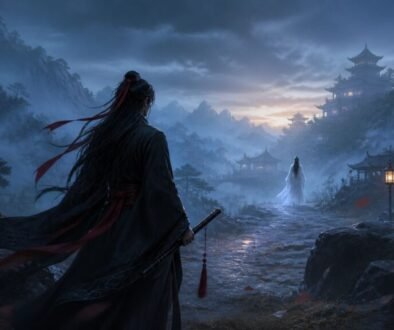
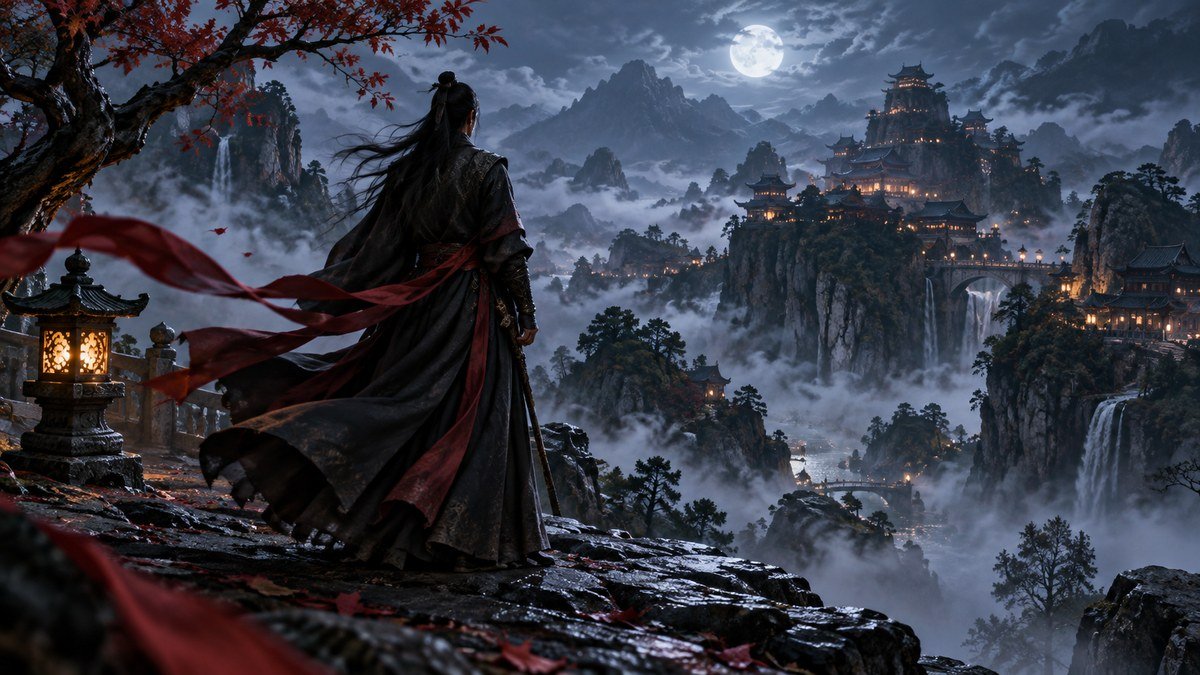
Wei Wuxian’s red ribbon creates a narrow line of warmth against black clothing. Because the accent is small, movement makes it noticeable. It can feel energetic, unruly, alive, and connected to the brightness of a personality that darker circumstances have not completely erased.
Red also carries danger and emotional heat in many contexts, so the ribbon need not represent only joy. Its strength comes from holding several possibilities together. It can recall vitality while suggesting how exposed that vitality has become.
The placement near his hair and face helps the accent travel with expression and motion. Even when a wider frame reduces the figure, red can guide the eye back toward him. The meaning is therefore emotional and compositional.
Meaning 4: Blue turns quiet into atmosphere
Blue and blue-gray tones frequently support night, mist, distance, and restraint. Around Lan Wangji, cool color can deepen the impression of quiet control. In landscapes, it can make people appear small within a larger, emotionally uncertain world.
Coolness does not always mean coldness. A blue night may create privacy, allowing a conversation or shared silence to feel sheltered from public view. The same tone can move from isolation to intimacy depending on who occupies the space.
The Untamed cinematography: How Images Make Us Feel explains how framing and light affect these impressions. Color becomes meaningful through the whole image, not through hue alone.
Warm and cool tones shape emotional distance
Warm and cool colors can separate locations, time periods, or emotional states. A warm face against a cool background may pull the viewer closer; two figures held within the same cool mist may feel connected by a shared environment.
During a rewatch, notice transitions rather than isolated screenshots. Does a scene move toward warmth as characters become less guarded? Does cool light preserve uncertainty even when they stand near each other? Such questions produce stronger interpretations than declaring blue “sad” or red “love.”
The Untamed color symbolism works through degrees. A muted red accent inside a blue frame can suggest life persisting within restraint. Warmth need not dominate the picture to change how it feels.
Meanings 5–6 — Gold and purple express power differently
Meaning 5: Gold can signal status and pressure
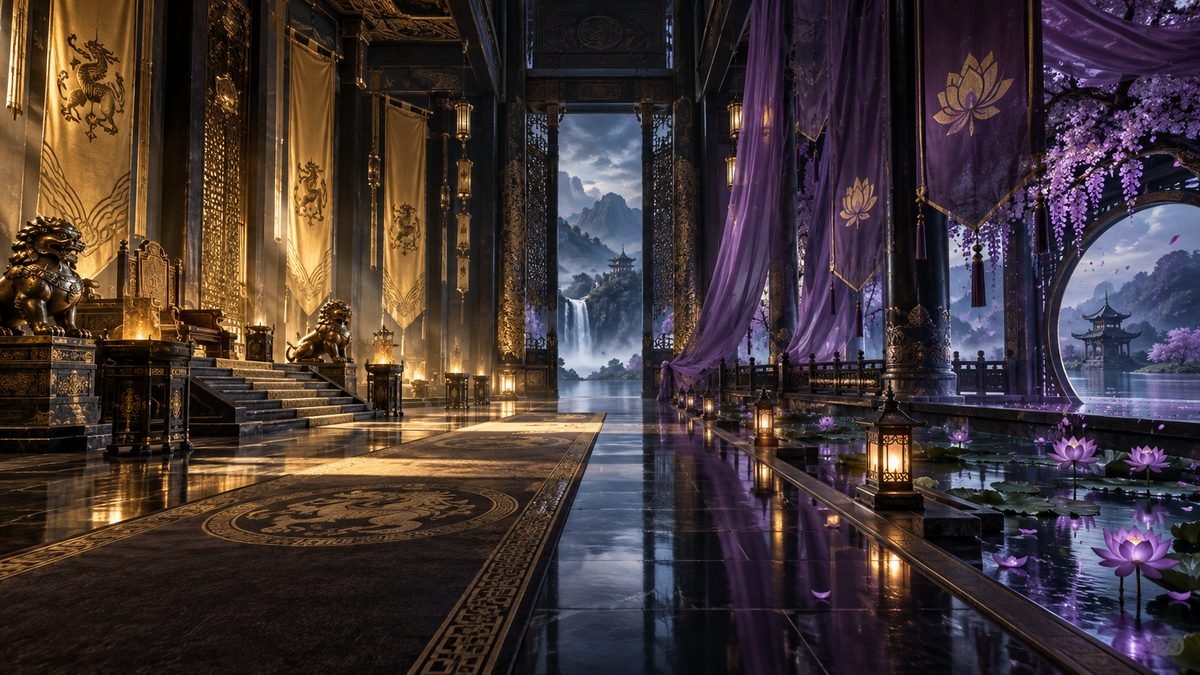
Gold attracts attention and carries visual weight. In formal clothing, architecture, or decoration, it can suggest wealth, authority, ambition, and public display. Its brightness can make power appear impressive before the story asks what that power demands.
Context may turn gold from celebration into pressure. Repeated ornament can make a person seem surrounded by expectation or institution. A polished environment may be beautiful while remaining emotionally unsafe.
This double effect suits a story concerned with reputation. Status can protect, but it can also trap characters inside roles. Gold shines; the viewer must still ask who benefits from that shine and who becomes smaller beneath it.
Meaning 6: Purple binds pride to home
Yunmeng Jiang purple is strongly tied to Lotus Pier and the family relationships centered there. It can feel vivid, proud, and emotionally direct. Because viewers associate it with home, later appearances may carry memory as well as clan identity.
Purple does not erase conflict within that home. Love, rivalry, duty, resentment, and protection coexist. The palette becomes moving because it holds the complete family history rather than an idealized version of it.
For Jiang Cheng especially, purple can suggest both inherited responsibility and fierce attachment. The color remains stable while his relationship to home grows more painful. That continuity lets costume carry emotional memory without dialogue.
Clan palettes turn politics into visual memory
Distinct clan colors help viewers read alliances and power structures quickly. A gathering becomes a map of affiliations. When one person stands among another clan’s colors, belonging or isolation can become visible before anyone states it.
The Untamed Clans Explained: Rivalries, Loyalty, and Tragedy offers broader context for those relationships. Palette and politics reinforce each other, yet individual characters still complicate what their clothing appears to promise.
That tension is central to The Untamed color symbolism. Uniformity shows the force of institutions; personal accents, changing clothes, and unexpected pairings show people negotiating those forces. Color organizes the world, then reveals who fits comfortably inside it.
Meanings 7–8 — Green and gray complicate the world
Meaning 7: Green makes survival visible
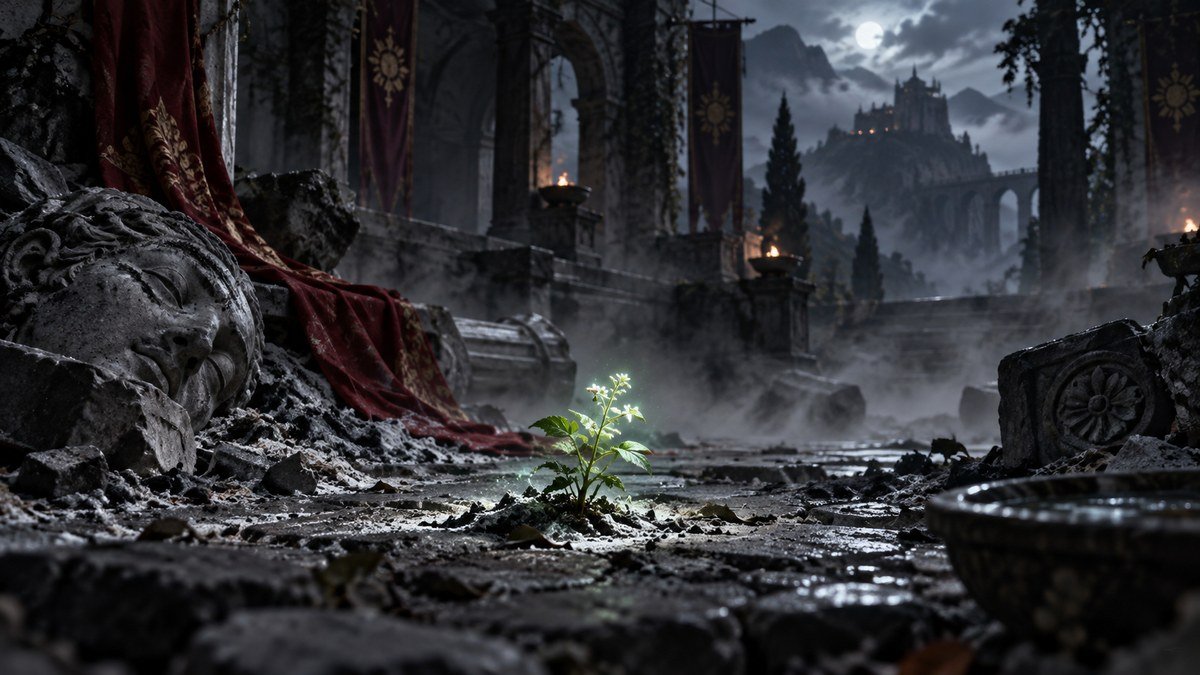
Green naturally appears in forests, medicinal spaces, gardens, and signs of cultivation. Within darker settings, living color can suggest endurance and renewal. A plant or landscape does not solve human danger, but it reminds viewers that the world continues to grow.
When green surrounds healers, caretakers, or quieter routines, it may feel restorative. That association should remain grounded in what the scene shows. Green can also appear strange, shadowed, or threatening under different light.
Its most useful meaning is possibility. After images dominated by ash, stone, or darkness, green gives the eye somewhere alive to rest.
Meaning 8: Gray creates a world between verdicts
Gray is the color of mist, weathered surfaces, ash, and reduced saturation. It can communicate grief or exhaustion, but it also creates moral uncertainty. Characters occupy a world where simple labels repeatedly fail.
A gray setting may withhold comfort and danger at the same time. Shapes become less distinct, distances harder to judge. That visual uncertainty echoes a narrative in which rumor often obscures truth.
The Untamed Character Analysis: 12 Hidden Insights examines this complexity through character rather than a fixed moral palette.
Muted color protects emotional complexity
Highly saturated color demands attention. Muted palettes allow small changes to matter: the warmth of skin, a red ribbon, a pale sleeve, or one green plant. Restraint makes the viewer look more carefully.
Gray-blue environments also prevent tragedy from becoming visually sensational. Emotion can remain heavy without becoming garish. The characters appear to carry history within the texture of the world.
The Untamed color symbolism gains maturity from these quieter tones. Not every feeling needs a bright announcement. Uncertainty, regret, patience, and loyalty often live between obvious extremes, and muted color gives them room.
Meanings 9–10 — Light and color change with memory
Meaning 9: Warm light creates temporary shelter
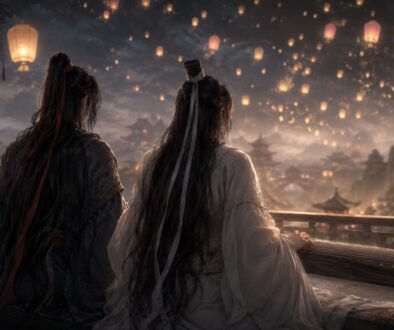
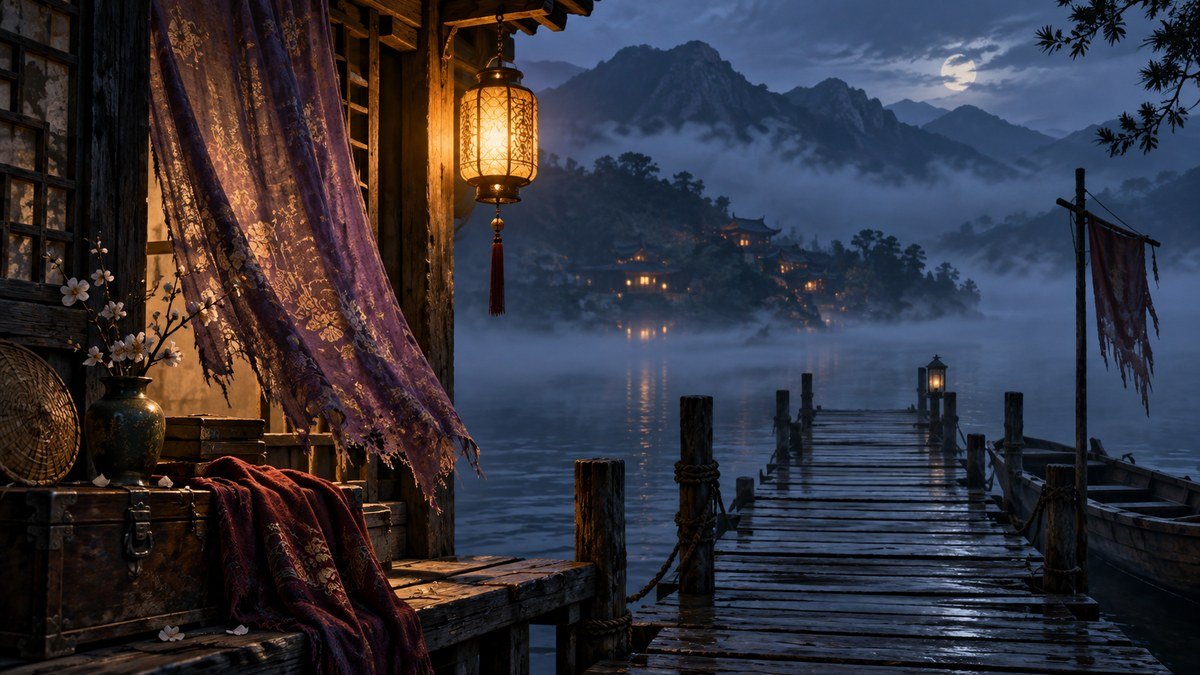
Lanterns and candlelight create islands of gold within dark or cool surroundings. Warm light can make a meal, conversation, or shared interior feel protected. Its boundaries are visible, so the safety often seems temporary rather than guaranteed.
That fragility increases the comfort. Characters do not need the entire world to become safe; they need one table, one room, or one moment where attention is kind. Warmth becomes a local achievement.
Fans may remember these scenes through feeling before detail. The glow gathers faces and objects into a shared space, allowing relationships to appear closer than the wider story permits.
Meaning 10: Faded color turns a place into memory
Locations change emotionally when their colors become softer, colder, darker, or less saturated. A place once associated with youth can later feel like memory even if its architecture remains recognizable.
This effect does not require a literal flashback. Viewers carry the earlier palette with them. Returning to Lotus Pier, Cloud Recesses, or another familiar landscape becomes a comparison between what the place was and what the characters now know.
The Untamed Emotional Aftermath: Why It Lingers explores that persistence. Color is one reason the past feels present: the eye notices absence through changed atmosphere.
Repetition lets color gather new meaning
A color rarely reaches its fullest emotional effect the first time. Repetition builds association. White becomes connected not only with discipline but with chosen protection; black carries not only danger but resilience; purple accumulates home, pride, and grief.
The viewer changes too. On a first watch, a palette may simply identify a clan. Later, the same colors recall relationships and consequences. Meaning grows through memory.
That growth keeps interpretation open. A repeated color can support a pattern without proving a single production intention. The strongest reading explains what appears, where it returns, and why the changed context matters.
Rewatching color without forcing a symbol
Start with one visible color relationship
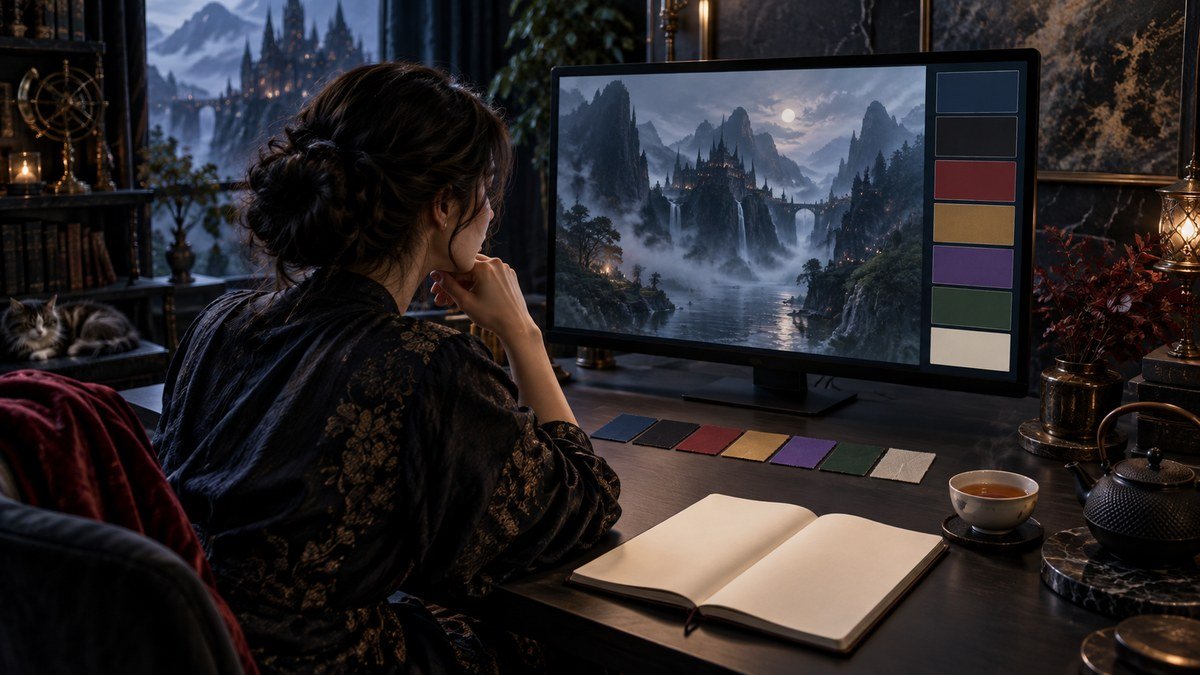
Choose a short scene and identify two dominant colors. Note where they appear and which part of the frame attracts you first. Avoid naming an emotion until you have described the image.
Then ask what the characters are doing. A pale costume beside dark clothing means little by itself; posture, distance, and action turn contrast into relationship. This method keeps interpretation connected to evidence.
The Untamed Hidden Details: 10 Secrets You Missed can encourage closer viewing, but no detail needs to become a secret message. Sometimes color clarifies mood or composition without representing a hidden fact.
Compare scenes that share a palette
Find another moment with similar colors and compare the context. Does white feel formal in one scene and gentle in another? Does warm light create celebration, privacy, or painful nostalgia?
Differences are as valuable as similarities. They show that visual storytelling adapts rather than repeats mechanically. Keep screenshots or brief notes if that makes comparison easier.
Readers who enjoy a physical viewing ritual can browse the optional Boxiao Store for themed clothing or use any notebook already at hand. Observation, not ownership, is what deepens the rewatch.
Separate evidence from a fan reading
A clear discussion can use two sentences: “The frame places the red ribbon against a muted blue background. To me, that contrast keeps Wei Wuxian’s vitality visible inside a restrained world.” The first sentence describes; the second interprets.
This structure welcomes disagreement. Another fan can see the same image and emphasize danger, loneliness, or visual focus. Neither response needs to become official canon.
The Untamed color symbolism remains compelling because it supports conversation. Careful language protects both factual accuracy and emotional freedom. Look first, connect patterns second, and let the interpretation stay proportionate to the evidence.
Frequently Asked Questions
What colors symbolize Wei Wuxian and Lan Wangji?
Wei Wuxian is strongly associated with black and red, while Lan Wangji is associated with white and pale blue. These palettes create immediate contrast, but their meanings change with context. Black can hold resilience and misjudgment; white can express discipline, distance, or protection.
Does black mean evil in The Untamed?
No. Dark clothing can signal danger or separation from convention, but the story repeatedly challenges simple moral labels. Wei Wuxian’s actions and relationships complicate the judgments attached to his appearance.
Why do the major clans have distinct colors?
Distinct palettes help viewers identify affiliation and make the political world visually readable. They also build emotional associations with particular homes, values, and histories. Individual characters may reinforce or challenge what their clan colors seem to promise.
What does Wei Wuxian’s red ribbon represent?
A common fan interpretation connects the red ribbon with vitality, freedom, warmth, and emotional intensity. Its movement and contrast against black also guide the viewer’s eye. The drama does not require one fixed definition.
Can lighting change the meaning of a costume color?
Yes. Cool moonlight, warm lantern light, shadow, mist, and color grading can make the same fabric feel distant, gentle, severe, or nostalgic. Analyze the finished frame rather than treating the costume color as an isolated fact.
Is every repeated color an intentional symbol?
Not necessarily. Repetition may come from clan design, location continuity, practical costume choices, or visual composition. A convincing symbolic reading identifies a pattern and explains its context without claiming undocumented intent.
Conclusion — Color Keeps Emotion in the Frame
Ten meanings, no rigid code
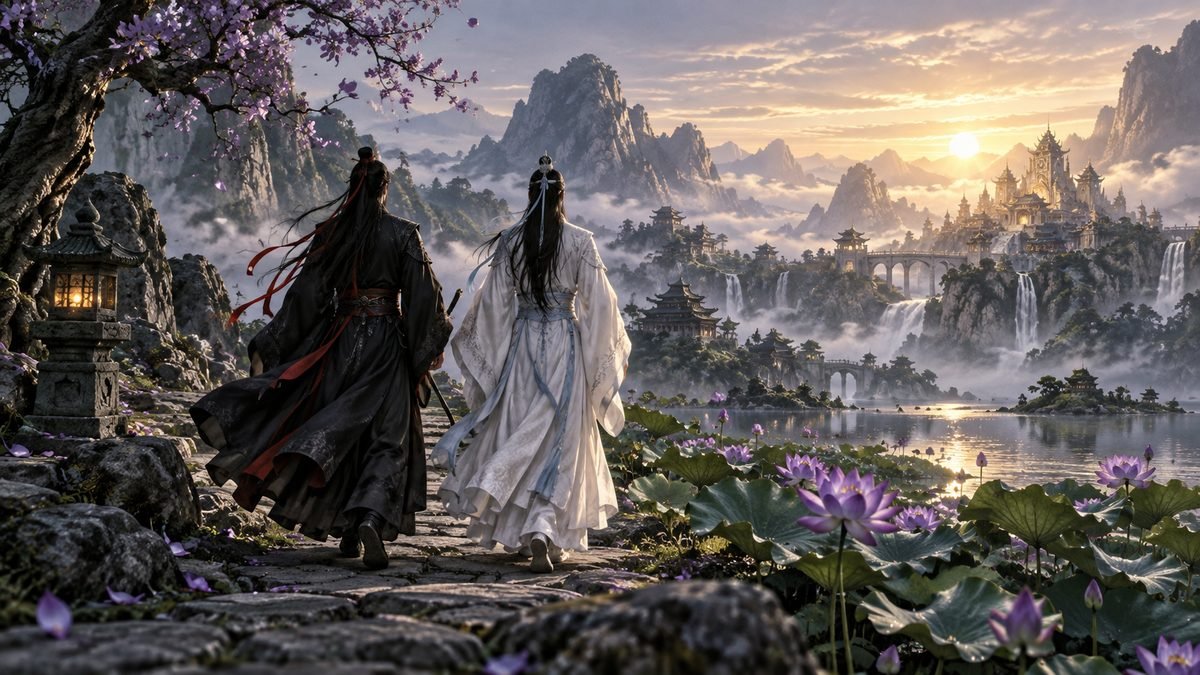
These ten meanings reveal a visual language built from relationships. White and black resist simple morality. Red keeps vitality visible, while blue gives quiet an atmosphere. Gold and purple express different forms of power and belonging. Green suggests survival, gray protects uncertainty, warm light creates shelter, and faded color turns place into memory.
None works alone. Costume meets set, light, movement, performance, and the viewer’s knowledge of the story. The Untamed color symbolism is powerful because those elements can change one another.
Looking carefully keeps the story alive
A thoughtful rewatch does not require film training. Begin with what you see, compare repeated contexts, and state clearly when you move from observation to interpretation. That care makes fandom discussion more inviting.
If you would like to support more reflective features, Ko-fi offers an optional way to help. Otherwise, looking again is enough. Which color detail in The Untamed returns to your memory first, and what does it mean to you now?
Fan-Favorite Collectibles & Gifts