The Untamed cinematography: How Images Make Us Feel
The Untamed cinematography starts with attention
A close-up makes a reaction the event
Think about what draws you toward Lan Wangji when he says very little. His restraint gives the viewer relatively small changes to follow. A face can occupy your attention without explaining itself. The pleasure comes from noticing that a response exists before deciding exactly what it means. You may read concern, hesitation, or recognition; another viewer may give the same expression a different emphasis.
In The Untamed cinematography, the useful question is not simply whether a face looks beautiful. Ask what becomes available when you can study it. A closer view can make the listener as compelling as the speaker. Wei Wuxian’s expressiveness and Lan Wangji’s reserve also create different demands on your attention: one invites you to follow changes, while the other invites you to wait for them.
That difference is a starting point for interpretation, not evidence of an invisible thought. Describe the visible expression first. Then consider the surrounding exchange. Our The Untamed Iconic Scenes: 15 Moments That Give Chills offers a broader scene-centered companion when you want to connect an image with its narrative context.
Wide frames change the scale of loneliness
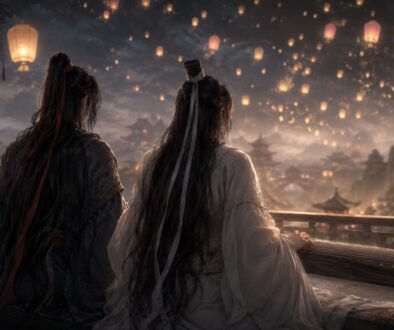
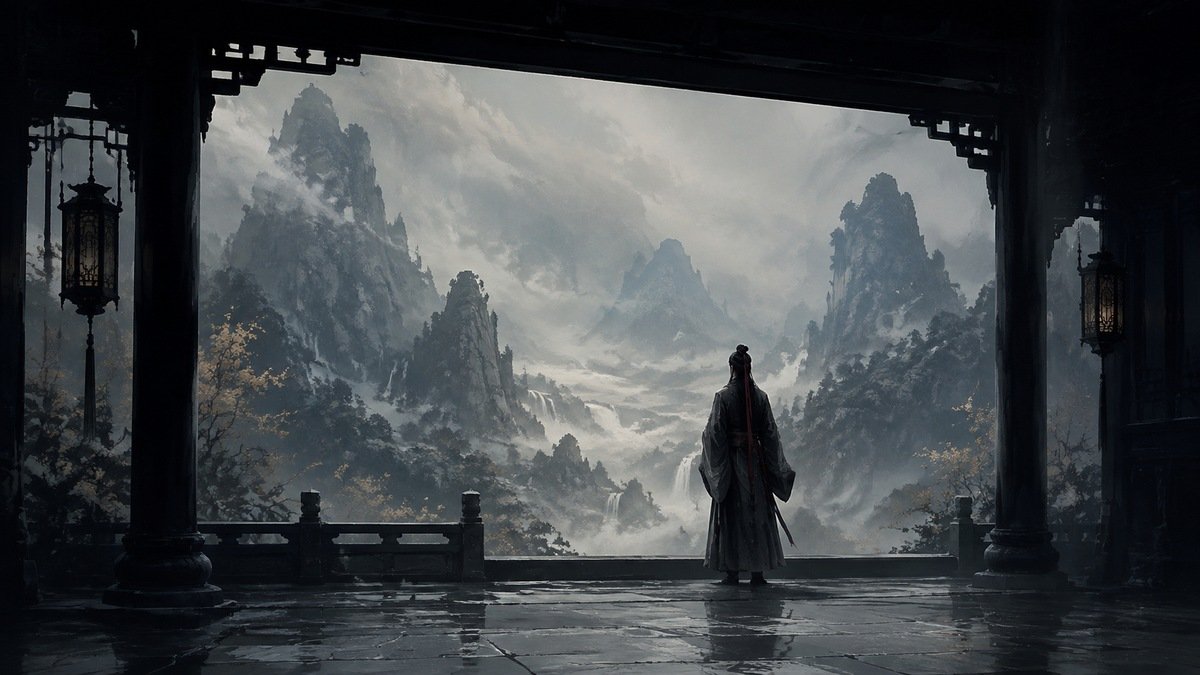
Move your attention outward and a different kind of feeling becomes possible. A wide view lets a character share attention with a courtyard, a stretch of landscape, or the surrounding people. You can consider a person in relation to the world instead of reading a face alone. That shift matters in a story where private loyalties and public expectations do not always fit together.
Size within the frame is only one part of the experience. Notice whether the surrounding space feels open, crowded, orderly, or difficult to cross. A small figure in open space might suggest loneliness to you, but it might also suggest freedom. The image does not supply a universal answer. The character’s situation helps you decide which possibility feels convincing.
Try keeping those alternatives alive for a moment. If you already know that a scene is sad, you may interpret every stretch of empty space as loss. Looking before labeling allows more texture. A beautiful environment can feel welcoming and emotionally remote at once, which is often more interesting than assigning it a single mood.
Foreground details shape what we notice
The center of the image is an easy place to begin, but it need not be the only place that matters. A sleeve, an object, or part of the setting may draw your eye before you fully register a face. Ask how that first point of attention influences what comes next. Does it make the character feel accessible, partly hidden, or connected to something else?
This is a useful way to explore The Untamed cinematography without guessing the equipment behind it. You can describe where something appears and how clearly you see it. You cannot reliably identify a lens, lighting setup, or production decision from an emotional impression alone. Careful description gives your interpretation firmer ground than technical-sounding certainty would.
For a wider collection of visual associations, The Untamed Hidden Details: 10 Secrets You Missed provides an internal starting point. Bring the same curiosity to every proposed detail: look for the surrounding image rather than treating a cropped object as a complete argument. What was outside the crop may change your reading.
Description comes before interpretation
A simple two-step habit can make a rewatch more rewarding. First say what is visible: two figures share the image; one looks toward the other; the space between them remains clear. Then say what you make of it. Perhaps the distance feels cautious. Perhaps their shared attention feels more important than their physical separation. Both statements remain open to the scene.
Keeping those steps separate does not drain the emotion away. It helps you explain the emotion instead of hiding it behind a confident label. You can love a romantic reading while recognizing that the image gives you room to participate. You can also change your mind after noticing a reaction you overlooked.
That flexibility is especially valuable with a familiar story. Memory can replace observation so smoothly that we stop seeing what is actually there. Let the next rewatch interrupt that habit. The frame may support your favorite reading, complicate it, or suggest another feeling altogether. Once attention becomes a practice, the space between Wei Wuxian and Lan Wangji offers even more to explore.
WangXian framing turns distance into a question
Sharing a frame does not settle a relationship
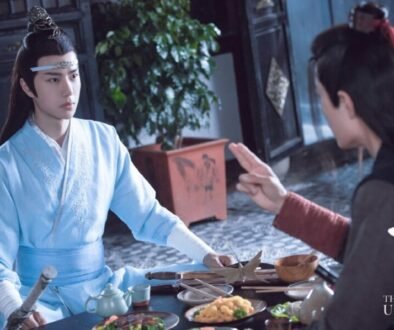
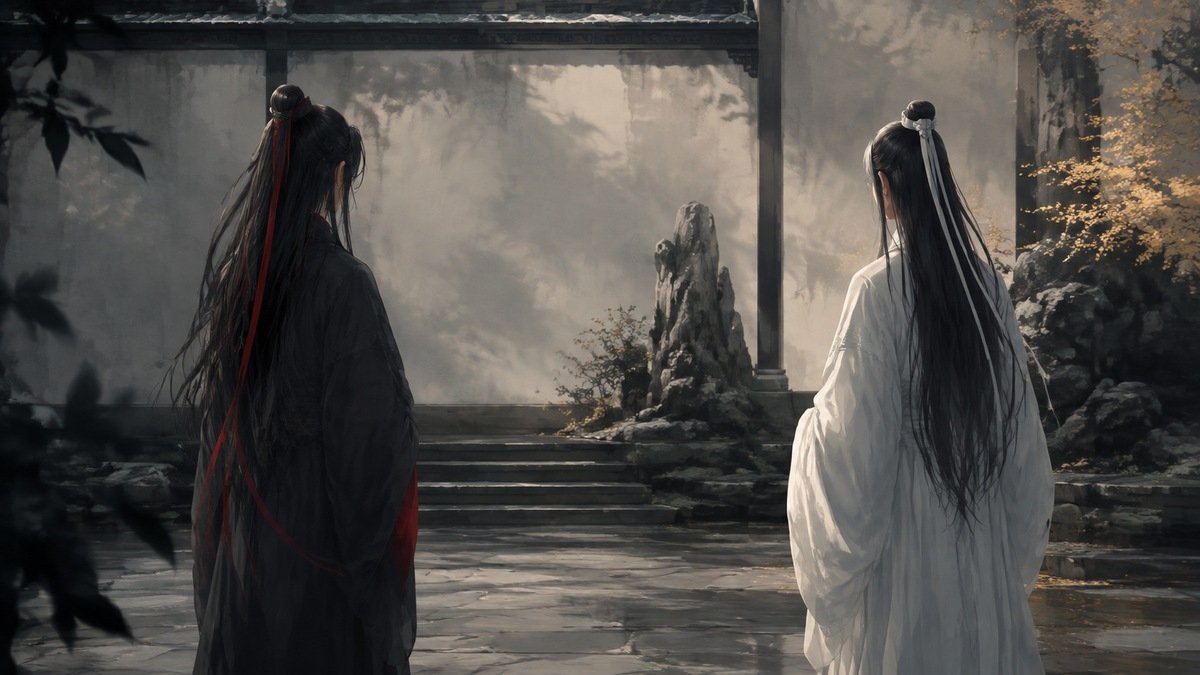
There is an immediate pleasure in seeing Wei Wuxian and Lan Wangji together. Their contrasting appearances make them easy to recognize as a pair, but sharing an image is only the beginning of the visual conversation. You still have to consider what connects them within it. They may attend to each other, respond to the same problem, or seem absorbed in different concerns.
This makes WangXian framing a richer subject than a collection of attractive screenshots. The relationship between the figures can feel settled in one image and uncertain in another, even when the physical distance looks similar. Context changes the emotional weight of togetherness. Being beside someone does not automatically mean feeling understood by them.
The Untamed cinematography gives viewers a way to examine those possibilities. A useful companion is WangXian Relationship Analysis: From Conflict to Devotion, which approaches the bond through character development. Here, keep the emphasis on the visible arrangement: how does the image allow closeness, hesitation, or shared purpose to register before you summarize the relationship?
Where bodies face can complicate closeness
Faces attract attention, yet posture can give you a different part of an exchange. Consider the direction of a character’s body, the turn of a head, or whether attention appears divided. These details are worth noticing because physical nearness and emotional availability are not interchangeable. A person can stand close while remaining difficult to reach.
With Wei Wuxian and Lan Wangji, their contrasting ways of presenting themselves invite this kind of observation. Expressiveness does not always equal openness, and composure does not always equal indifference. Try resisting those quick substitutions. Look instead at how the visible behavior fits the immediate situation, including what each character knows and what remains unsaid between them.
You do not have to turn posture into a diagnostic system. A shoulder angle cannot settle a character’s private feelings, and a single still image leaves out the movement around it. The value lies in noticing an additional layer. When you return to the whole exchange, a small change in orientation may feel tender, guarded, practical, or ambiguous rather than carrying one fixed meaning.
The listener deserves a second look
On a first viewing, following dialogue and plot can absorb almost everything. A later visit offers the freedom to watch the person receiving the words. That change in attention can alter the emotional center of an exchange. The speaker may seem confident while the listener introduces uncertainty; a playful remark may meet a response that feels more serious than expected.
Lan Wangji’s reserve makes this approach especially rewarding, provided we leave room for uncertainty. Looking closely is different from claiming access to an unspoken monologue. Instead of announcing exactly what he thinks, describe the reaction and explain why it affects your reading. Lan Wangji Character Analysis: 10 Powerful Traits offers character context without requiring every look to become a coded confession.
Wei Wuxian deserves the same patience. His visible energy can make it tempting to assume that everything important appears on the surface. A rewatch can ask what happens when that energy meets someone else’s attention. The interesting unit is often the exchange itself: expression, response, and the space in which each becomes meaningful to the other.
Let changing context challenge your reading
The most satisfying interpretation need not remain the same from beginning to end. Early uncertainty and later familiarity can make similar arrangements feel different. A shared frame may initially draw attention to contrast, then invite a reading of companionship once you understand more of the characters’ history. Your knowledge changes, even when the image remains exactly as it was.
This is one reason to approach The Untamed cinematography through comparison rather than proof. Choose two moments that you remember differently. Describe the visible similarities and differences before attaching a conclusion. If the comparison does not support a neat progression, keep that result. Emotional development rarely needs every image to fit one straight line.
It also helps to identify a romantic interpretation as your reading of the characters, rather than a claim about the actors’ private lives or an undocumented production intention. That distinction protects the pleasure of interpretation. You can be precise about the image and generous about what it evokes. The same generosity matters when we move from spatial relationships to the drama’s immediately recognizable contrasts of color and light.
Color and light complicate first impressions
Black and white are a contrast, not a verdict
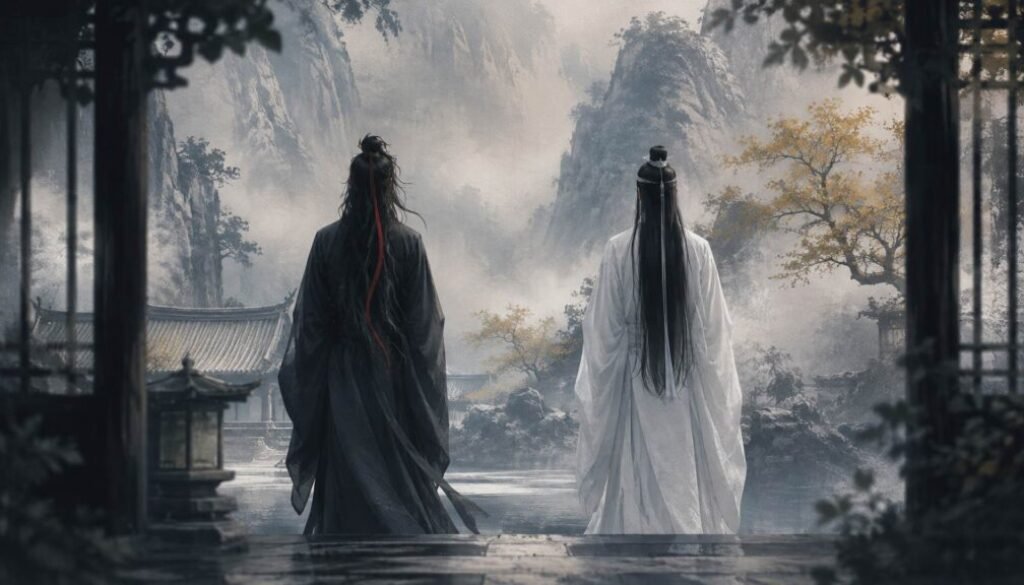
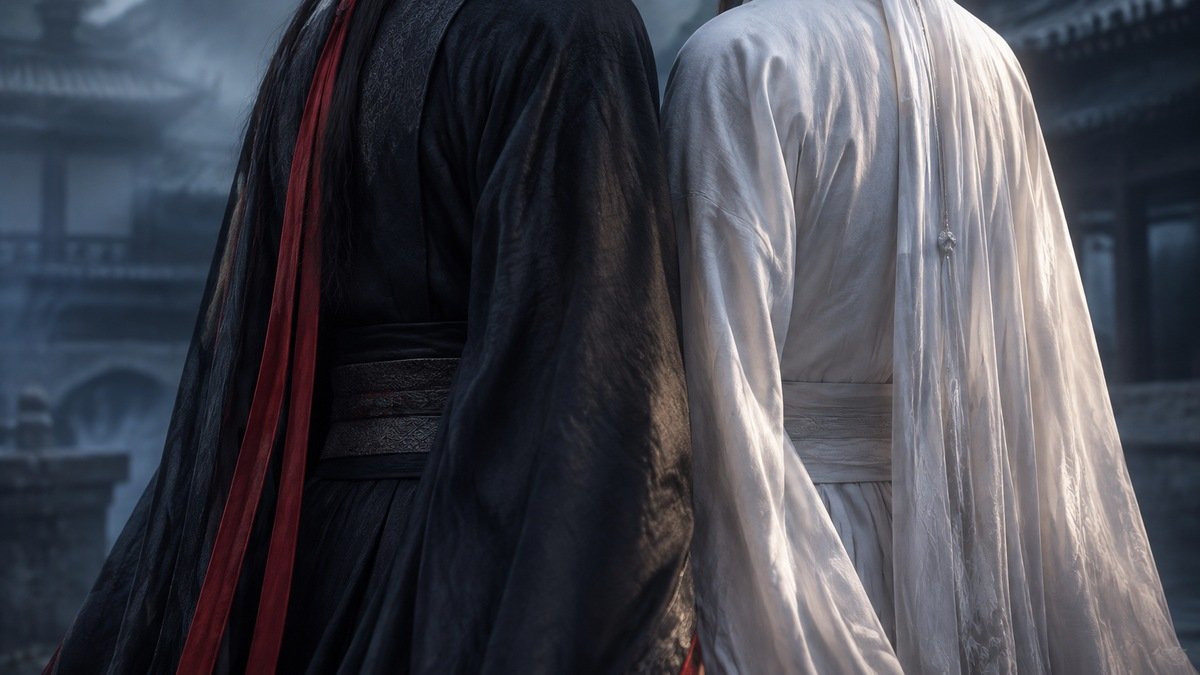
Wei Wuxian’s dark clothing and Lan Wangji’s pale clothing offer a striking visual contrast. It is tempting to turn that contrast into a moral shortcut. Yet the drama asks viewers to look beyond reputations and appearances, so a simple equation between darkness and wrongdoing would flatten the very characters we want to understand. Recognizability and moral judgment are different things.
Consider instead how the colors work together within an image. Their separation can make two figures easy to follow, while their shared presence can become visually memorable. Neither effect requires a claim that every costume choice has one official symbolic definition. A possible reading can remain persuasive because it fits the characters without pretending to be the only permitted reading.
For a costume-focused companion, explore Untamed Costume Design: 7 Hidden Details. The distinction matters here: clothing supplies part of the visual material, while The Untamed cinematography presents that material within an environment. What surrounds a pale robe or a dark sleeve can change how strongly it attracts your eye.
Softness can change how restraint feels
Light affects how you experience a face, fabric, and the space around them. Rather than naming equipment you cannot verify, begin with the visible result. Does an image feel gentle or stark? Can you see fine detail easily, or do shadow and brightness simplify what you notice? Those descriptions make the discussion accessible without reducing it to vague praise.
For a restrained character such as Lan Wangji, a softer-looking image may support a gentler reading of composure. That is an interpretation of the viewing experience, not a rule that soft light always means affection. Dialogue, posture, and context can push in another direction. A visually delicate moment may still contain tension that refuses to disappear.
The same caution makes Wei Wuxian’s images more interesting. A dark costume does not stop an expression from feeling warm, and a bright environment does not guarantee emotional safety. Look at the combinations. If the image seems comforting while the situation feels uncertain, let that contrast remain part of your response. The feeling may come from the mismatch, rather than from either element alone.
A location creates an emotional expectation
The world around the characters supplies more than scenery. Viewers come to associate places with rules, relationships, and earlier experiences. Returning to a familiar setting can therefore change how an image feels before anyone speaks. You bring a memory of what that space has meant, and the current scene may confirm or unsettle that expectation.
Cloud Recesses is a useful example of how setting and character knowledge interact. Its association with the Gusu Lan world gives a viewer context for reading order and restraint. That does not mean every image there expresses the same emotion. A setting associated with discipline can also become a place where curiosity, discomfort, or companionship registers more clearly against that expectation.
Our The Untamed Worldbuilding Explained: Why Fans Still Obsess explores the surrounding story world. When studying the images, keep the question smaller: what part of a familiar place do you notice now, and how does that alter your attention to the people within it? The answer may depend as much on your memory as on the visible environment.
Keep costume, lighting, and grading distinct
An attractive image often brings several kinds of work together. Costume determines what a character wears. Set and location choices provide the environment. Lighting affects how those things appear during filming, while color treatment can shape the finished image. Editing decides how an image relates to the ones around it. These contributions overlap in the viewing experience without becoming the same craft.
You can appreciate The Untamed cinematography without assigning every visual effect to a camera alone. Use modest, observable language when the production process is unknown. Saying that an image looks cool-toned is different from claiming knowledge of a particular color-grading method. Describing contrast is different from naming the light that created it.
This precision leaves more room for enjoyment, not less. You can discuss the effect of pale fabric against a darker background without inventing a technical explanation. You can admire the image while remaining unsure how the team achieved it. Once you begin separating the visible result from the unseen process, the drama’s objects offer another rewarding level of attention: things we recognize immediately, but do not always stop to examine.
Objects give visual memory something to hold
A flute is more than an identifying silhouette
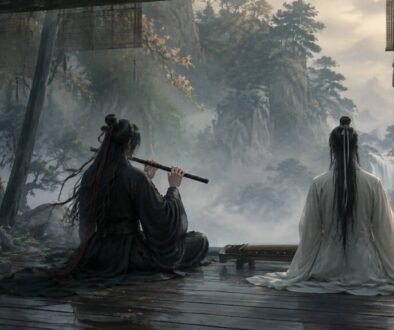
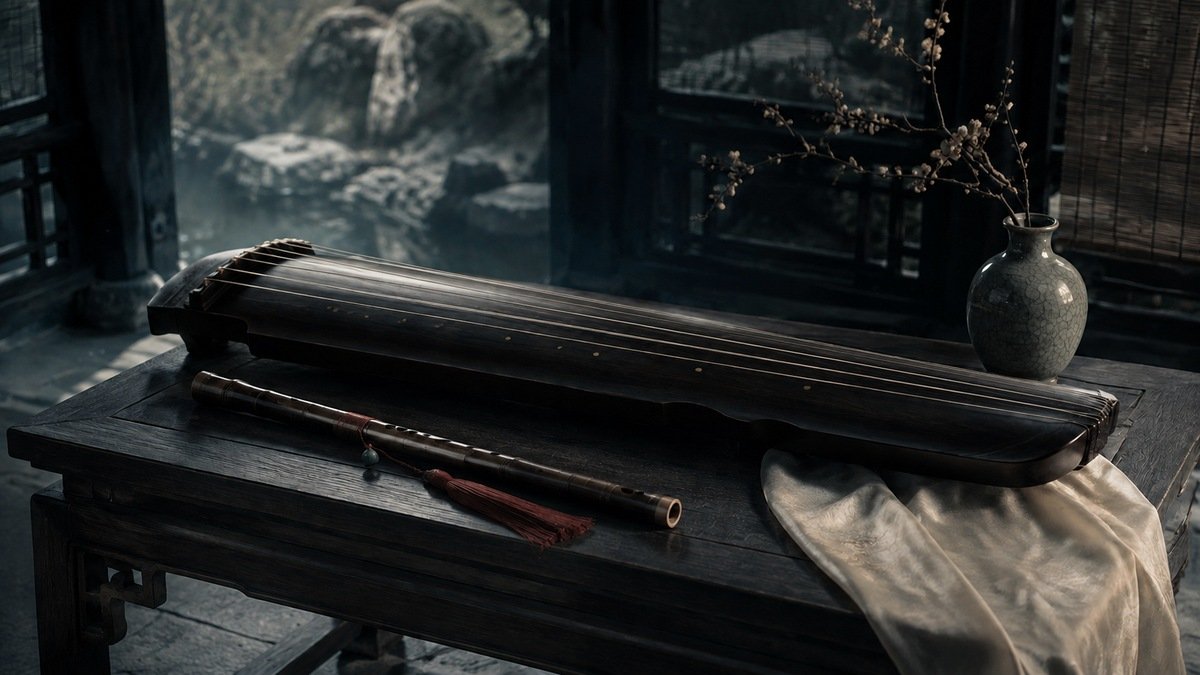
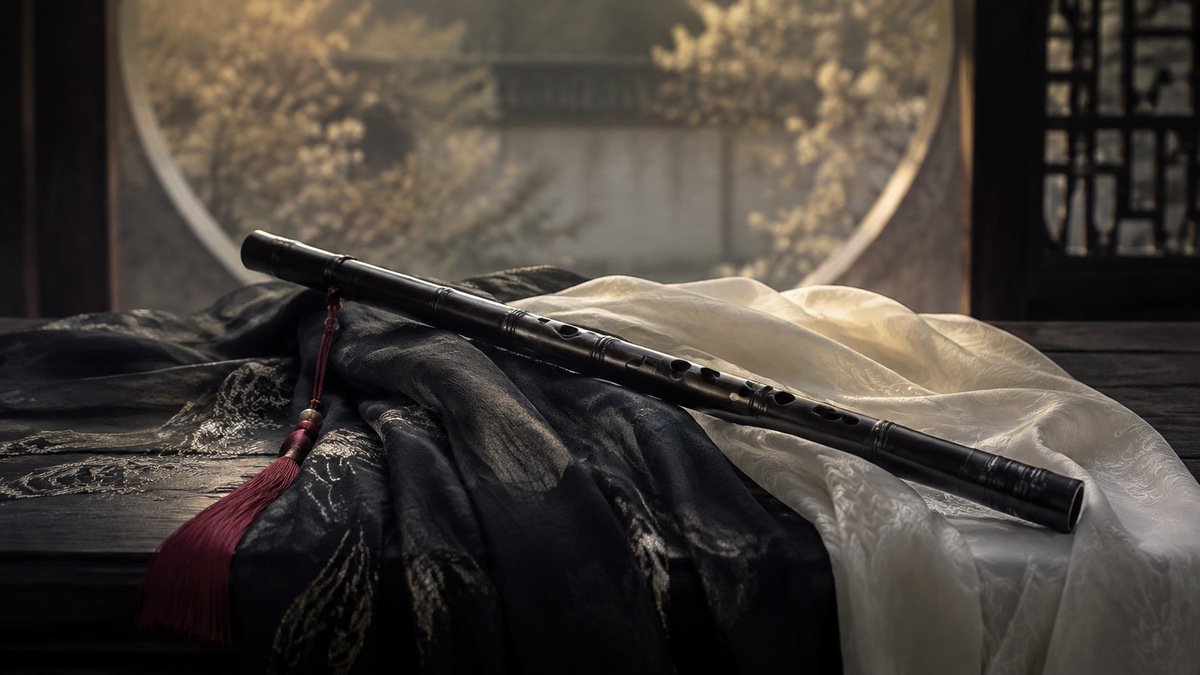
Wei Wuxian’s flute offers a clear point of recognition. An object associated with a character can bring that character to mind before a face appears in our memory. Yet recognition is only one part of its visual role. Consider how an object shares space with a body: whether it draws attention to a hand, extends a line, or interrupts the surrounding shapes.
The useful move is to stay with what the image makes available. You need not attach a new hidden meaning to every appearance of the flute. Sometimes familiarity itself carries the emotion. A viewer who already knows the character brings a history of feeling to an object that would seem ordinary or unexplained to someone else.
In The Untamed cinematography, props can help connect immediate attention with remembered experience. The Untamed Talismans and Artifacts: Hidden Meanings offers a wider object-centered discussion. This chapter asks a narrower question: how does seeing an object here, in this arrangement, affect the way you look at the person associated with it?
The guqin connects posture with attention
Lan Wangji’s association with the guqin invites a different visual emphasis. An instrument asks us to notice a relationship between an object and a body. Posture, hands, and the space needed to play can become part of our attention. The visible arrangement may encourage a reading of focus or restraint, but the surrounding scene still matters more than a symbolic label.
Music adds another layer, so it helps to separate what you see from what you hear before considering how they interact. An instrument in an image is not automatically the source of every sound on the soundtrack. Nor does a still image preserve the feeling produced by the full musical passage. Each gives you a different part of the experience.
For readers interested in that musical dimension, WangXian lyrics Meaning and Music Explained provides an internal companion. Here, avoid borrowing lyrics or turning an instrument into a translation of unspoken dialogue. The visual pleasure can be more open: someone attends carefully to an object, and the viewer attends carefully to them.
Small motifs carry different weights
Not every memorable object needs the scale of a weapon or an instrument. A small motif, such as a rabbit associated with the drama, can gather feeling through familiarity. The important distinction is between recognizing an association and claiming that the motif has an identical meaning whenever it appears. A recurring shape may invite tenderness in one context and recollection in another.
This helps explain the appeal of motif-inspired keepsakes. An object outside the story can become a personal reminder of how watching it felt. That is a viewer’s connection, not proof that a particular product reproduces an official prop or carries a confirmed symbolic message. The memory belongs to your experience of the drama.
If that kind of personal association appeals to you, you can browse clothing at the Boxiao Store. This article includes optional links to the Boxiao Store and Ko-fi to support this site. Choosing a keepsake remains entirely separate from interpreting a scene; there is no need to own anything for a visual memory to stay meaningful.
Meaning grows through context, not a codebook
The urge to decode is understandable. Once an object has moved you, finding a definitive explanation can feel like holding the feeling more securely. But a codebook approach often makes the image less interesting. It treats every recurrence as the same message and leaves little room for changes in situation, attention, or the viewer’s understanding.
Try describing the object’s role each time instead. Who is near it? What attracts your eye first? Does the surrounding exchange make you think about identity, memory, responsibility, or companionship? You can propose an answer without presenting it as a documented instruction from the creators. A careful interpretation explains its reasoning and leaves room for another one.
The Untamed cinematography becomes richer when objects remain part of a living scene. A flute, guqin, or small motif can anchor attention without containing the scene’s entire meaning. The next step is to let the image move again. A screenshot preserves an arrangement, but movement and duration can change what that arrangement allows us to feel.
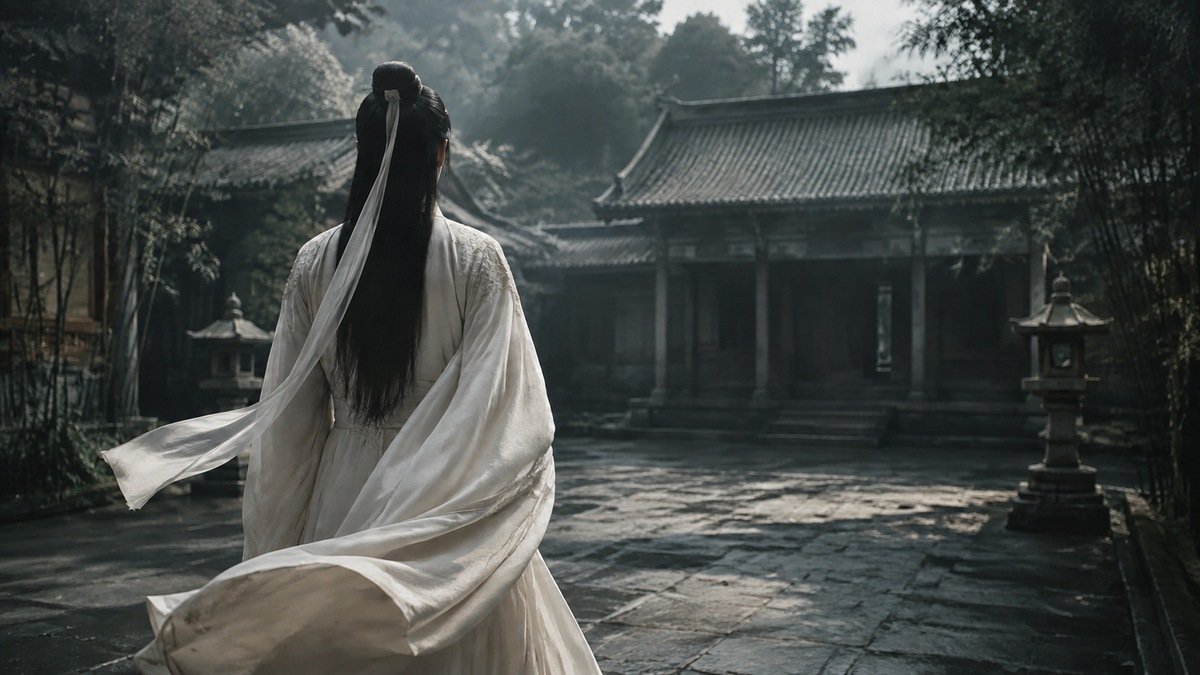
Stillness and movement change the emotional pace
A quiet body can make a small gesture matter
Lan Wangji’s restrained manner gives stillness a place in our attention. When a character offers relatively little outward movement, a small visible change can become noticeable. That does not mean every change reveals a secret. It means the viewer may become sensitive to differences that would attract less attention in a more outwardly animated performance.
Wei Wuxian’s expressiveness offers a useful comparison without turning either character into a fixed formula. Notice when energy continues, when it pauses, and how the other person responds. The pleasure lies in the variation. A lively character does not have to remain lively in every image, and a reserved character does not have to stay unreadable.
This is one way to approach The Untamed cinematography as an encounter with performance. The camera gives us a view, but the actor’s visible behavior supplies something to follow within it. Studying the arrangement and studying the performance can support each other. Neither requires a claim about an actor’s private feelings or an invented account of how a particular take developed.
Movement redirects the eye
When something moves, your attention may move with it. A person changes position, fabric shifts, or the camera changes the view. These are different events, even when they contribute to one fluid impression. Watching them separately can help you explain why an image suddenly feels more open, crowded, intimate, or uncertain.
Start with the simplest question: what actually changes? If the person moves but the surrounding view stays stable, describe that. If your view travels, notice what becomes newly visible and what leaves your attention. You do not need to identify the filming apparatus to discuss the effect. Observable movement is enough to begin a useful reading.
Resist calling all motion expressive of the same emotion. Movement may help us follow an action, reveal a response, or reorient us within a space. Sometimes its practical clarity is part of its appeal. The emotional reading becomes stronger when it grows from the scene’s needs rather than from a rule that every moving camera must mean urgency or every still view must mean peace.
A reaction gains meaning from what surrounds it
A face in isolation can support several readings. The images before and after it narrow or complicate those possibilities. That relationship belongs partly to editing: the arrangement of views over time. Cinematography and editing work together in the finished drama, but it helps to keep the distinction when explaining why a reaction feels important.
Fan edits make this especially easy to notice. A selected look can become the center of a new emotional sequence, supported by different music, cropping, or repetition. You can enjoy that creative interpretation while recognizing that it is not the complete original exchange. Returning to the scene lets you compare the edit’s emphasis with the drama’s broader context.
For a narrative companion, Character Growth Comparison: The Arcs Fans Still Debate offers another way to consider change across the story. When watching, keep the claim precise: this sequence makes a reaction feel significant to you. That is more defensible, and often more revealing, than claiming a single expression proves the character’s entire emotional history.
Sound changes the way an image lands
Try recalling a favorite image, then recalling the sound around it. The emotional memory may be difficult to separate. Music, voices, and pauses can guide the way a visible gesture lands, even though they are not themselves camera choices. A visual analysis becomes more useful when it acknowledges that partnership instead of crediting everything to the image.
The Untamed OST Analysis: 7 Songs Fans Still Love offers a music-centered companion. You can briefly mute a familiar passage to concentrate on visible attention, then restore the sound. The comparison is an exercise in noticing contributions, not a test of whether the scene should work without its soundtrack.
The Untamed cinematography belongs to that combined experience. A held view, a changing expression, and a musical phrase may affect you together. Understanding their different roles need not break the spell. It can make the spell easier to describe. With that distinction in mind, a rewatch can become more deliberate while remaining every bit as absorbing as the viewing that first drew you in.
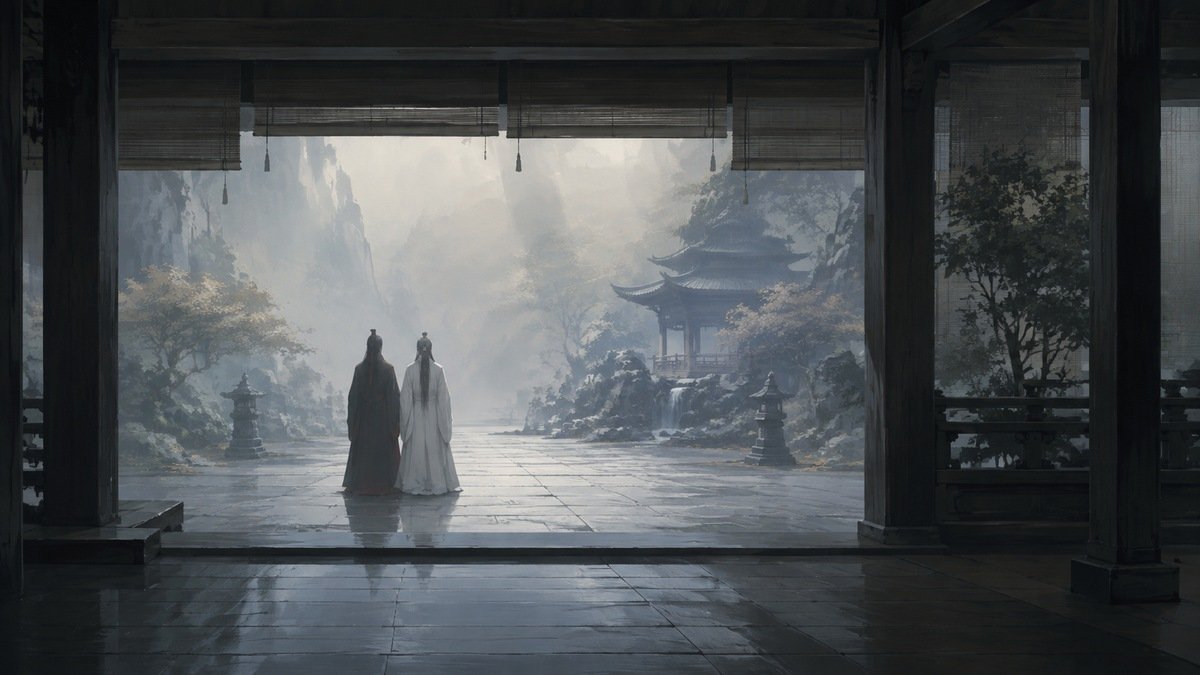
Rewatch The Untamed cinematography with fresh eyes
Begin with the whole frame
Choose a short exchange you already know well enough to follow without chasing the plot. Watch it once normally. On the next pass, notice where your eye goes first and what remains at the edge of your attention. Include the setting and the space between figures, rather than concentrating immediately on a favorite face or object.
Then describe the arrangement in ordinary language. You might notice that one figure occupies more of the image, that two people attend to the same thing, or that the surroundings attract your attention before the characters do. These are observations you can revisit. They give you a starting point that another viewer can understand even if they interpret the emotion differently.
The Untamed cinematography rewards this small change of pace because familiarity otherwise makes it easy to watch from memory. You already know what the moment means to you. Looking at the whole frame gives the scene a chance to offer something beyond that established feeling, including details that complicate an interpretation you have long enjoyed.
Compare moments without forcing a match
Select another exchange that feels related, then keep the comparison specific. You might compare how much of the environment is visible, whether the characters share a view, or how attention shifts between them. One clear point of comparison is more useful than a long list of possible symbols that cannot all be tested against the images.
A similarity is not automatically a confirmed visual callback. It may support that reading, but you still need to explain why the connection matters. Consider what differs as carefully as what repeats. If the emotional context changes while the arrangement remains similar, the comparison may reveal something about your understanding of the characters rather than prove an intentional production pattern.
Keep the adaptation boundary clear, too. The Untamed vs Novel: 9 Key Differences Fans Must Know offers an internal companion for that distinction. Details remembered from a novel, illustration, or another adaptation should not quietly become things you claim to have seen in the live-action frame. Compare them openly when relevant, with each source identified.
Separate observation from a WangXian interpretation
When sharing an observation, you can use a simple progression: describe the visible detail, state your interpretation, and acknowledge what remains uncertain. For example, explain that a shared view makes companionship feel prominent to you, then note that the surrounding dialogue or another viewer’s emphasis may suggest a different emotional balance. This invites discussion instead of demanding agreement.
Such care does not require emotional distance. You can write warmly about WangXian and still distinguish character interpretation from an unsupported claim about the creators or performers. A romantic reading can be thoughtful precisely because it shows how the image leads you there, rather than treating disagreement as a failure to notice an obvious fact.
For a broader character-centered discussion, The Untamed Relationship Analysis: 7 Powerful Insights offers another internal route. Keep your own contribution grounded in the moment you watched. A small, clearly explained observation often gives other fans more to respond to than a sweeping claim about everything the drama must secretly mean.
Let visual analysis deepen the pleasure
There is no obligation to pause every few seconds. A rewatch should not become a task that prevents you from enjoying the exchange. You can spend a little time with one image, carry the observation back into the scene, and then let the story move. Sometimes the best result is simply understanding why a moment catches your attention.
If you want to keep notes, a few sentences will do: what you saw, how it felt, and what you would like to look at again. Leave space for revision. An interpretation that changes after a fuller viewing has done useful work. It has brought you closer to the scene instead of asking the scene to confirm a conclusion at any cost.
The Untamed cinematography can be both an object of analysis and a source of uncomplicated pleasure. You can admire fabric, light, and composition while remaining moved by the people inside the image. The aim is a more attentive relationship with the drama, one that welcomes uncertainty alongside affection. A few practical questions help keep that approach clear before we return to the feeling that started it.
Frequently Asked Questions
Does this guide cover the Chinese drama or a film with the same title?
This guide covers the Chinese drama featuring Wei Wuxian and Lan Wangji, played by Xiao Zhan and Wang Yibo. It does not discuss other productions with similar titles. When searching for related visual analysis, adding the character names or “Chen Qing Ling” can help you keep the results focused on the drama you mean.
Do I need film training to appreciate The Untamed cinematography?
No film training is necessary. Start by noticing where your eye goes, how much space surrounds a character, and how the image changes your response to an exchange. Plain descriptions are enough. Technical vocabulary can be useful later, but it should clarify something you can observe rather than replace that observation with an impressive label.
Does a close-up prove what Lan Wangji is thinking?
A close-up makes a visible expression easier to study, but it does not independently prove an exact private thought. Read the reaction alongside dialogue, behavior, and the surrounding sequence. You can explain why concern or affection seems plausible while identifying that conclusion as an interpretation rather than an unspoken line the drama has explicitly confirmed.
Are all black-and-white contrasts moral symbols?
No single moral meaning applies to every black-and-white contrast. Color can help distinguish characters, organize attention, or support an emotional association. Its significance depends on the surrounding image and story. Treating dark clothing as automatic evidence of wrongdoing would obscure the more complicated questions of reputation, judgment, and character that make the drama engaging.
Can a fan edit change the meaning of a scene?
A fan edit can change a scene’s emphasis through selection, order, cropping, repetition, and music. That can produce a compelling creative interpretation. To discuss the original drama accurately, return to the complete exchange and compare the context. Enjoying an edit and recognizing its selective perspective are compatible ways of engaging with the same material.
Should I watch silently when studying the visuals?
A brief silent viewing can help you concentrate on composition and visible behavior, but restore the sound afterward. The finished scene includes voices, music, and timing that shape its emotional effect. Muting is a focused observation exercise, not a requirement or a way to decide that sound contributes less than the images do.
Conclusion — Keep the Feeling, Look Again
Attention is a way of returning
The image that stays with you does not need to contain a secret. It may offer a face you have learned to watch, a familiar object, or a space that suddenly feels different because you understand the people within it differently. The Untamed cinematography gives that act of looking a form, while your experience of the story gives it emotional weight.
Across this guide, the same invitation has appeared in different ways: look at what is present before deciding what it means. Shot scale changes what you can study. Shared space opens questions about connection. Color, light, and objects shape attention, while performance, editing, and sound help the images move and breathe. None of those contributions has to explain the entire feeling alone.
That is why a rewatch can offer more than recognition. You return with memories, but the drama still has a visible shape outside those memories. A detail may support an old interpretation or gently unsettle it. You can welcome either result. Looking again is a way of renewing your attention, not simply proving that you understood everything the first time.
Leave room for another viewer
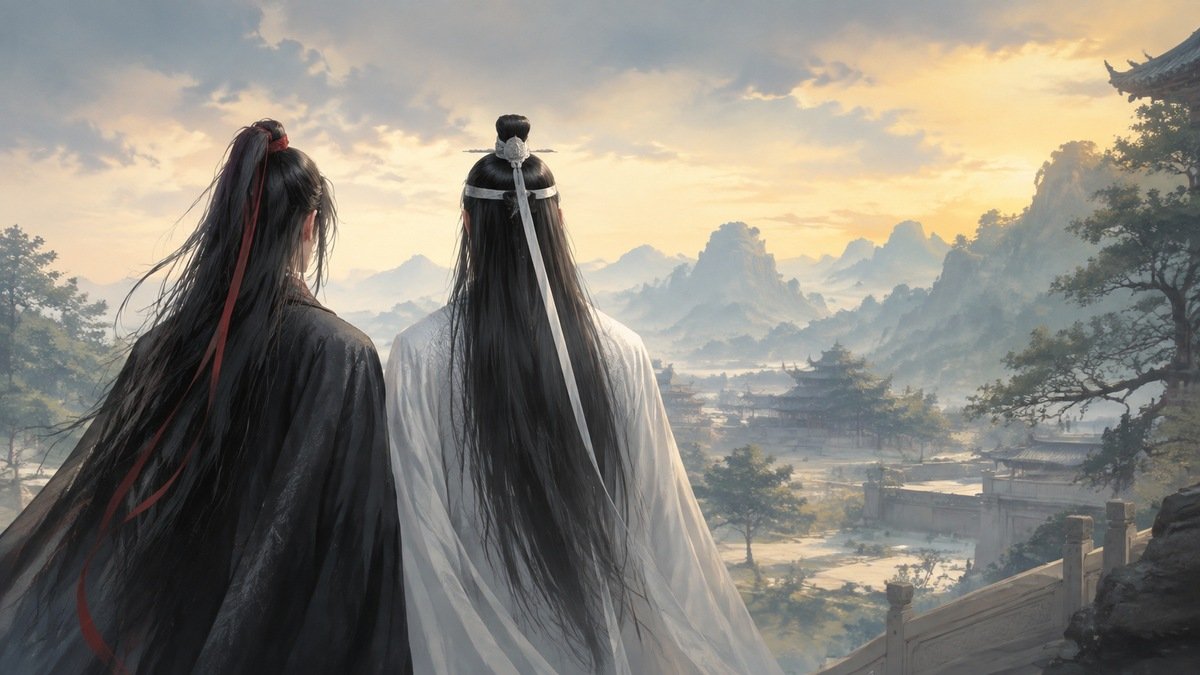
Wei Wuxian and Lan Wangji remain compelling subjects for this kind of attention because their differences give us so much to consider. Expression and restraint, closeness and uncertainty, the individual and the surrounding world: these tensions can remain interesting without resolving into a single answer. An image can feel tender to one viewer and tentative to another, with both readings beginning in something visible.
Sharing those observations can make a fandom conversation more generous. Describe the part of the image that moved you. Explain your reading, and leave another person room to notice something else. You do not have to defend every feeling as a confirmed production fact for it to matter. A careful interpretation can be personal, persuasive, and open at the same time.
If you would like to support more thoughtful drama features, Ko-fi offers an optional way to help. For your next rewatch, choose one familiar exchange and give the whole frame a few extra moments of attention. Then return to the story and see whether the feeling has changed. Which image from The Untamed would you like to look at again, and what first draws your eye to it?
Fan-Favorite Collectibles & Gifts