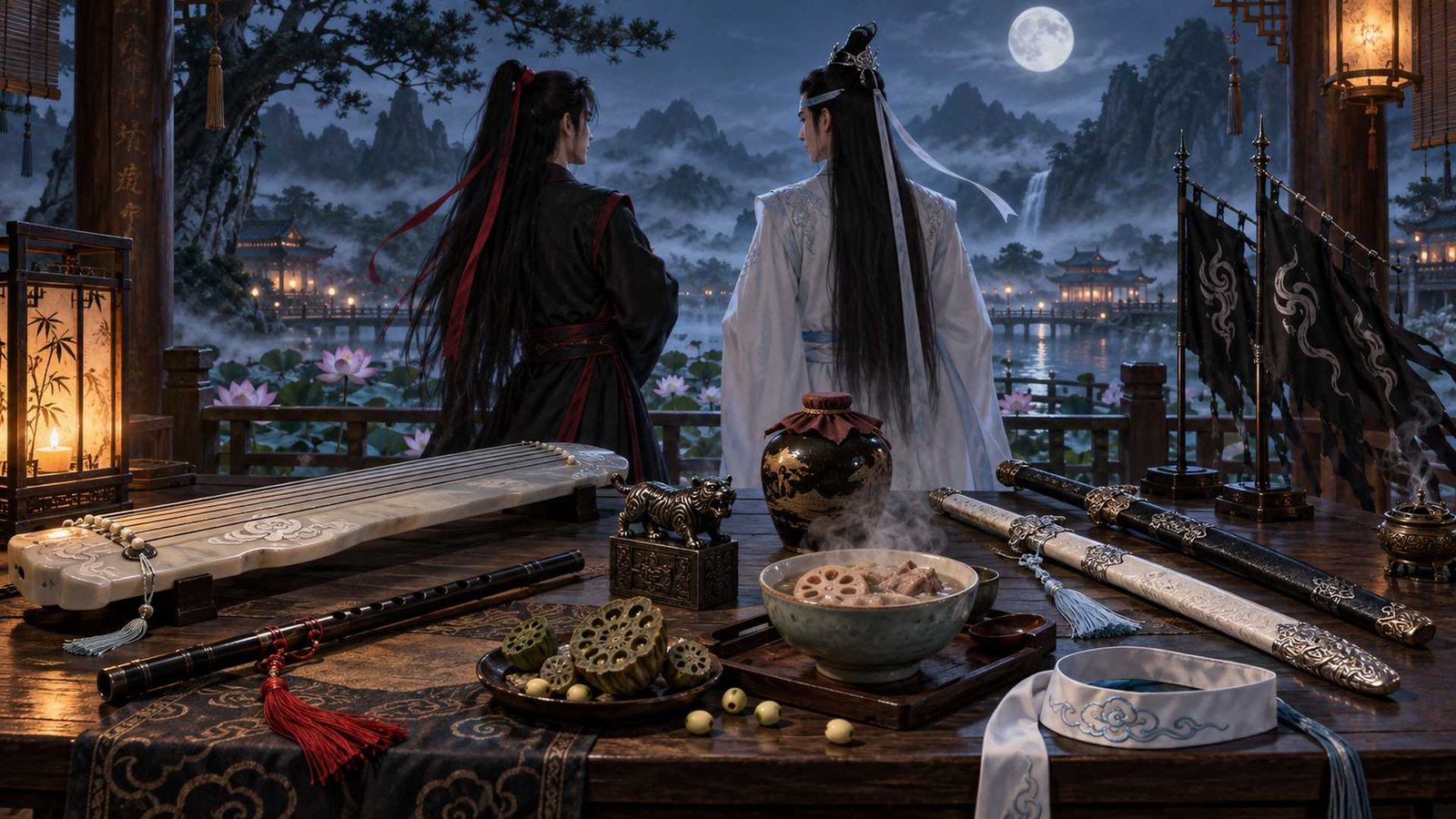
The Untamed Props Explained: 10 Objects That Tell a Bigger Story
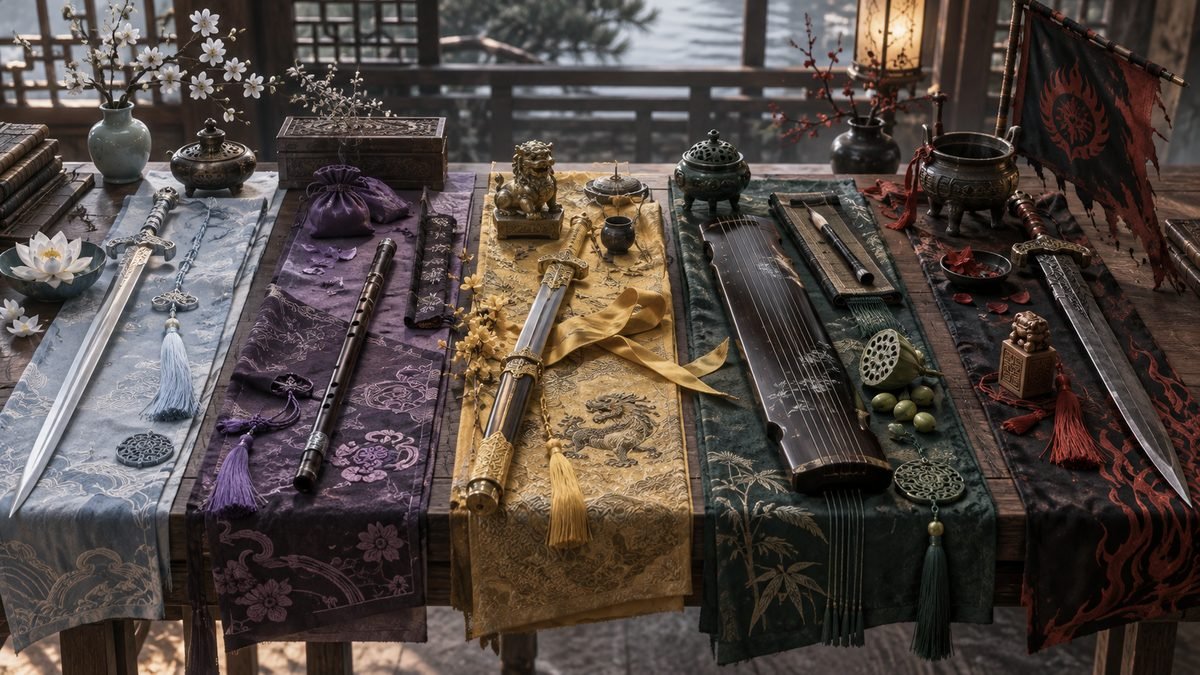
Why Props Matter in The Untamed
A prop becomes meaningful through repetition. The first appearance establishes its practical use; later scenes add emotion, conflict, or irony. When the same object returns after a time jump, viewers remember earlier hands, promises, and losses. The drama can therefore compress a long history into a close-up. We do not need a speech to understand why a familiar sword, ribbon, flute, or bowl changes the atmosphere of a scene.
Props also connect individuals to communities. Gusu Lan objects favor restraint, pale colors, musical cultivation, and careful ritual. Yunmeng Jiang objects often evoke water, food, mobility, and a more relaxed social rhythm. Clan emblems, swords, instruments, and clothing details announce affiliation before dialogue explains it. The visual codes complement the cultural distinctions described in The Untamed Clans Explained.
Ownership, however, does not settle meaning. A weapon may be named for one person but become evidence about another. A tool created to protect people may be treated as proof of corruption. A symbol of restraint may become a sign of chosen intimacy. The drama repeatedly separates an object’s function from the story society tells about it.
Handling is just as important as appearance. Who is permitted to touch an object? Who offers it, refuses it, hides it, repairs it, or keeps it after separation? These actions turn material things into relationships. The most revealing moment may be a character placing something carefully beside another person rather than using it for its obvious purpose.
Finally, props make morality visible without making it simple. The same tool can heal or harm. The same sword can defend justice or enforce a flawed consensus. The series asks viewers to judge intention, context, and consequence rather than assume that an orthodox object is good and an unorthodox one is evil. That ambiguity is central to the ten objects below.
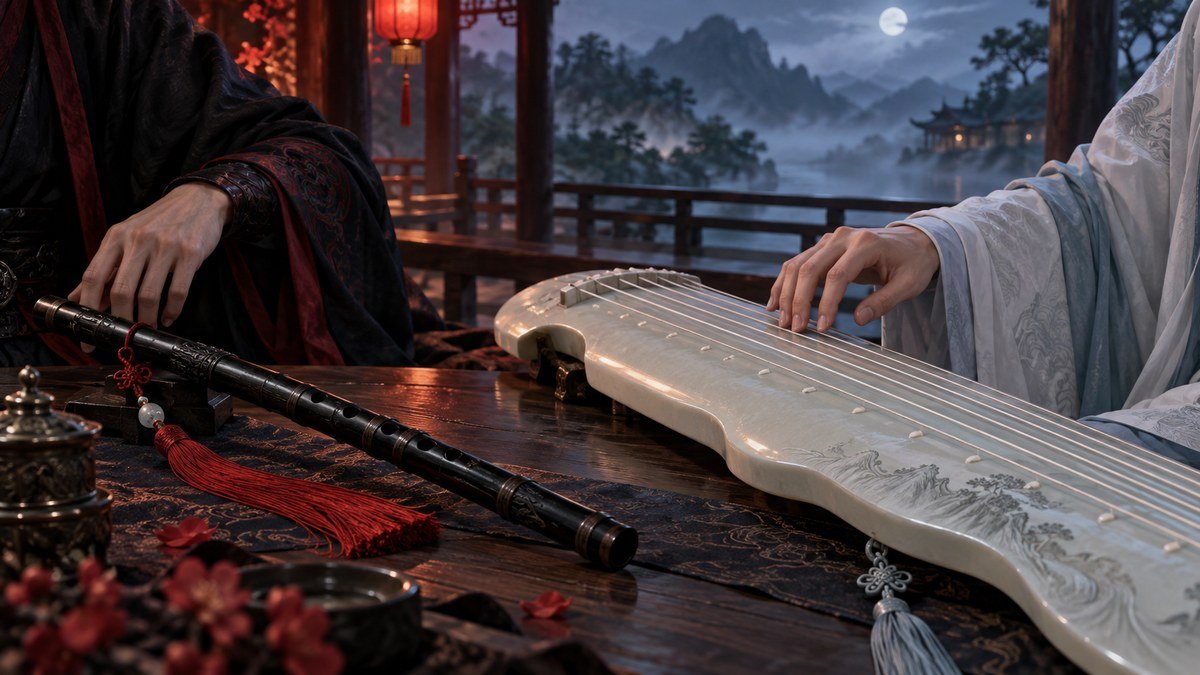
1–2. Chenqing and Wangji — Music as Identity and Trust
1. Chenqing, Wei Wuxian’s Black Flute
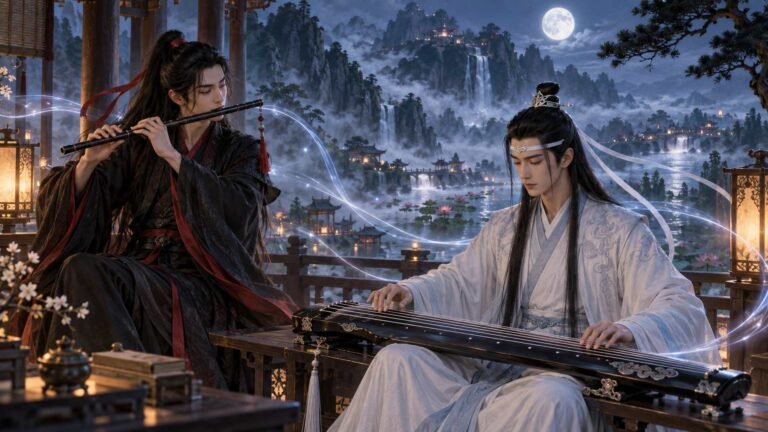
Chenqing is instantly recognizable: dark bamboo, a red tassel, and a sound associated with Wei Wuxian’s unorthodox cultivation. Visually, it belongs to him as clearly as his black robes and red hair ribbon. Yet the flute is not merely a substitute for a sword. It represents adaptation. When the path available to him changes, he develops another way to act, protect, and fight.
Other characters project their fears onto Chenqing. Its sound can announce danger before Wei Wuxian appears, and its presence is used to reduce a complex person to a threatening reputation. The cultivation world often treats the object as if it possesses an independent moral character. The drama complicates that assumption by showing that control, intention, and circumstance matter. Chenqing can be frightening without making every use of it cruel.
The flute also preserves Wei Wuxian’s independence. It is portable, responsive to breath, and suited to improvisation. Unlike a formal clan object displayed within a hall, it travels with an exile. Its red tassel ties it visually to the warmth and vitality still present beneath his dark public image. For a fuller account of that resilience, see the Wei Wuxian Character Study.
2. Wangji, Lan Wangji’s Guqin
Wangji, Lan Wangji’s guqin, expresses a different musical discipline. Its strings, measured technique, and connection to Gusu Lan cultivation reflect training, precision, and restraint. Where Chenqing responds to breath and urgent invention, Wangji suggests structure. Yet both instruments allow their players to communicate with forces and feelings that ordinary speech cannot contain.
The guqin is associated with inquiry, protection, healing, and remembrance. In Lan Wangji’s hands, music is not passive refinement; it is a form of action. His emotional constancy is often expressed through repetition and patience, qualities the instrument embodies. The careful placement of the guqin, the posture required to play it, and the stillness around a musical scene all create a visual counterpoint to open conflict.
Together, Chenqing and Wangji transform the relationship between Wei Wuxian and Lan Wangji into sound. Improvisation meets discipline without either disappearing. The instruments differ, but their music can align. That alignment becomes a model for trust: two people retain distinct identities while learning to listen and respond. The Untamed Music Analysis explores this emotional language in greater depth.
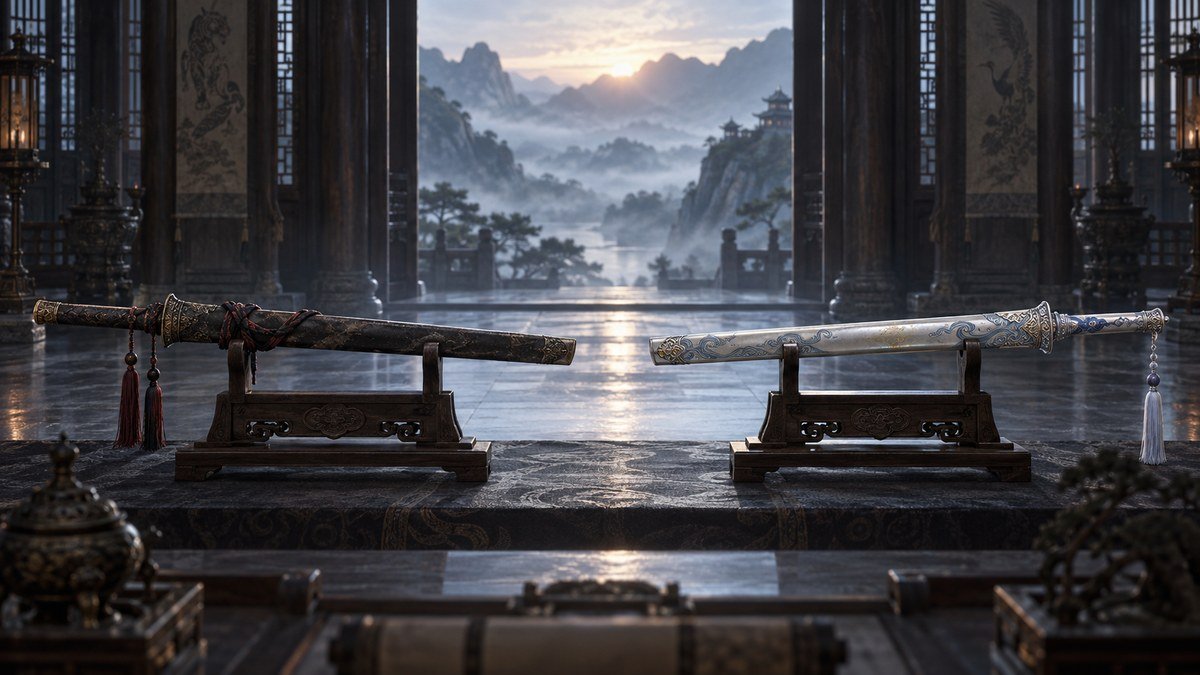
3–4. Suibian and Bichen — Two Swords, Two Moral Paths
3. Suibian, the Sword That Keeps a Secret
Suibian belongs to Wei Wuxian’s earlier cultivation identity. Its name carries his playful irreverence, while its effectiveness reflects genuine skill. In youthful scenes, sword and cultivator appear naturally joined. That ease makes the later separation striking. When Wei Wuxian stops carrying or drawing the sword as expected, others interpret the change as arrogance, instability, or rejection of orthodox discipline.
The truth is more painful. Suibian becomes material evidence of the golden-core sacrifice that Wei Wuxian refuses to explain. The sealed sword knows, in effect, what the social world does not. Its response helps reveal that his apparent misconduct grew from loss and protection rather than simple pride. A familiar object thus overturns years of judgment.
Suibian’s symbolism depends on absence as much as presence. An unused sword creates questions. A sword that cannot be drawn by others creates recognition. The object links Wei Wuxian’s lively youth, concealed injury, damaged reputation, and eventual vindication without requiring him to narrate his suffering.
4. Bichen, the Sword of Steady Discipline
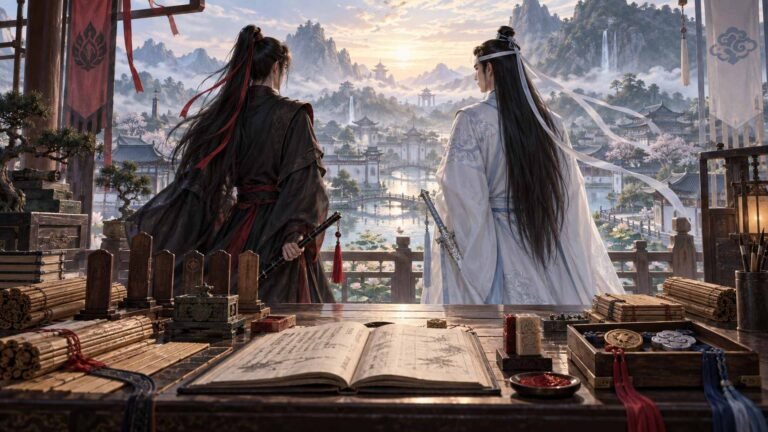
Bichen mirrors Lan Wangji’s visual identity: pale, refined, controlled, and precise. It carries the authority of orthodox cultivation, but its meaning comes from the person who wields it. Lan Wangji’s steadiness does not mean blind obedience. As his moral judgment develops, Bichen increasingly represents the use of cultivated power in service of conscience rather than reputation.
The sword’s clean visual line complements Lan Wangji’s white and pale-blue robes and his white cloud-pattern forehead ribbon. These details place him firmly within Gusu Lan culture even when his choices bring him into conflict with other authorities. His discipline remains visible; what changes is his understanding of where discipline should lead.
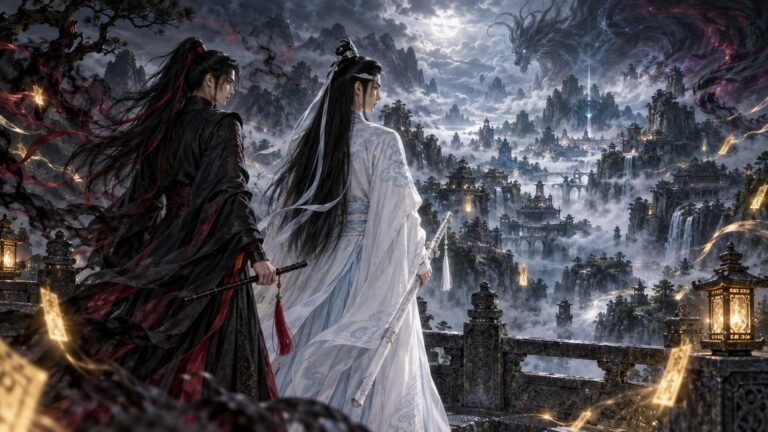
Suibian and Bichen therefore create a revealing contrast. One sword disappears from normal use because its owner has secretly sacrificed the foundation others assume he possesses. The other remains present as its owner gradually refuses the easier path of conformity. Both challenge superficial judgment. A weapon’s appearance cannot tell us whether its bearer is morally secure.
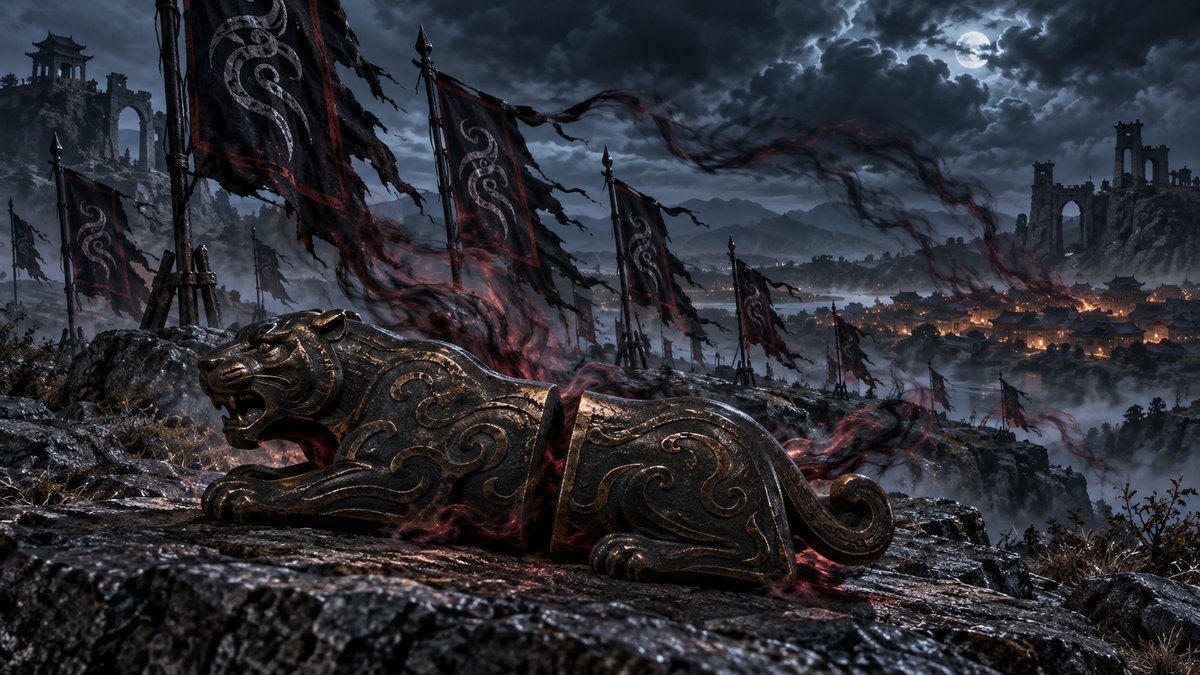
5–6. The Yin Tiger Tally and Spirit-Attraction Flags — Power Becomes Public
5. The Yin Tiger Tally
The Yin Tiger Tally concentrates the drama’s anxiety about power into a small, portable artifact. Its scale is part of the point: something that can fit in a hand can affect armies, alliances, and the balance of the cultivation world. The tally makes invisible spiritual force politically legible. Once power has an object, people can demand it, steal it, divide it, imitate it, or claim that possession alone proves guilt.
The artifact also exposes a contradiction. Powerful clans condemn Wei Wuxian’s methods while desiring the advantage those methods produce. Their fear is not separate from ambition. Public concern about safety may be sincere, but it becomes entangled with the wish to control what no institution authorized. The tally is therefore both dangerous and a test of everyone around it.
Fragmentation adds another layer. Dividing an object does not divide responsibility cleanly. Attempts to contain power can spread the struggle over it, while attempts to destroy it may create new opportunities for misuse. The tally shows why the drama’s moral questions cannot be solved by labeling one artifact forbidden and every orthodox weapon acceptable.
6. Spirit-Attraction Flags
Spirit-attraction flags represent another side of Wei Wuxian’s inventive cultivation. They are tools that can be made, placed, taught, copied, and used by people other than their creator. Visually, a field of dark flags can make danger legible across a landscape. Functionally, they redirect spiritual threats and support collective action.
The flags complicate the claim that all unorthodox invention is selfish or corrupt. A repeatable tool can help communities, but once it circulates, the inventor no longer controls every use. This is a familiar problem in the drama: society wants the benefit of innovation while distrusting the person who challenged convention to create it.
Placed beside the Yin Tiger Tally, the flags reveal two models of power. The tally is concentrated, exceptional, and politically coveted. The flags are distributed, practical, and adaptable. Both can be misused, but neither has an automatic morality independent of human choices. This theme connects with the wider visual motifs examined in The Untamed Symbolism Explained.
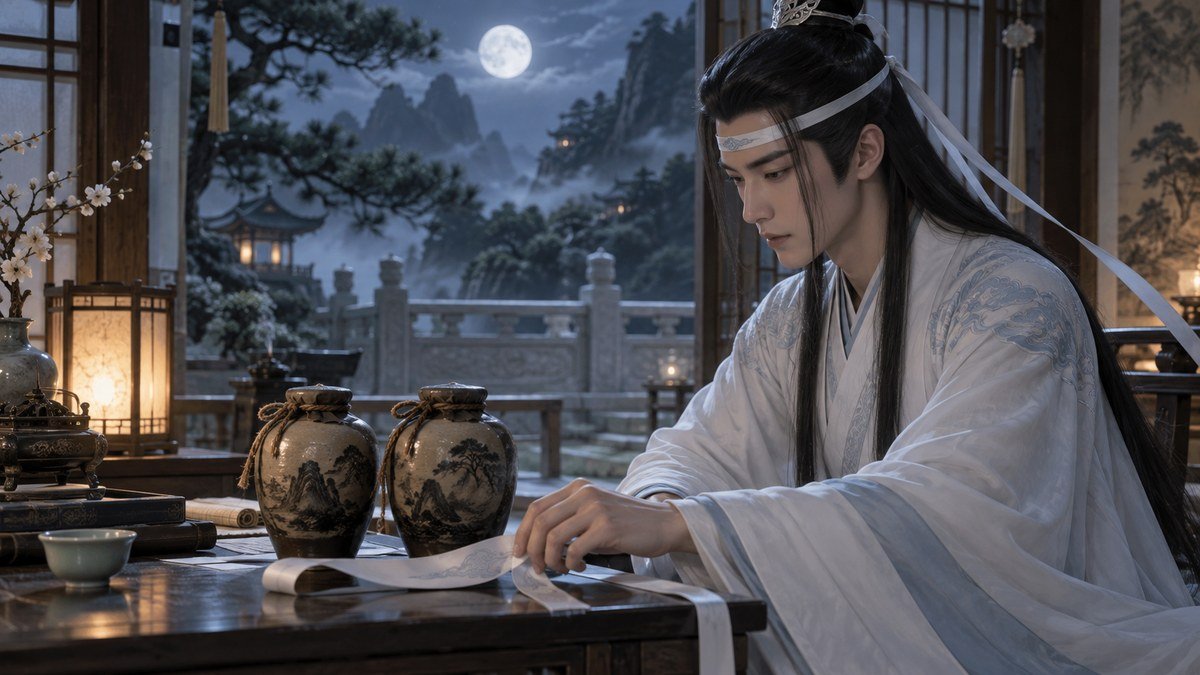
7–8. The Forehead Ribbon and Emperor’s Smile — Rules, Intimacy, and Choice
7. The Gusu Lan Forehead Ribbon
The white forehead ribbon is among the most important The Untamed props because it unites costume, clan law, and emotional boundary. Worn across the forehead by Gusu Lan disciples, it makes discipline visible. On Lan Wangji, the ribbon should always be clearly present: it is a central identifier, not an optional decorative strip.
Its meaning deepens through rules about touch. What appears public is governed by private restriction. When another person handles or disturbs the ribbon, the action can become comic, transgressive, intimate, or all three at once. The emotional charge comes from the gap between what an outsider sees and what a Gusu Lan disciple understands.
The ribbon also illustrates how rules can carry living meaning. Lan Wangji does not simply discard his culture as he grows. Instead, the significance of its symbols becomes more personal and deliberate. A token of restraint can become a token of trust when he chooses who may cross the boundary it represents. Lan Wangji Character Analysis traces the moral strength beneath that reserve.
8. Emperor’s Smile Wine Jars
Emperor’s Smile wine introduces pleasure, memory, and gentle rebellion into the austere world of Cloud Recesses. The ceramic jars are humble compared with swords or talismans, yet they immediately evoke Wei Wuxian’s personality: sociable, curious, rule-testing, and eager to share experience. Wine creates informal space inside a culture of formal boundaries.
Offering, hiding, confiscating, or preserving a jar can express more than a conversation about rules. The object becomes associated with remembered companionship. What begins as youthful mischief later carries tenderness because someone else has remembered what Wei Wuxian loved. Care appears not as a speech but as attention to a specific preference.
The jars also bridge Yunmeng spontaneity and Gusu restraint. They do not transform Lan Wangji into Wei Wuxian; instead, they show his willingness to make room for another person within his ordered life. That is why a simple container can feel so emotionally significant.
9–10. Lotus Seed Pods and Lotus-Root Soup — Home in Ordinary Things
9. Lotus Seed Pods
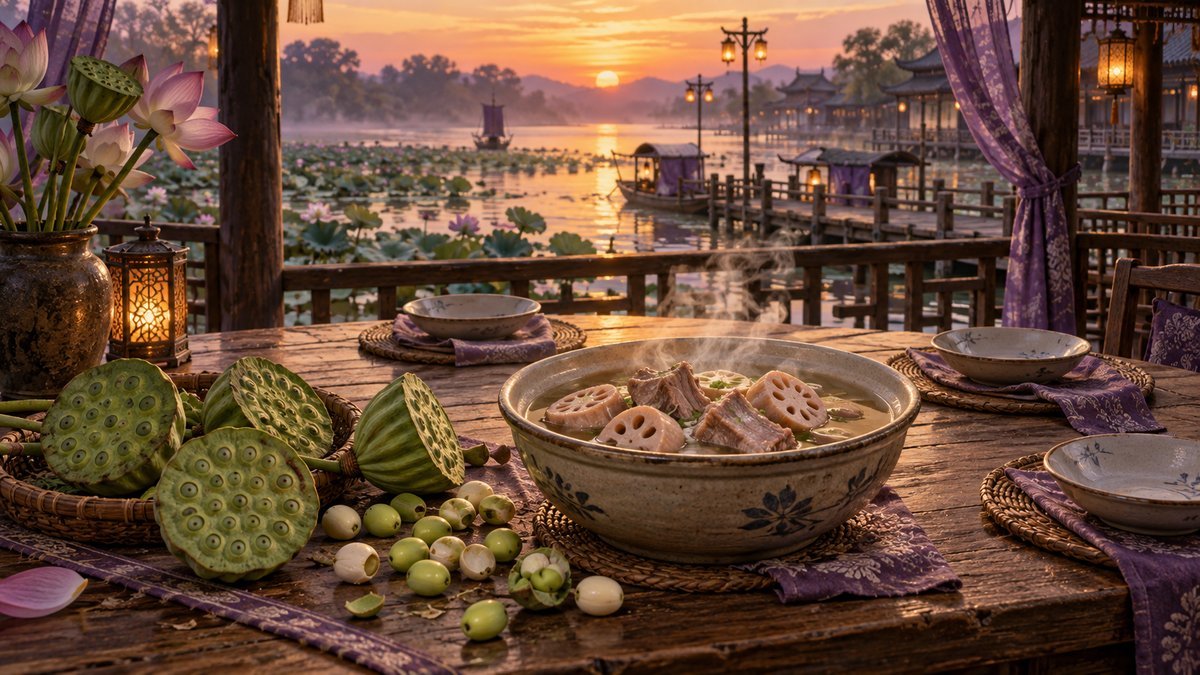
Lotus seed pods connect Wei Wuxian to water, summer, movement, and the everyday pleasures of Yunmeng. They belong to a landscape of boats and open air rather than a formal hall. Their meaning is sensory: the shape of the pod, the act of picking out seeds, the shared snack, and the ease of spending time beside someone.
Because they are seasonal and ordinary, lotus pods carry memory differently from heirlooms. They are not meant to last. Their emotional value comes from a moment that cannot be preserved except through recollection. When lotus imagery returns, it can evoke both the freedom of youth and the impossibility of recovering that youth unchanged.
The prop also makes regional identity intimate. Yunmeng is not only purple clothing and clan doctrine; it is a way of moving through water and enjoying what grows there. The smallest local object can therefore hold an entire idea of home.
10. Lotus-Root-and-Pork-Rib Soup
Jiang Yanli’s lotus-root-and-pork-rib soup is food, labor, and relationship in one object. A bowl carries evidence that someone selected ingredients, spent time cooking, remembered a preference, and wanted conflict to soften. It expresses care in a language the Jiang siblings understand immediately.
The soup often stands against the harshness of public life. Clan politics turns people into titles, alliances, liabilities, and symbols. A familiar meal restores the body and reminds them that they were once family before others assigned larger roles. Its power is domestic rather than ceremonial.
That domesticity also makes later associations painful. Taste and smell can collapse time, bringing a lost person or home emotionally close while confirming that the original moment cannot return. The bowl is not powerful because it changes the cultivation world. It matters because it reveals what the cultivation world destroys when pride, fear, and political violence overtake ordinary care.
Lotus pods and soup complete the list by changing its scale. After flutes, swords, talismans, and flags, these objects remind us that survival alone is not the whole story. People need play, nourishment, recognition, and memory. The drama’s most intimate symbols are often the ones with no value in a contest for power.
Frequently Asked Questions
What is the most important prop in The Untamed?
Chenqing and the Yin Tiger Tally have enormous plot importance, while the forehead ribbon is central to character and relationship symbolism. There is no single answer because the drama gives different objects different jobs. The most powerful artifact is not necessarily the most emotionally meaningful one.
Why is Chenqing feared?
Chenqing is associated with Wei Wuxian’s unorthodox cultivation and his ability to influence resentful energy. Its sound carries the reputation others have built around him. The fear comes from real power, limited understanding, political messaging, and anxiety about someone operating outside established clan authority.
What does Lan Wangji’s forehead ribbon mean?
It represents Gusu Lan discipline and self-restraint, while rules surrounding touch make it a personal boundary. When Lan Wangji allows that boundary to change through trust, the ribbon gains an intimate meaning without losing its connection to clan culture. Related costume details appear in Untamed Costume Design: 7 Hidden Details.
Why can Wei Wuxian no longer use Suibian normally?
He secretly gives up his golden core for Jiang Cheng. Without that foundation, he cannot continue orthodox sword cultivation in the expected way. His avoidance of Suibian is misunderstood for years, and the sword later helps expose the truth behind his changed behavior.
Is the Yin Tiger Tally the same as the Yin Iron?
No. The drama connects both to dangerous resentful power, but they are not interchangeable objects. The Yin Iron has its own fragmented history, while Wei Wuxian creates the Yin Tiger Tally as a powerful controlling artifact. Keeping them distinct helps clarify who created what and why different factions pursue them.
Why include food and wine among important props?
Props are meaningful objects used in storytelling, not only weapons or magical artifacts. Emperor’s Smile, lotus pods, and soup reveal preference, care, place, and memory. They show characters in relationships rather than in combat, which is why fans often remember them as vividly as the supernatural objects.

Conclusion
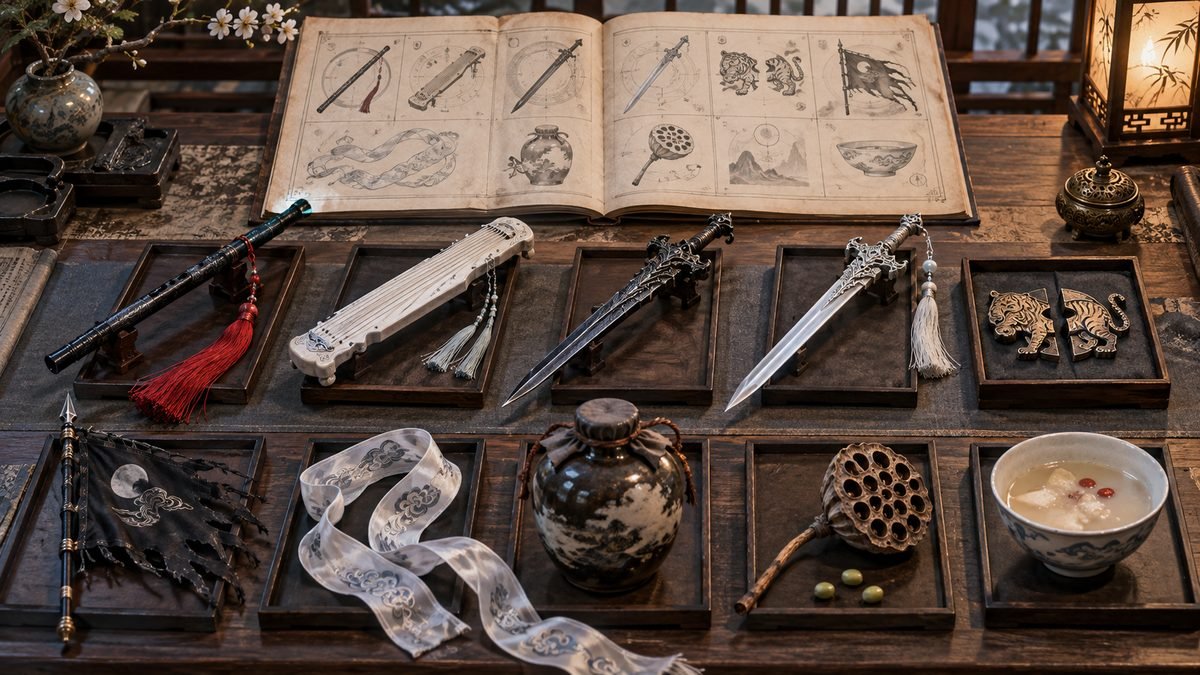
The Untamed props tell a larger story because they travel where explanations cannot. Chenqing and Wangji turn character into music. Suibian and Bichen complicate the visible signs of orthodox identity. The Yin Tiger Tally and spirit-attraction flags expose society’s unstable response to innovation and power. The forehead ribbon and Emperor’s Smile transform rules and preferences into trust. Lotus pods and soup make home tangible through fleeting pleasure and care.
The ten objects also reveal a moral pattern. Weapons and artifacts are not good or evil by appearance alone, and ordinary things are not insignificant because they lack supernatural force. Meaning comes from relationships: who made an object, who uses it, who fears it, who remembers it, and who is permitted to touch it.
That is why these props remain vivid after the plot details fade. They let viewers hold an emotion in material form: a red tassel moving with breath, pale strings beneath steady hands, a white ribbon crossing a forehead, lotus seeds shared on the water, or a warm bowl offered between siblings. If you enjoy close readings like this, you can support more essays through Ko-fi.
Fan-Favorite Collectibles & Gifts