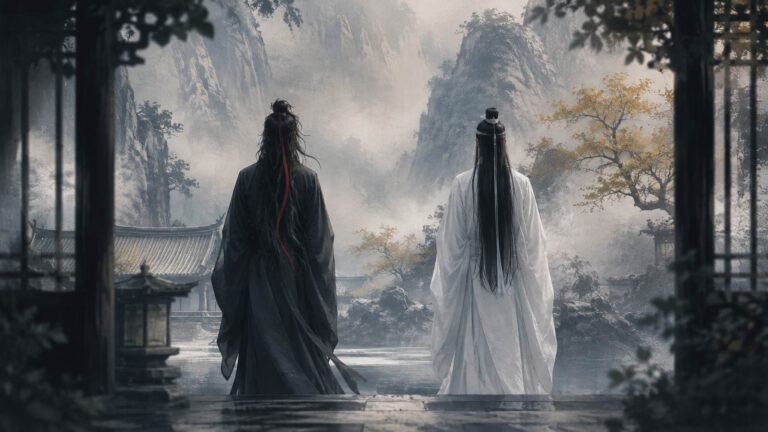
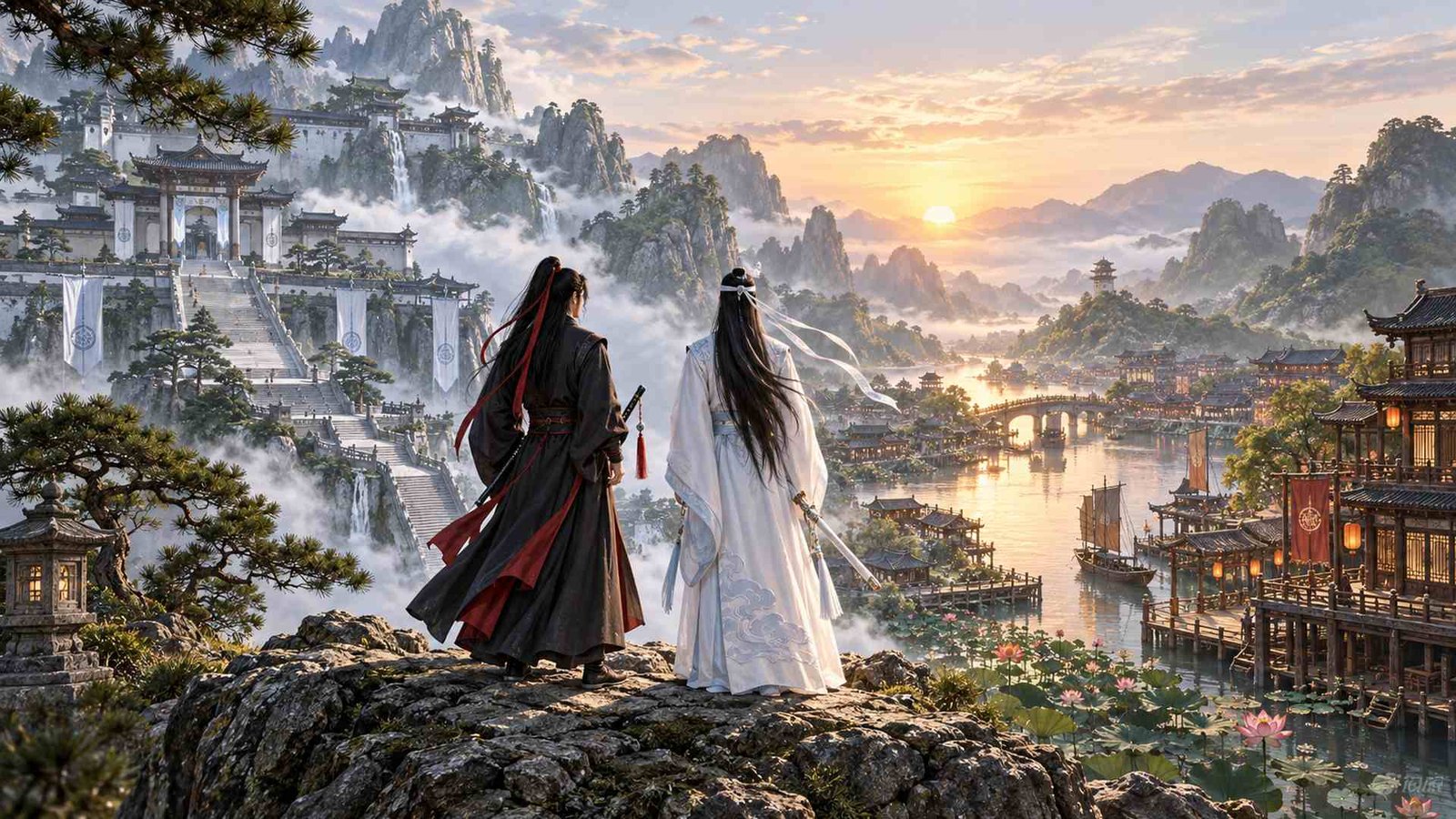
The Untamed Set Design: Character & Culture
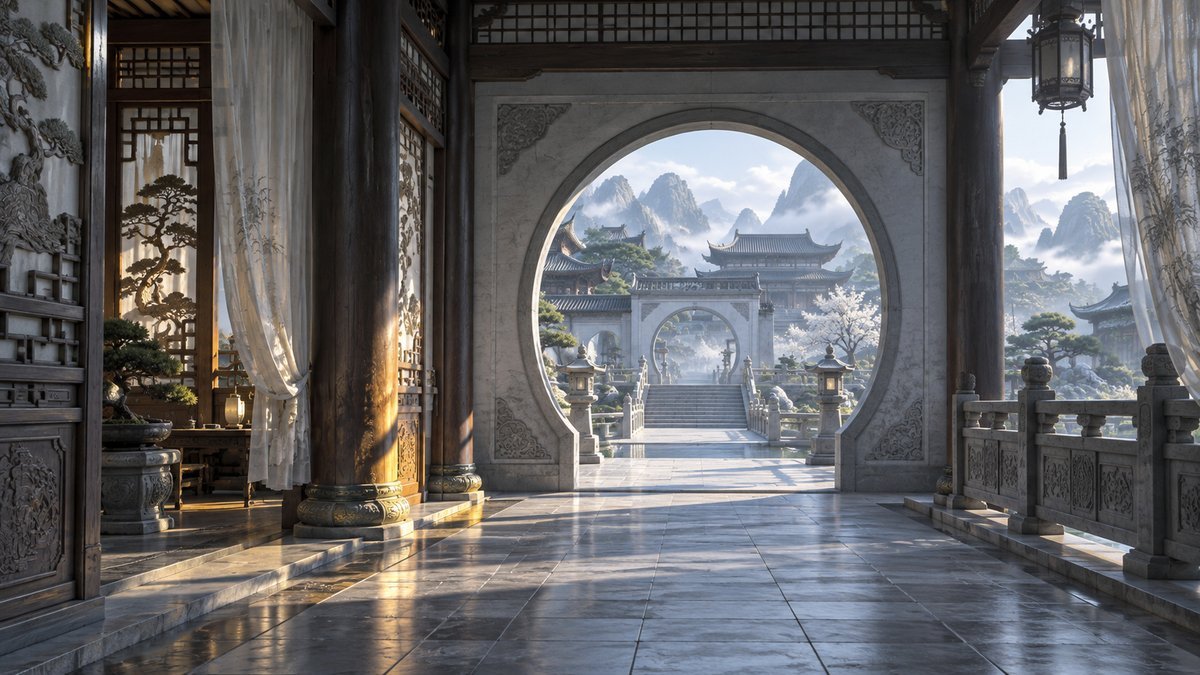
Why Set Design Works as Visual Storytelling
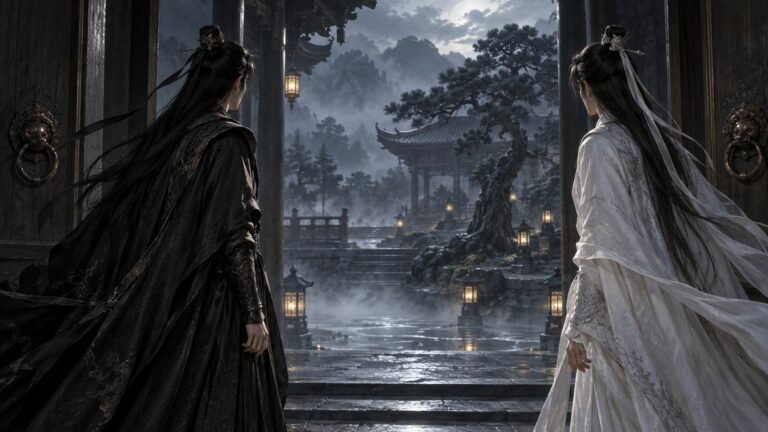
Set design becomes storytelling when space imposes choices. A wide hall can expose a person to public judgment; a narrow passage can force two characters into uncomfortable proximity; a raised platform can turn a conversation into a declaration of power. In The Untamed, these choices recur often enough to become a visual language. Large clan halls favor hierarchy and ceremony. Side rooms, hidden paths, rooftops, and secluded courtyards create the possibility of honesty. The contrast tells viewers whether a character is performing a social role or speaking as an individual.
Architecture also regulates movement. Cloud Recesses repeatedly guides characters along stairs, bridges, and orderly corridors. Lotus Pier opens outward toward water, docks, and long horizontal views. The Burial Mounds resist easy passage with rough ground and makeshift living areas. Nightless City arranges people before monumental structures and within spectacle. Each place encourages a different rhythm: measured, fluid, improvised, or imposed. Those rhythms reflect the values of the communities that occupy them.
Objects strengthen these impressions. Rule tablets, screens, incense vessels, weapons, family emblems, lanterns, boats, and dining arrangements are never merely decorative when they repeat beside important decisions. They connect private behavior to public culture. A character who crosses a threshold without permission, sits in the wrong place, or brings an intimate object into a formal hall creates a visible disturbance before anyone names it.
This is why the series can introduce many factions without making every distinction depend on exposition. The viewer learns through pattern recognition. For a concise guide to the rivalries and values behind those patterns, The Untamed Clans Explained provides useful context. The sets then transform that information into experience: we feel what a culture permits, restricts, celebrates, or fears.
Repetition completes the effect. A place is introduced with one emotional meaning, revisited under new circumstances, and finally remembered through absence or change. Because the architecture remains recognizable, the viewer measures what has been lost. Set design thus creates continuity across time. The building may stand still, but our relationship to it does not.
Cloud Recesses: Discipline, Distance, and Quiet
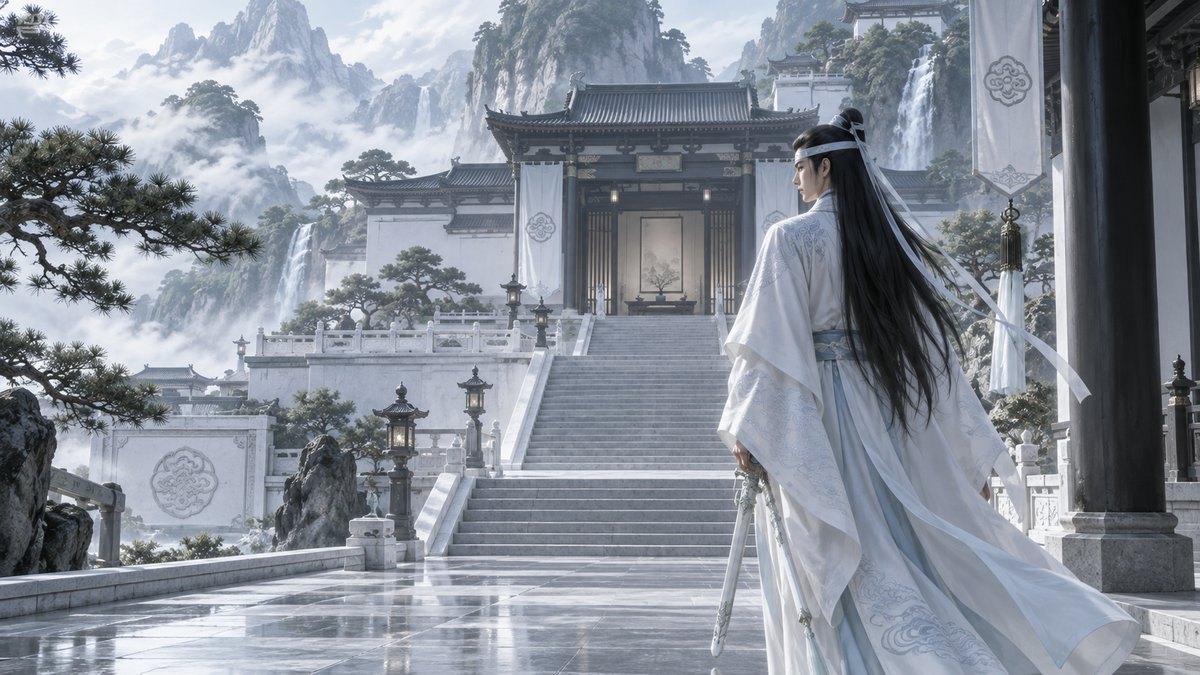
Cloud Recesses presents order as an environment. Pale stone, cool colors, mountain mist, clean lines, and carefully arranged courtyards give the Gusu Lan seat an atmosphere of restraint. Its beauty is real, yet it rarely feels casual. Long stairs slow arrivals. Gates mark permission. Screens divide public and private space. Open areas are often balanced and uncluttered, making any unexpected movement immediately noticeable.
The location’s verticality matters. Climbing toward halls and classrooms suggests the effort of cultivation, but it also reinforces hierarchy. Knowledge and authority appear elevated, protected from the disorder below. The surrounding mountains produce serenity while also creating distance from ordinary life. Cloud Recesses is a sanctuary, a school, and a system of boundaries at once.
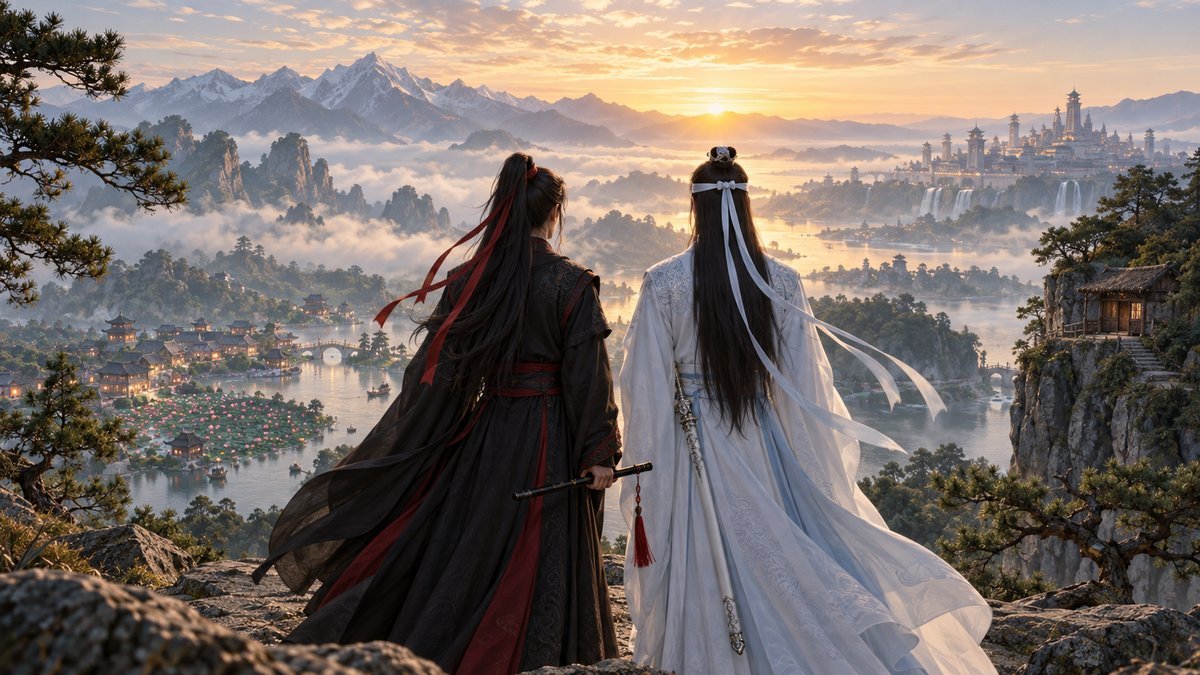
Lan Wangji belongs visually to this world. His white and pale-blue robes, controlled posture, pale sword, and unmistakable white forehead ribbon echo the location’s precision. He seems at first like an extension of its architecture: composed, formal, and difficult to approach. Yet the quiet spaces also reveal the cost of such discipline. In a crowded hall he is exemplary; in an empty corridor or secluded room, the same restraint can feel lonely. The setting helps the audience read the difference between composure and emotional absence.
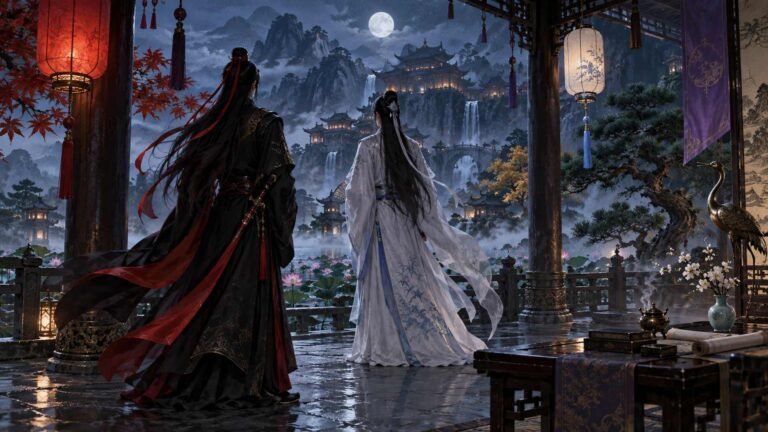
Wei Wuxian enters this geometry as purposeful disruption. His black robes, red hair ribbon, quick movement, humor, and willingness to test rules create contrast against the pale, measured environment. He leans where others stand straight, explores where others follow paths, and turns formal spaces into sites of improvisation. The visual comedy is not superficial. It dramatizes a deeper conflict between rules as moral guidance and rules as unquestioned authority.
At the same time, Cloud Recesses gradually becomes more than a symbol of restriction. Its quieter corners allow trust to form. Shared study, argument, music, injury, and care give private meaning to formal rooms. Later returns therefore feel different from the first arrival. The viewer recognizes the same steps and roofs, but accumulated memory softens their severity. Lan Wangji’s home becomes one possible place of refuge because his understanding of its values changes.
The location also demonstrates how character and set work together. A forehead ribbon is not an optional ornament in this visual system; it locates Lan Wangji within Gusu Lan culture and makes the tension between personal feeling and inherited discipline immediately legible. For a closer study of his restraint and moral development, see Lan Wangji Character Analysis.
Lotus Pier: Warmth, Water, and Family Memory
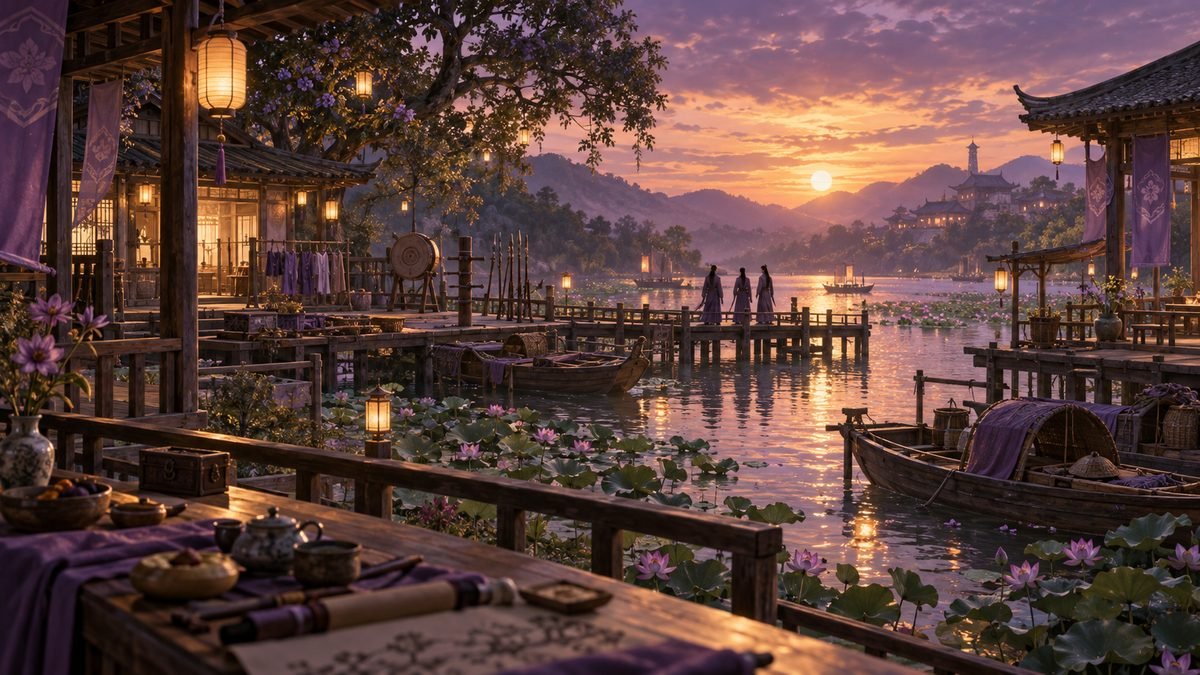
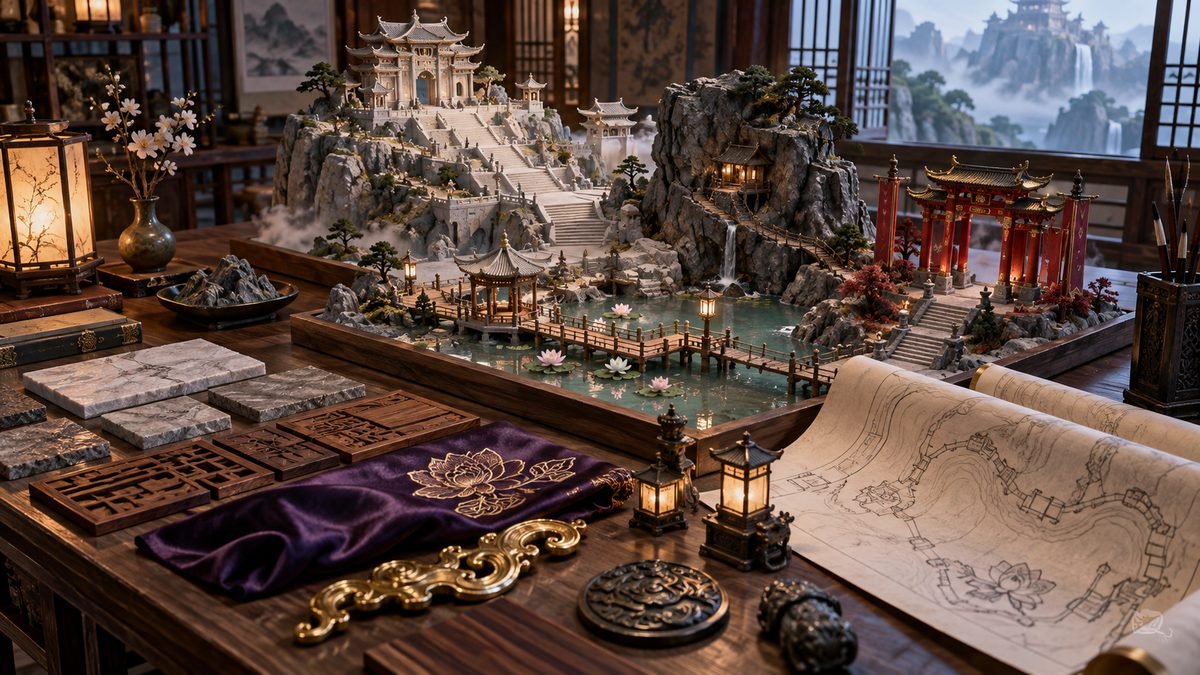
If Cloud Recesses organizes life through stone, height, and controlled passage, Lotus Pier imagines it through water, wood, and openness. Piers extend into the lake; boats promise movement; lotus leaves soften the horizon; warm lanterns connect domestic life to the landscape. The space feels breathable. Its horizontal lines suggest access rather than ascent, and everyday activity sits close to clan identity.
This openness reflects the Yunmeng Jiang ideal of attempting the impossible, but it also suits the complicated family at the center of the location. Lotus Pier can hold training, teasing, arguments, meals, departures, and returns without making each activity feel ceremonial. Its lived-in quality gives Wei Wuxian and Jiang Cheng room to appear as brothers before politics forces them into fixed positions. Jiang Yanli’s presence adds another layer of domestic warmth: care is expressed through familiar routines and shared space rather than grand declarations.
Color reinforces the distinction. Purple and lavender identify Yunmeng Jiang, while the surrounding greens, browns, and reflected golds keep the palette connected to earth and water. Costumes do not float free of the setting; they belong within it. The result is a visual culture that appears flexible and emotionally immediate even when the household itself contains tension.
Lotus Pier’s importance depends on its ordinary details. A home becomes mournable when viewers know where people eat, practice, wait, and quarrel. The drama gives us enough spatial familiarity to imagine life continuing outside the main plot. When violence reaches that environment, the loss is not an abstract defeat of one clan by another. It is the destruction of habits, relationships, and a shared map of daily life.
Later memories and returns cannot restore the original meaning of the place. Reconstruction can reproduce structures, emblems, and functions, but it cannot make the people who once moved through them unchanged. This gap between physical survival and emotional continuity is central to the series. Lotus Pier remains home, yet “home” becomes inseparable from grief and from the question of who is still allowed to belong there.
The contrast also clarifies Wei Wuxian’s character. His ease near water, appetite for noise and companionship, and instinct to treat public space as social space all feel rooted in Yunmeng. Even when he is separated from Lotus Pier, he carries its openness with him. Read alongside the Wei Wuxian Character Study, the setting helps explain why exile wounds him so deeply: he loses both family and the environment in which his most spontaneous self once made sense.
Burial Mounds and Nightless City: Exile and Power
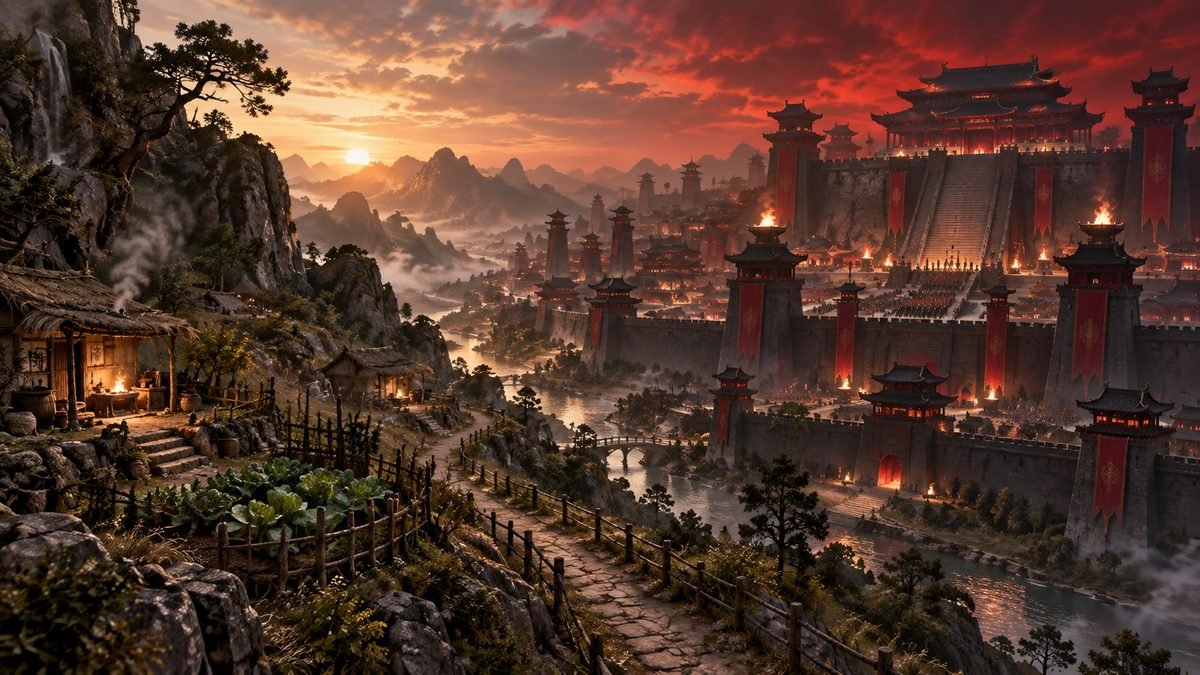
The Burial Mounds and Nightless City form one of the sharpest spatial contrasts in the drama. One is rough, marginal, and associated with fear; the other is monumental, brightly asserted, and designed to project dominance. Yet both reveal how power decides who may occupy the center of society and who must survive at its edges.
The Burial Mounds resist the polished order of the great clans. Uneven ground, dark rock, sparse vegetation, crude shelters, and limited resources make daily life appear provisional. Paths are not ceremonial routes; they are practical solutions. The environment communicates danger, but it also exposes prejudice. The place is treated as contaminated, and that judgment extends to the people living there.
Small signs of domestic life challenge that judgment. Cooking, farming, medicine, conversation, and care transform a feared landscape into a fragile community. The visual effect is important: viewers see human need and cooperation where the cultivation world sees only a threatening label. Improvised objects carry more moral weight than luxurious furnishings because they show people making life possible with almost nothing.
Wei Wuxian’s relationship with the Burial Mounds therefore contains a paradox. The location represents trauma and isolation, yet it also becomes a place where he acts according to his conscience without institutional permission. Its disorder suits his improvisational intelligence, while its marginal status reveals the cost of refusing the majority’s convenient story. The set makes his social position physical: he protects people from a location that respectable society prefers not to see.
Nightless City operates through the opposite strategy. Scale, axial staging, fire, raised positions, and assembled crowds turn power into spectacle. Individuals are visually subordinated to the event. Approaches feel exposed, and central platforms transform judgment into theater. Where the Burial Mounds create intimacy through scarcity, Nightless City creates conformity through magnitude.
This comparison prevents a simple equation of beauty with goodness or darkness with evil. A polished hall may conceal coercion; a harsh refuge may contain loyalty and care. The Untamed set design repeatedly asks viewers to judge spaces by what people do within them, not by the prestige attached to their appearance. That principle is essential to understanding the drama’s moral world.
Interiors, Thresholds, and Clan Identity
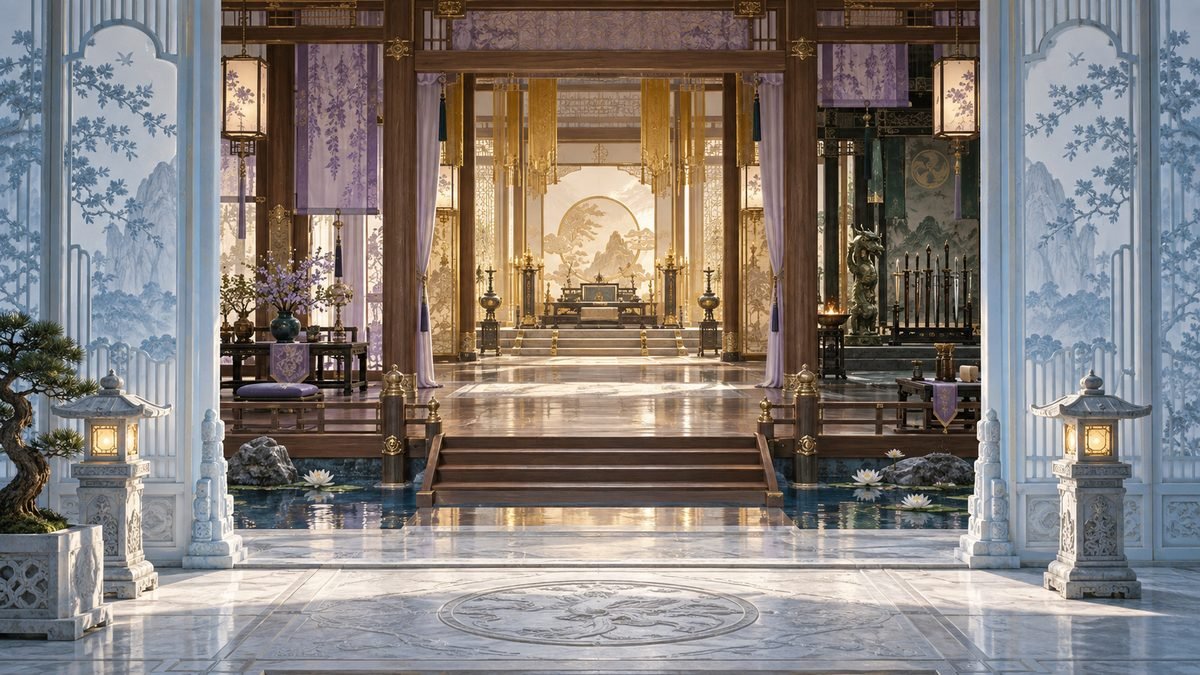
The largest landscapes establish broad cultural differences, but interiors make those differences precise. Clan halls organize bodies into visible ranks. Leaders occupy central or elevated positions; guests and juniors are placed according to status; distance becomes a measure of access. Even without understanding every title, viewers can read the room.
Gusu Lan interiors favor restraint, pale materials, ordered screens, and controlled decoration. Yunmeng Jiang spaces feel warmer and closer to daily activity. Lanling Jin settings emphasize display, polish, gold, cream, and social performance. Qinghe Nie spaces carry darker weight through gray, green, wood, metal, and the visual presence of sabers. Qishan Wen favors red, black, burgundy, flame motifs, and imposing scale. These are flexible tendencies within the drama’s visual vocabulary, not rigid rules for every scene, but together they allow a location to announce allegiance quickly.
Costume design strengthens the same system. White and pale blue place Lan Wangji within Gusu Lan even when he stands far from Cloud Recesses; his forehead ribbon keeps that affiliation visible in close view or silhouette. Purple signals Yunmeng Jiang, gold and cream evoke Lanling Jin, and red-black combinations recall Qishan Wen. The article Untamed Costume Design: 7 Hidden Details explores how these garments carry meaning of their own. On screen, the richest effect comes from the conversation between clothing and place.
Thresholds are especially expressive. Gates decide who enters. Bridges suspend characters between destinations. Stairs turn approach into submission or challenge. Screens reveal only part of a room, suggesting privacy, concealment, or divided knowledge. A person paused in a doorway may be physically present but socially excluded. These simple structures let the drama stage inner conflict without explaining it aloud.
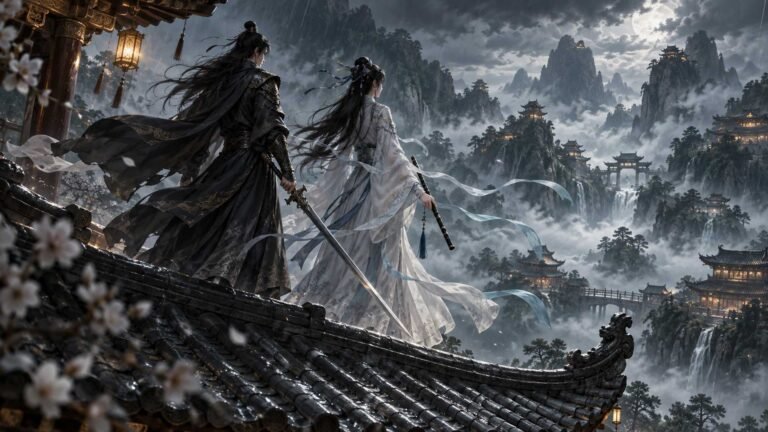
Tables and objects perform similar work. A shared meal can create temporary equality; a formal arrangement can restore hierarchy. Swords, sabers, flutes, guqin, seals, and clan emblems connect personal identity to institutional culture. Wei Wuxian’s black bamboo flute with its red tassel introduces the memory of danger and unorthodox power into any environment. Lan Wangji’s pale sword and guqin bring the discipline of Gusu Lan beyond its walls.
Attention to such details rewards revisiting scenes. Viewers may first follow dialogue and action, then later notice who is positioned closest to an exit, whose colors clash with the room, or which barrier separates two allies. Many of these discoveries complement the observations collected in The Untamed Hidden Details.
How Locations Change Meaning Across the Story
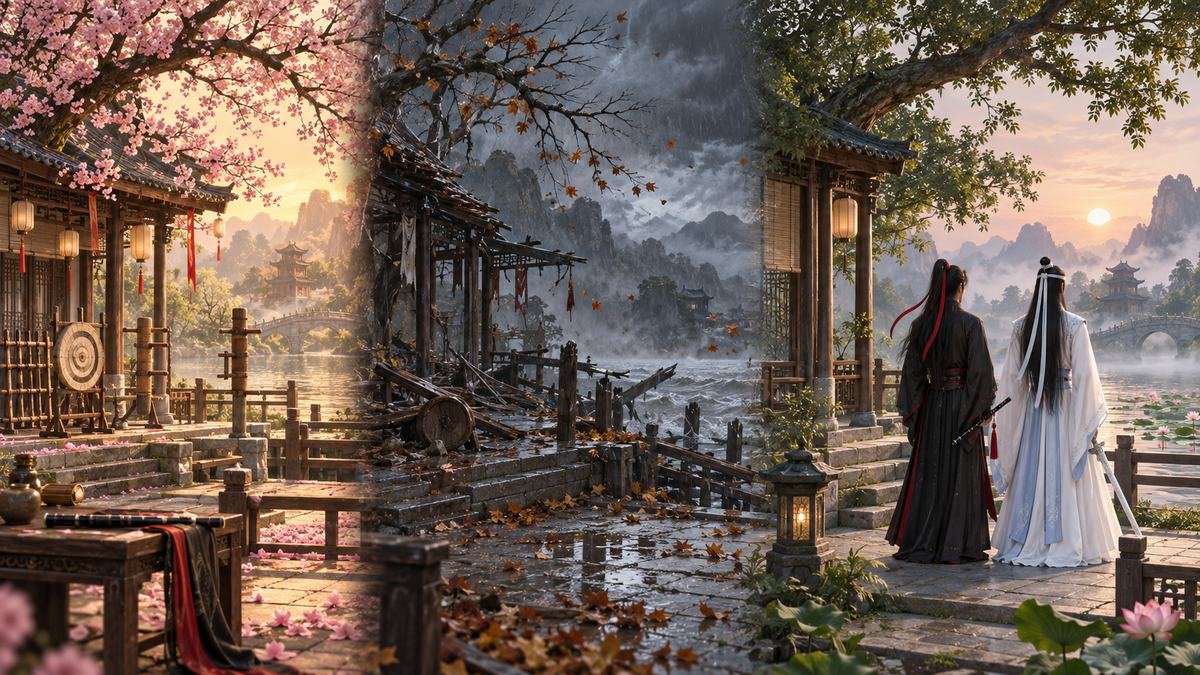
A powerful set does not have one permanent meaning. It acquires meaning through events, returns, and absences. The Untamed uses its nonlinear structure to make this process unusually visible. A location seen in the present may feel mysterious or damaged; a later journey into the past fills it with people, routines, and promises; the return to the present then carries the weight of everything the viewer now knows.
Arrival and departure form a recurring pattern. Arrivals reveal how a community receives outsiders. Departures expose what a character cannot say while remaining. A gate that first represented opportunity can later feel like separation. A pier can hold both welcome and irreversible leaving. The physical route remains recognizable, allowing the audience to compare emotional states across time.
Blocking changes meaning too. The same courtyard can feel generous when filled with students and hostile when one person stands surrounded by accusers. A hall can appear stable when everyone observes ritual and fragile when someone refuses the expected position. Empty space after loss is especially eloquent because the viewer remembers the bodies that once occupied it.
Public and private spaces create another transformation. In public halls, characters speak for clans, defend reputations, and accept the pressure of collective judgment. In secluded rooms, rooftops, forest paths, caves, or quiet courtyards, they can reveal doubt and care. The movement between these settings charts the distance between social identity and personal truth. For more examples of how staging and emotion combine, see The Untamed Iconic Scenes.
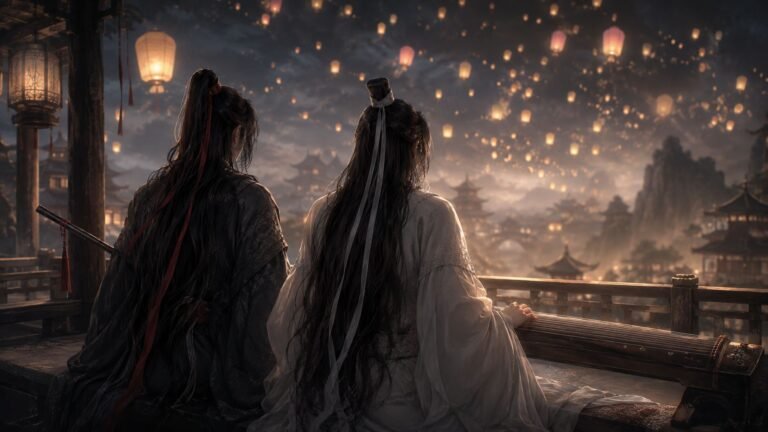
Wei Wuxian and Lan Wangji’s changing relationship can be read as a search for a place where neither must perform a false version of himself. Wei Wuxian repeatedly loses institutional belonging but creates connection through action. Lan Wangji begins within a highly structured home and gradually learns to distinguish principle from obedience. When they share a landscape without the full pressure of public ceremony, the composition often feels calmer. Space briefly permits the honesty that society resists.
This makes “home” one of the drama’s deepest spatial questions. Is home the place of birth, the clan that names you, the community you protect, or the person who understands your choices? The series never reduces the answer to one building. Its locations show that homes can be destroyed, rebuilt, rejected, or reimagined. What survives is a moral and emotional orientation carried from one space to another.
Frequently Asked Questions
What makes The Untamed set design distinctive?
Its strongest feature is consistency between place, culture, and character. Architecture, color, objects, and routes reinforce each clan’s values, while repeated locations change meaning as the story moves between youth, catastrophe, memory, and return. The sets are memorable because they do narrative work rather than serving as neutral backgrounds.
Were all the locations real historical places?
The finished drama blends location scenery, constructed environments, dressed interiors, and visual effects into a unified fictional world. Viewers should not assume that every apparent palace, pier, mountain compound, or city exists exactly as shown. If you want to compare the fictional geography with places used for production, consult The Untamed Filming Locations and The Untamed Filming Sites.
How does Cloud Recesses differ visually from Lotus Pier?
Cloud Recesses emphasizes elevation, pale stone, cool colors, symmetry, formal routes, and quiet restraint. Lotus Pier emphasizes water, wooden walkways, boats, lotus ponds, warm light, horizontal openness, and domestic activity. The contrast mirrors Gusu Lan discipline and Yunmeng Jiang flexibility while also shaping Lan Wangji and Wei Wuxian’s different senses of belonging.
Which location best represents Wei Wuxian?
No single place contains him completely. Lotus Pier represents his formative warmth and lost family life. The Burial Mounds express his exile, inventiveness, and decision to protect the vulnerable. Roads, rooftops, and transitional spaces suit his resistance to fixed categories. His character is defined partly by carrying a sense of connection after stable homes have failed him.
How does set design distinguish the clans?
The drama combines palette, materials, architecture, objects, and spatial behavior. Gusu Lan favors pale restraint and order; Yunmeng Jiang feels open, warm, and water-bound; Lanling Jin projects gold-toned display; Qinghe Nie uses darker, heavier visual weight; Qishan Wen favors forceful red-black spectacle. For character-level context, The Untamed Character Analysis connects these cultural pressures to individual choices.
Why do repeated locations feel different later in the story?
The architecture stays familiar while the viewer’s knowledge changes. We remember earlier relationships, notice missing people, and understand the consequences of decisions that once seemed small. Changes in population, blocking, light, and sound intensify that memory. The set becomes a container for time, allowing one image to hold both the present and what has been lost.
Conclusion
The Untamed set design turns geography into emotional structure. Cloud Recesses makes discipline beautiful, demanding, and ultimately capable of change. Lotus Pier gives warmth a physical form through water, movement, and daily life, then shows why a rebuilt home cannot erase grief. The Burial Mounds reveal care at society’s margins, while Nightless City exposes the intimidation hidden inside public grandeur. Clan halls, gates, bridges, screens, and ordinary objects refine those larger contrasts scene by scene.
The achievement lies in how these places remain stable enough to be recognized yet flexible enough to evolve. A stairway can mean aspiration, judgment, or return. A courtyard can hold companionship and later echo with absence. A refuge can appear frightening from outside and humane from within. Architecture becomes character because it remembers what happened there.
Most of all, the locations clarify the drama’s idea of home. Home may begin as an inherited place, but it survives only through loyalty, recognition, and chosen responsibility. Wei Wuxian and Lan Wangji move through institutions that alternately shelter and reject them, and their journey gradually relocates belonging from walls to mutual understanding. If this close reading helped you see the series differently, you can support more essays through Ko-fi.
Fan-Favorite Collectibles & Gifts