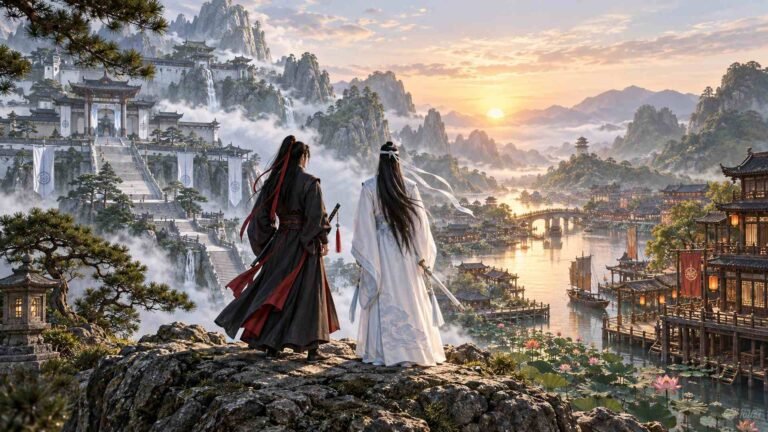
The Untamed Weapons: Meaning & Symbolism
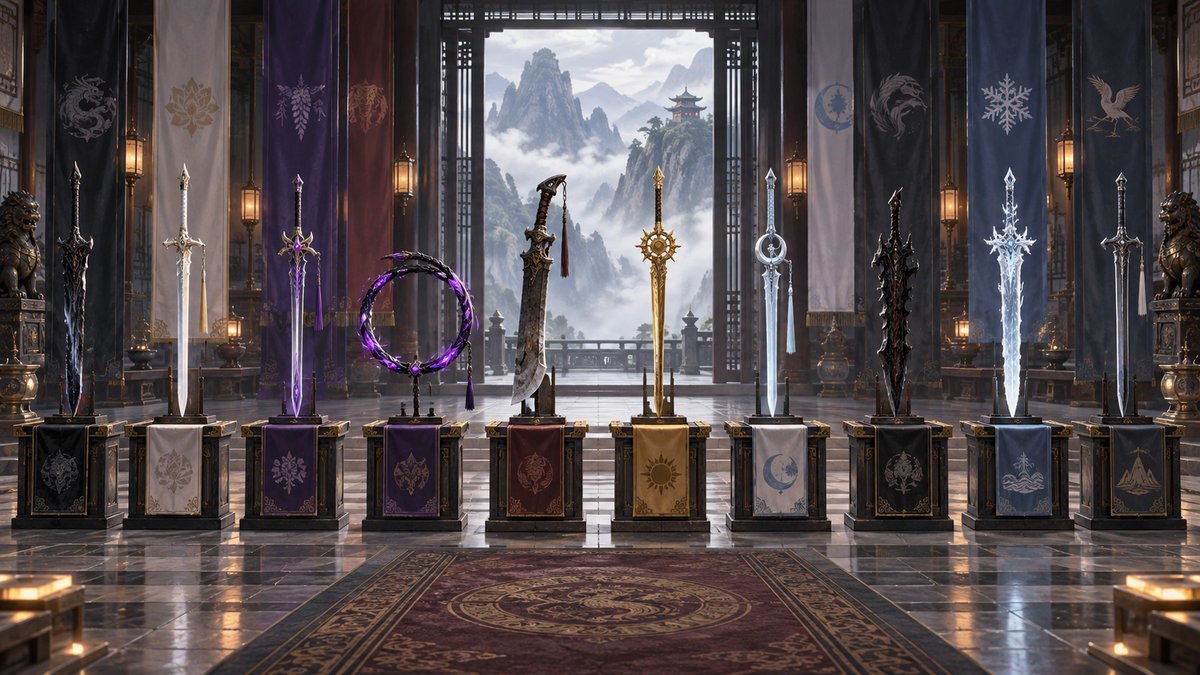
Why Named Weapons Matter in The Untamed
In the cultivation world, a personal weapon connects inner power with public identity. Skill, spiritual energy, education, and clan tradition become visible in one object. A cultivator does not simply possess a sword; the sword is often understood as recognizing its owner. That relationship makes a weapon difficult to separate from biography.
Naming strengthens the connection. A named weapon can be discussed as if it has a history and temperament of its own. Viewers learn to identify characters from a hilt, scabbard, color palette, or fighting rhythm before a face appears. These visual signals help distinguish a large cast while reinforcing the clan cultures described in The Untamed Clans Explained.
Weapons also serve as evidence. Suibian’s behavior helps uncover a secret that words concealed. Zidian can test whether a body is occupied by another soul. An inherited sword identifies a family line and transfers expectations to a younger generation. In a story full of mistaken appearances, a spiritual weapon may know something society refuses to believe.
Yet the drama does not grant weapons simple moral authority. Elegant swords can support unjust consensus, while feared tools can be used to protect the vulnerable. A weapon reflects training and intention, but it cannot replace judgment. The wielder must still decide when to draw it, whom to defend, and whether obedience is the same as righteousness.
This tension explains why weapon scenes often matter even when no duel follows. Setting a sword aside can signal trust. Refusing to draw can reveal injury or restraint. Carrying another person’s weapon can express grief, duty, or control. The object becomes a sentence in the drama’s emotional language.
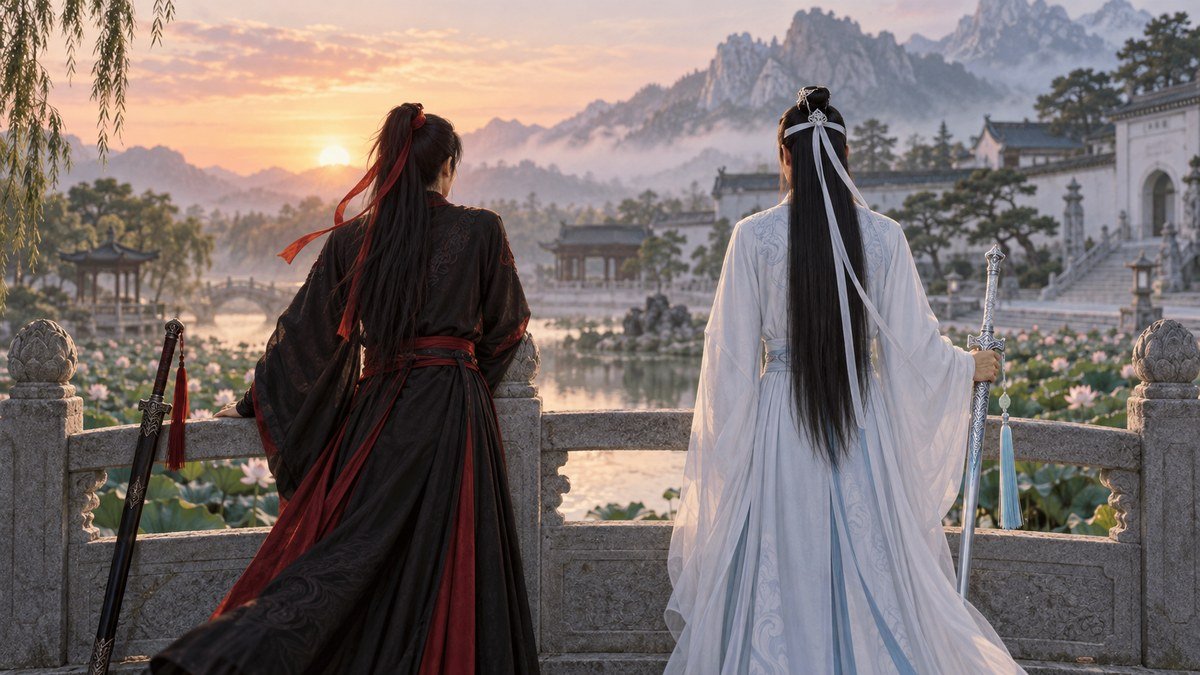
1–2. Suibian and Bichen — Freedom and Discipline
1. Suibian, Wei Wuxian’s Sword
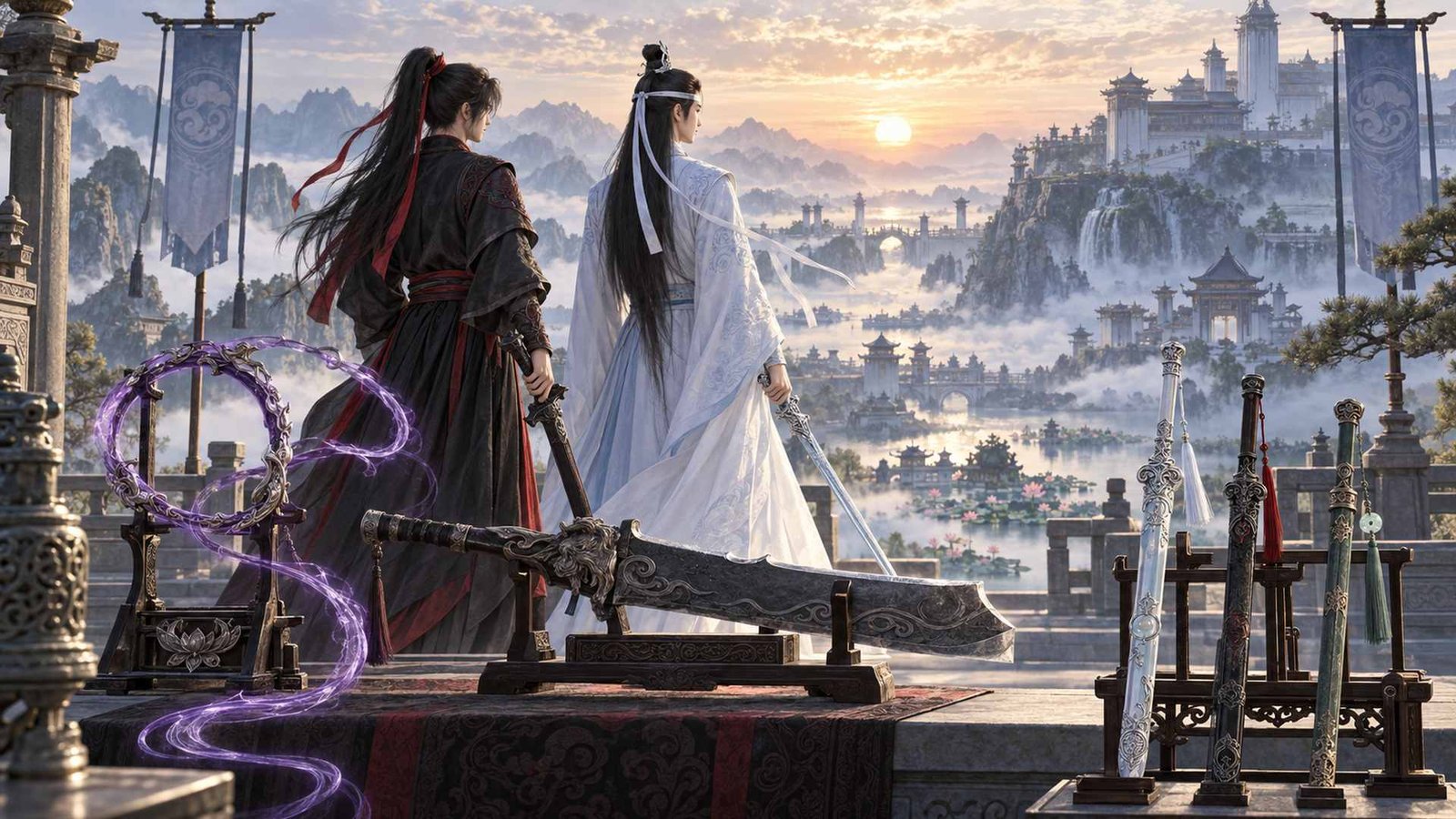
Suibian reflects the lightness and confidence of Wei Wuxian’s youth. Its famously casual name suits his humor and resistance to unnecessary solemnity, but the sword itself is not a joke. It belongs to a highly talented cultivator who once moved naturally within orthodox sword practice.
That early ease makes his later separation from Suibian emotionally powerful. After sacrificing his golden core for Jiang Cheng, Wei Wuxian can no longer use conventional sword cultivation as others expect. Because he keeps the sacrifice secret, people misread his avoidance of the sword as arrogance or contempt for tradition. The absent weapon becomes the visible outline of an invisible loss.
Suibian later helps expose the truth. Its sealed state and response to particular people connect Wei Wuxian’s changed behavior with the golden-core secret. The sword carries evidence that he himself refused to use in self-defense. It therefore represents both personal freedom and the terrible cost of protecting someone without explaining the sacrifice.
Suibian also complicates the idea that Wei Wuxian simply rejected orthodoxy because he preferred rebellion. His unorthodox path was shaped by necessity. The Wei Wuxian Character Study provides broader context for the courage, secrecy, and improvisation that the sword comes to embody.
2. Bichen, Lan Wangji’s Sword
Bichen expresses the opposite visual rhythm: pale, refined, precise, and controlled. It harmonizes with Lan Wangji’s white and pale-blue robes, measured movement, and white cloud-pattern forehead ribbon. The weapon appears to extend the discipline already visible in his body.
Consistency does not make Bichen static. As Lan Wangji’s moral understanding develops, the sword remains with him while the purpose of his obedience changes. He does not abandon cultivation or discipline; he learns to direct them according to conscience. Bichen therefore becomes an image of steadfastness without passivity.
When Lan Wangji draws Bichen, the gesture feels deliberate rather than impulsive. Precision matters more than display. This controlled style helps distinguish his strength from Wei Wuxian’s improvisation without reducing either man to a simple opposite.
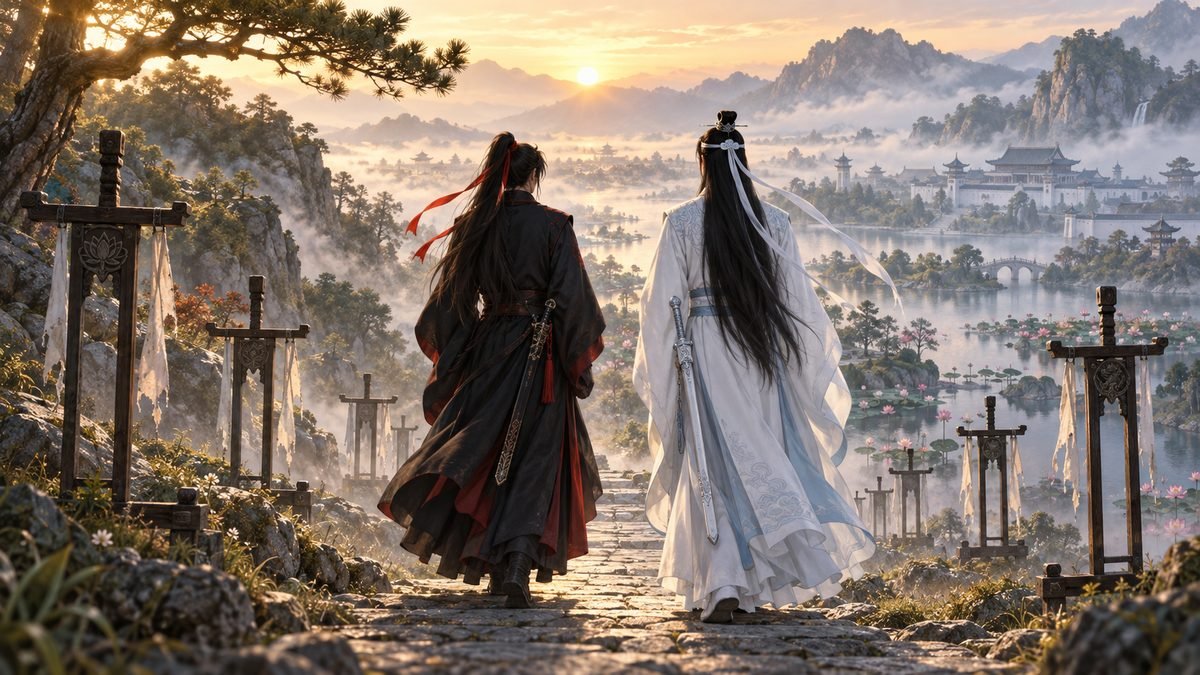
Suibian and Bichen together show two paths through the cultivation world. One sword becomes absent because its owner has lost what society assumes he still possesses. The other remains visibly present while its owner quietly changes what loyalty means. For more on that moral steadiness, see Lan Wangji Character Analysis.
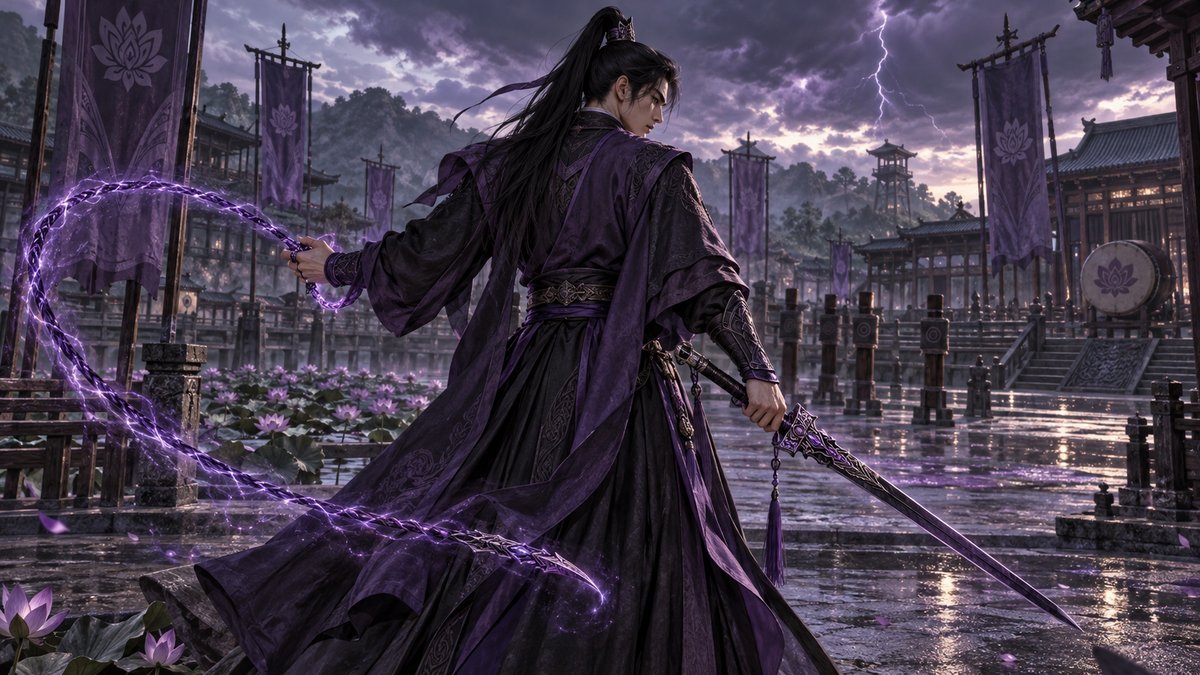
3–4. Sandu and Zidian — Jiang Cheng’s Burden of Inheritance
3. Sandu, Jiang Cheng’s Sword
Sandu is closely tied to Jiang Cheng’s identity as heir and later leader of Yunmeng Jiang. Its disciplined sword form fits a character who feels responsible for restoring order after catastrophic loss. Where Wei Wuxian often treats rules flexibly, Jiang Cheng relies on visible competence, status, and control to hold a damaged world together.
The sword carries pride, but that pride is defensive. Jiang Cheng repeatedly fears being judged as inadequate beside Wei Wuxian. Sandu becomes part of the image he must maintain: a legitimate cultivator, a capable clan leader, and a man who cannot afford public uncertainty.
Its name, often associated with overcoming the three poisons, creates an ironic tension with Jiang Cheng’s anger, resentment, and attachment. He has discipline, but discipline does not erase pain. The weapon shows the ideal he is meant to embody and the emotional struggle that makes the ideal difficult.
4. Zidian, the Purple Lightning
Zidian is one of the most visually distinctive The Untamed weapons. It can appear as a ring and transform into a glowing purple spiritual whip. That transformation compresses elegance and violence into the same object. Worn on the hand, it looks controlled; extended in anger, it claims space with unmistakable force.
The weapon first carries the authority of Madam Yu. Her severity, pride, protective instinct, and volatile family relationships remain attached to it. When Jiang Cheng inherits Zidian, he receives more than power. He inherits a style of defense shaped by anger and a legacy in which love is rarely spoken gently.
Zidian’s ability to test possession gives it an investigative role as well. In a story where bodies and identities can be uncertain, the whip turns suspicion into physical action. This function makes it both useful and frightening: proof is sought through force.
Together, Sandu and Zidian show Jiang Cheng carrying two kinds of inheritance. Sandu supports the public identity of a clan leader; Zidian preserves the intimate, painful authority of his mother. He wields both competence and unresolved family history.
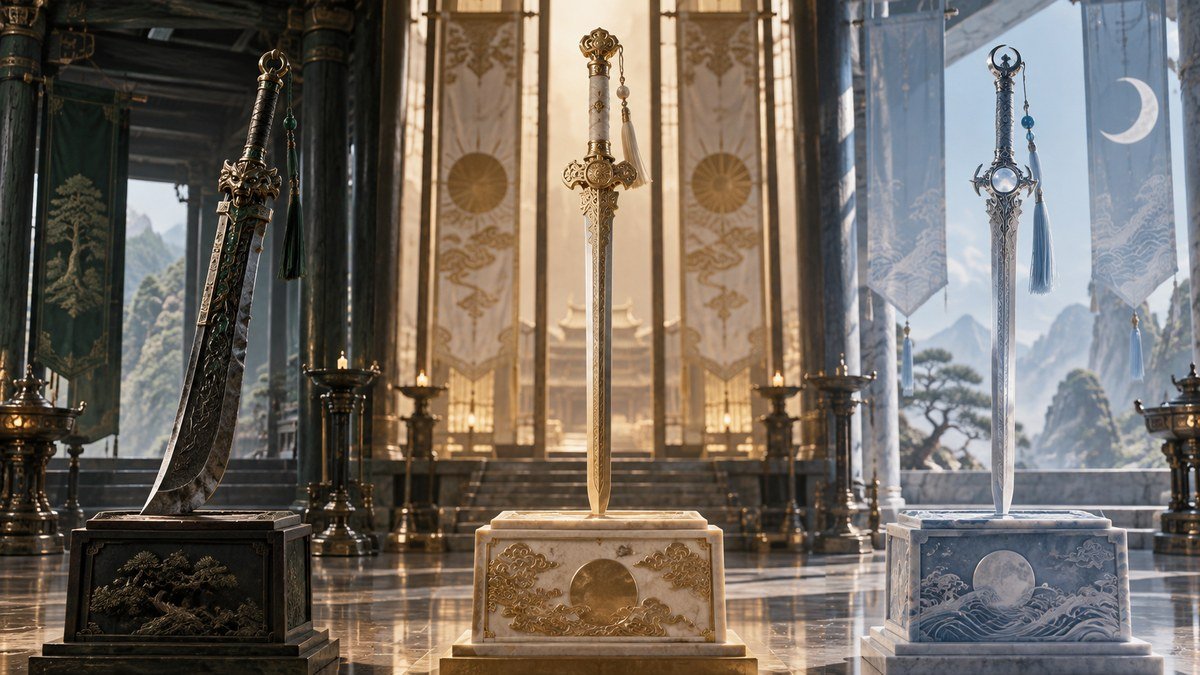
5–7. Baxia, Suihua, and Shuoyue — Clan Leadership in Three Forms
5. Baxia, Nie Mingjue’s Saber
Baxia reflects the Qinghe Nie saber tradition and Nie Mingjue’s uncompromising temperament. Its heavier visual presence differs from the refined line of a scholar’s sword. The saber suggests direct force, martial responsibility, and a clan culture in which strength is both protection and burden.
Nie Mingjue’s moral clarity can be admirable, but it can harden into inflexibility. Baxia fits that tension. The weapon feels decisive; it is suited to someone who wants evil named and confronted. Yet the saber tradition also carries spiritual danger, showing that cultivated power can damage the person expected to master it.
The relationship between saber and owner continues beyond ordinary life. Baxia’s agitation preserves Nie Mingjue’s unresolved violence and injustice. The weapon does not let the political world achieve a clean, convenient silence.
6. Suihua, the Sword of Jin Zixuan and Jin Ling
Suihua begins with Jin Zixuan and later passes to Jin Ling. Its gold-toned refinement fits Lanling Jin wealth and public elegance, but inheritance changes its emotional weight. For Jin Ling, the sword connects status with parents he barely knew.
Carrying Suihua means carrying expectations. Jin Ling inherits a prominent name, unresolved grief, competing family influences, and the pressure to appear stronger than he feels. The sword offers legitimacy while continually reminding him that his identity was shaped by absence.
Suihua therefore works as a family object rather than merely a combat tool. It allows Jin Zixuan’s place in the story to remain materially present. The younger bearer must decide what parts of that legacy to continue and what kind of person he will become beyond it.
7. Shuoyue, Lan Xichen’s Sword
Shuoyue matches Lan Xichen’s cultivated elegance and position as a clan leader. Like Bichen, it emerges from Gusu Lan discipline, but the person wielding it has a different social role. Lan Xichen often mediates, welcomes, interprets, and tries to preserve relationships across factional lines.
The sword’s refinement supports authority without the aggressive visual weight of Baxia. That contrast mirrors two leadership styles: Nie Mingjue confronts; Lan Xichen seeks understanding. Neither approach guarantees freedom from manipulation or tragedy.
Baxia, Suihua, and Shuoyue make clan leadership visible in three forms. One weapon bears the dangerous intensity of martial duty. One transfers family prestige and grief to a child. One represents polished authority vulnerable to misplaced trust. The weapons reveal that leadership is never only power; it is also inheritance, perception, and risk.
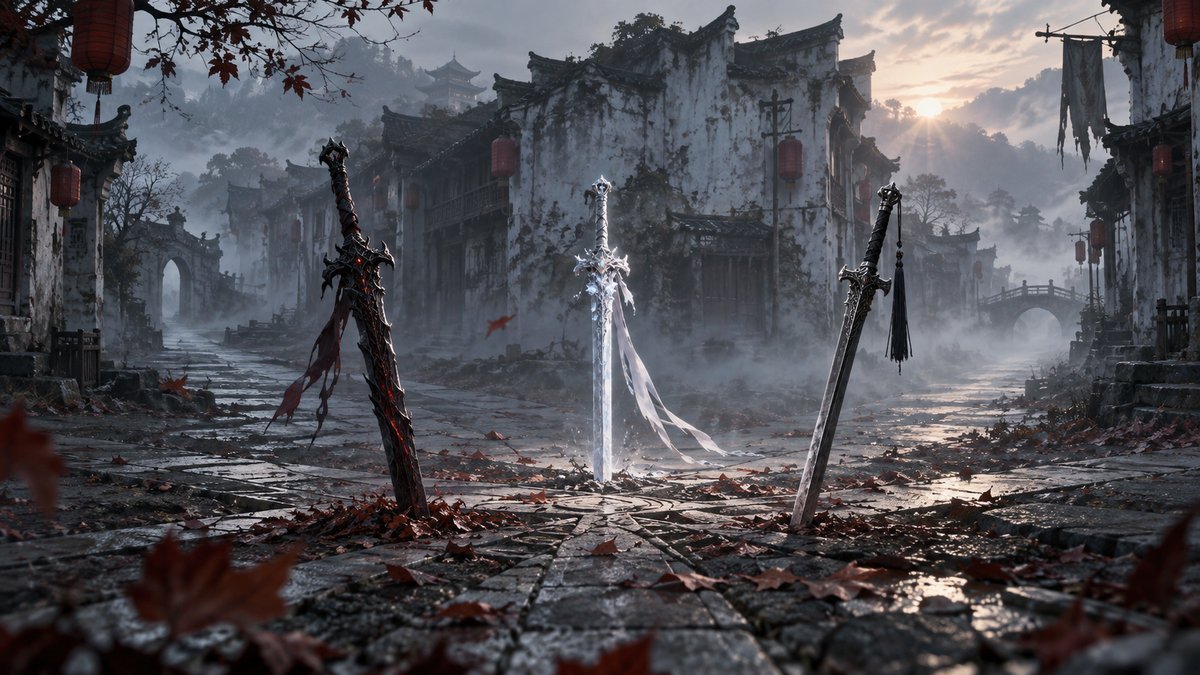
8–10. Jiangzai, Shuanghua, and Fuxue — The Moral Tragedy of Yi City
8. Jiangzai, Xue Yang’s Sword
Jiangzai belongs to Xue Yang, a character whose intelligence and talent are inseparable from cruelty, resentment, and the desire to control vulnerability before it can be used against him. The sword’s dark, sharp design reinforces danger without explaining it away.
In Xue Yang’s hands, skill becomes weaponized grievance. He understands systems well enough to exploit them and people well enough to manipulate their compassion. Jiangzai is frightening because it is wielded with precision rather than chaos.
The weapon also marks identity within deception. Yi City repeatedly turns on mistaken perception: who is present, who can be trusted, and who is acting behind another appearance. A personal sword can reveal the person that disguise attempts to hide.
9. Shuanghua, Xiao Xingchen’s Sword
Shuanghua reflects Xiao Xingchen’s clarity, idealism, and desire to act beyond narrow clan interests. Its pale elegance suits a wandering cultivator associated with moral aspiration rather than institutional ambition.
After Xiao Xingchen gives up his eyes, the sword’s spiritual responsiveness helps him continue to fight. That bond is admirable, but it becomes the mechanism through which he is deceived. He trusts the weapon to identify danger while Xue Yang manipulates the circumstances surrounding its guidance.
This is one of the drama’s cruelest weapon symbols. Shuanghua remains true to its function, yet truth is made destructive through false context. The sword shows that pure intention and reliable tools cannot protect someone when another person controls the information on which action depends.
10. Fuxue, Song Lan’s Sword
Fuxue belongs to Song Lan, whose relationship with Xiao Xingchen is shaped by shared ideals, separation, guilt, and unfinished loyalty. The sword carries the disciplined identity that violence tries to erase.
Within the Yi City tragedy, Fuxue helps keep Song Lan recognizable even when his body, voice, and freedom are compromised. A weapon may survive when ordinary communication cannot. It becomes a remaining link between the man he was, the friend who knew him, and the future he must carry alone.
Jiangzai, Shuanghua, and Fuxue form a tragic triangle. One sword serves manipulation, one is made to act on manipulated truth, and one endures as evidence of loyalty after devastating loss. Their meanings become clearest when read alongside the wider character patterns in The Untamed Character Analysis.
What the Weapons Reveal About Cultivation and Morality
The weapons show that cultivation is both spiritual practice and social institution. Sword skill signals education, legitimacy, and belonging. Losing access to that practice can damage reputation even when the loss results from sacrifice. This is why Wei Wuxian’s separation from Suibian becomes politically dangerous as well as personally painful.
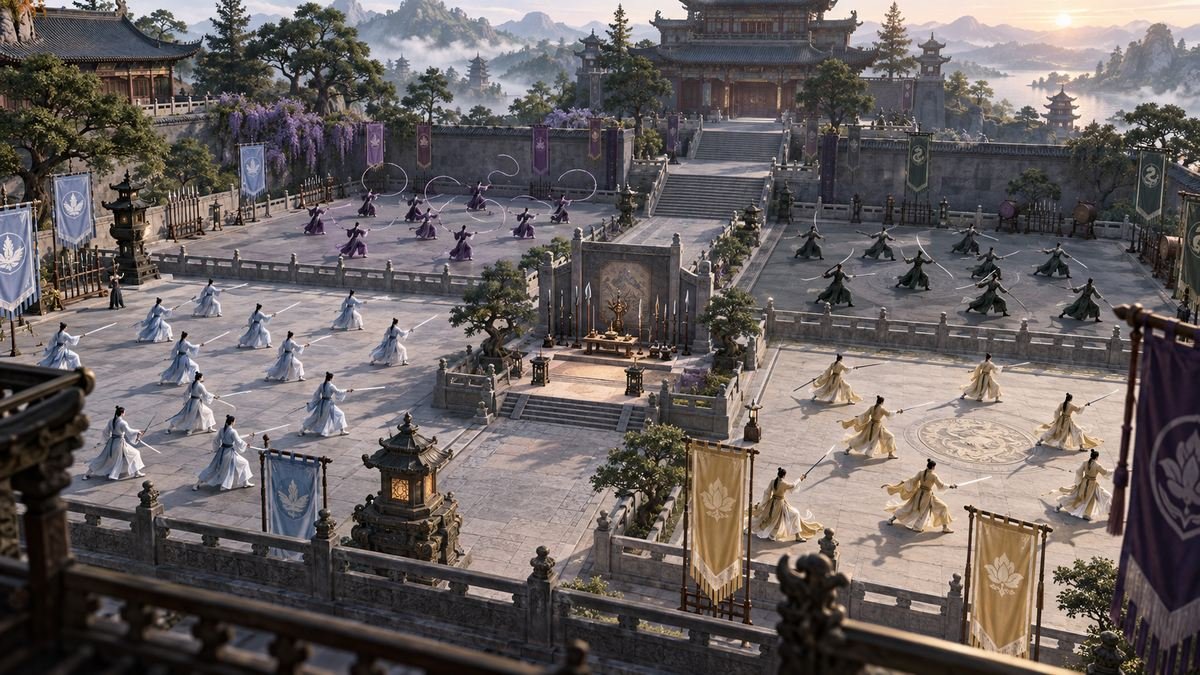
Different weapon traditions also preserve clan identity. The Nie saber is not simply a heavier sword; it belongs to a distinct martial and spiritual lineage with its own strengths and dangers. Gusu Lan weapons emphasize refined discipline. Yunmeng Jiang weapons combine fluid sword practice with Zidian’s forceful inherited authority. Lanling Jin weapons carry polished visibility and status.
Recognition between weapon and owner makes objects participants in questions of identity. A sealed blade, responsive sword, or transforming ring can confirm facts that testimony cannot. In a world of possession, disguise, political rumor, and damaged memory, material recognition matters.
Still, no weapon offers moral certainty. Nie Mingjue’s directness can become rigidity. Lan Xichen’s refinement cannot prevent misplaced faith. Xue Yang’s technical skill does not make his choices just. Wei Wuxian’s break from orthodox sword cultivation does not make him morally empty. The drama separates competence from goodness and legitimacy from truth.
Weapons are especially powerful after inheritance or death. Suihua transfers a family line to Jin Ling. Baxia refuses to let Nie Mingjue’s fate become quiet. Shuanghua and Fuxue preserve the broken history of Yi City. The object remains when its owner cannot speak, forcing survivors to decide what the legacy means.
This visual storytelling rewards close attention. The angle at which a character sets down a sword, the person permitted to carry it, or the moment a blade refuses another hand may contain a revelation. More examples of such recurring clues appear in The Untamed Hidden Details.
Frequently Asked Questions
What are the most important weapons in The Untamed?
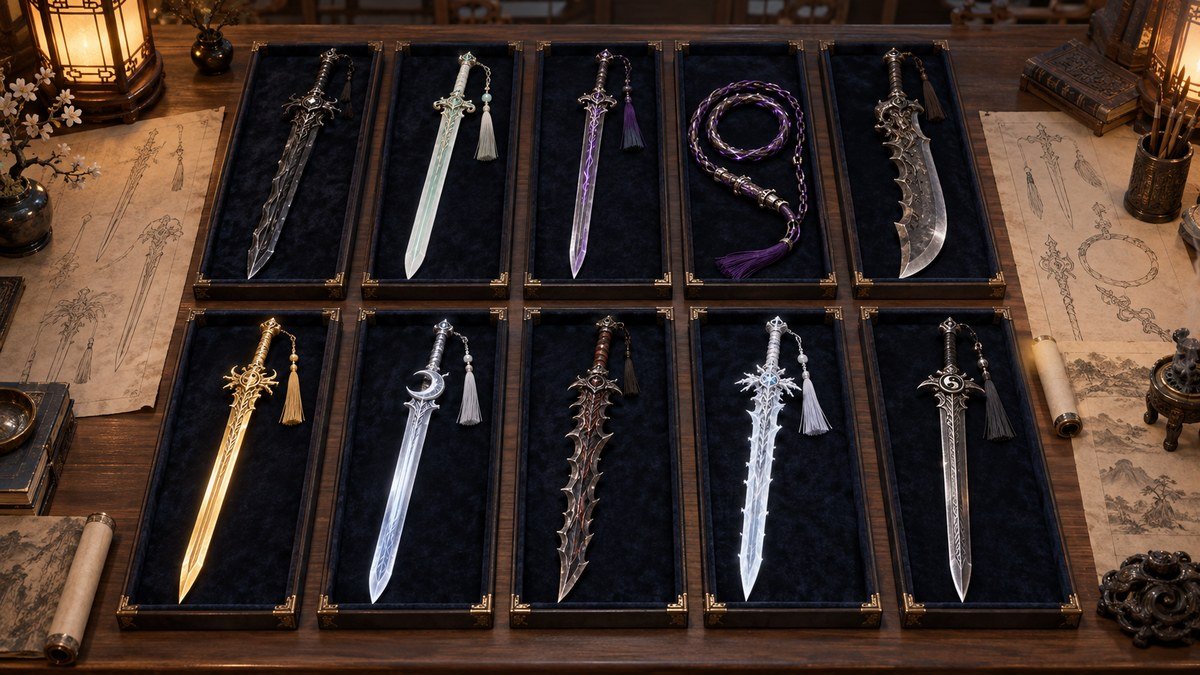
Suibian and Bichen are central because they reflect Wei Wuxian and Lan Wangji’s contrasting paths. Sandu, Zidian, Baxia, Suihua, and Shuoyue reveal clan and family legacies. Jiangzai, Shuanghua, and Fuxue are essential to the moral tragedy of Yi City.
Why does Suibian seal itself?
Suibian’s sealed state reflects its bond with Wei Wuxian. The sword’s unusual behavior later helps reveal the golden-core secret and confirm identity. It turns a spiritual bond between weapon and owner into evidence that challenges years of misunderstanding.
Is Zidian a ring or a whip?
It is both. Zidian rests in a compact ring form and can transform into a purple spiritual whip when activated. The dual form suits a weapon that combines inherited status, controlled appearance, and sudden force.
Why does the Nie clan use sabers?
Saber cultivation is a defining Qinghe Nie tradition. It supports a direct martial style but also carries a dangerous spiritual burden that requires special management. Baxia embodies both the clan’s strength and the cost attached to that strength.
Who inherits Suihua?
Suihua belongs to Jin Zixuan and later passes to his son, Jin Ling. The inheritance gives Jin Ling a tangible connection to his father while adding to the pressure of his Jin status and family history.
Are Chenqing and Wangji weapons?
They can be used in cultivation and combat, but they are musical instruments with broader roles involving communication, inquiry, control, healing, and memory. This article focuses on blades and Zidian; the instruments deserve separate analysis because their symbolic language extends far beyond fighting.
Conclusion
The Untamed weapons turn character history into visible form. Suibian carries freedom, sacrifice, and misunderstood absence. Bichen carries discipline guided by conscience. Sandu and Zidian burden Jiang Cheng with public leadership and private inheritance. Baxia, Suihua, and Shuoyue reveal three different costs of clan authority. Jiangzai, Shuanghua, and Fuxue preserve the manipulation, idealism, and loyalty of Yi City.
The weapons matter because no blade exists outside relationship. A sword recognizes an owner, passes to a child, survives a friend, exposes a secret, or refuses to let injustice disappear. The person gives the weapon purpose, while the weapon preserves a trace of the person.
That is why a close-up of a scabbard can feel as emotionally charged as a battle. These objects are witnesses. They outlast public stories and sometimes correct them. If you enjoy detailed readings of the drama’s visual language, you can support more essays through Ko-fi.
Fan-Favorite Collectibles & Gifts