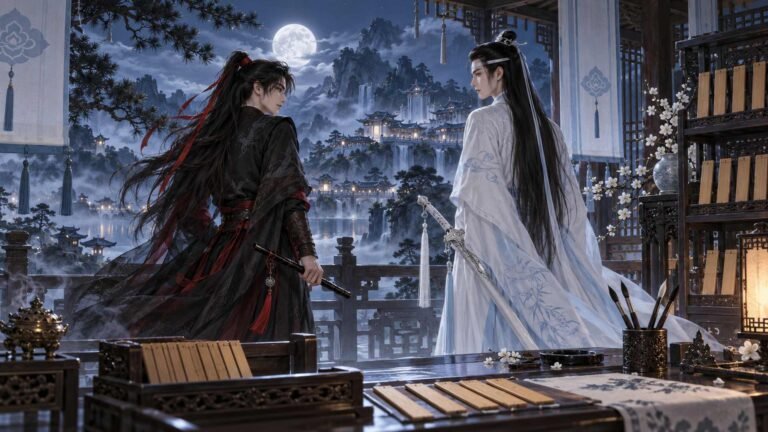

The Untamed Character Parallels: 8 Revealing Mirrors
The most revealing The Untamed character parallels are not always between people who look alike, share a clan, or even spend much time together. They emerge when different characters face a similar pressure and choose different ways forward. One protects through open defiance; another protects through silence. One survives by refusing society’s story; another learns to control the story told about him. These echoes make the drama feel larger than any single relationship.
Parallels do not mean that two characters are secretly the same, nor do they prove that the creators intentionally designed every visual resemblance as a code. They work best as a way of asking sharper questions. What does duty look like when love is private but reputation is public? Why does kindness survive in some people after violence, while fear hardens others? How much can timing, status, and support change a moral choice?
The eight connections below bring together central heroes, siblings, healers, survivors, strategists, and figures from the Yi City arc. Each comparison reveals a different part of the story’s emotional architecture—and gives rewatchers new details to follow.
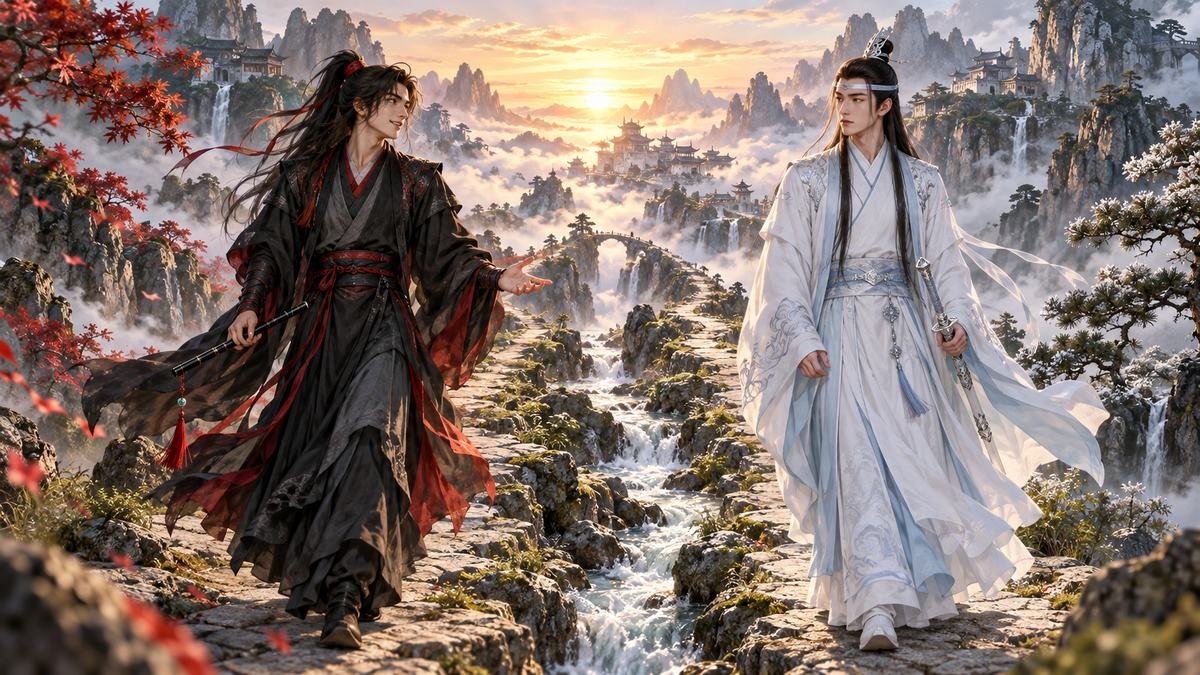
1. Wei Wuxian and Lan Wangji — Different Temperaments, Shared Moral Center
Connection 1: Rebellion and restraint reach the same answer
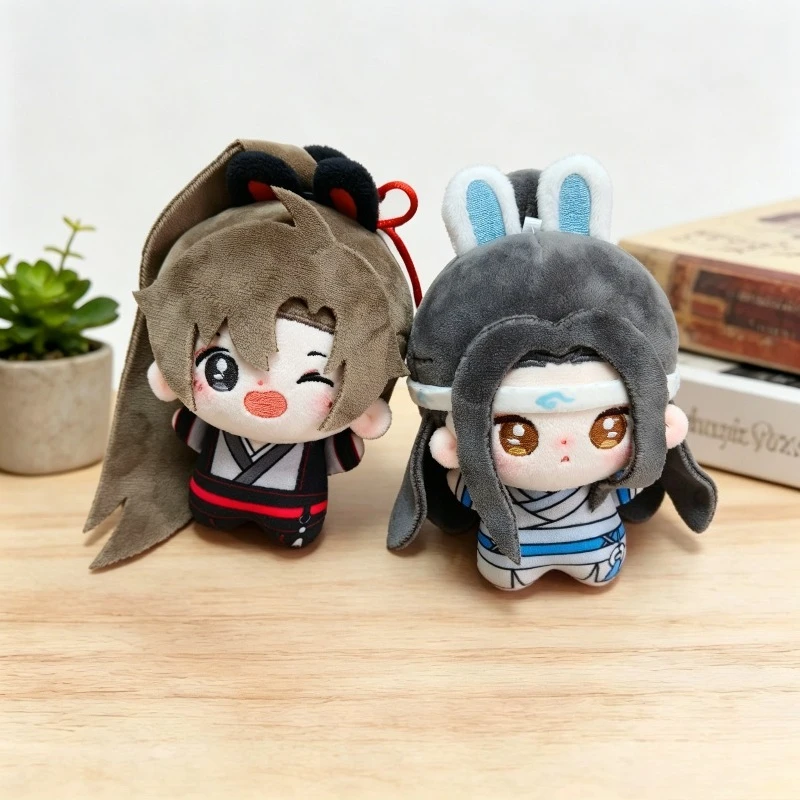
Wei Wuxian and Lan Wangji are the drama’s clearest parallel because their surfaces are built from contrast. Wei Wuxian moves quickly, talks freely, improvises, and turns rules into questions. Lan Wangji measures his words, respects form, and initially appears to embody the order Wei Wuxian disrupts. Their black-and-white visual pairing makes the difference easy to see, but the deeper mirror lies beneath style.
Both men eventually place conscience above approval. Wei Wuxian makes that priority visible early, often before he has considered the personal cost. Lan Wangji reaches similar decisions through reflection, discipline, and painful recognition. Their methods differ, yet each becomes willing to stand apart from the cultivation world when consensus fails the vulnerable. This is why their bond feels like recognition rather than simple attraction between opposites.
A broader The Untamed Character Analysis: 12 Hidden Insights helps place this mirror within the drama’s wider interest in identity, justice, and belonging. The comparison matters because neither man completes the other by supplying a missing virtue. Instead, each confirms that the other’s moral instinct is real.
Why the mirror becomes clearer on rewatch
First-time viewers often focus on conflict: someone challenges a rule, ignores a warning, or disagrees with another character. On rewatch, actions begin to rhyme. Both men remember what others dismiss. Both men remember what others dismiss. Their protective instincts become clear through actions rather than explanations. Even when public opinion turns against them, they accept isolation instead of compromising their principles.
Their parallel also prevents a shallow reading of freedom versus discipline. Wei Wuxian is not careless in everything, and Lan Wangji is not obedient in everything. Each learns to separate principle from performance. That distinction prepares the article’s next comparison, where love and duty remain aligned in feeling but collide in practice.
For a closer look at how Wei Wuxian and Lan Wangji build their connection through shared experiences, watch Their First Scene Together? Behind the Scenes of This Iconic Moment in The Untamed. This behind-the-scenes video offers another perspective on the characters’ early interactions.
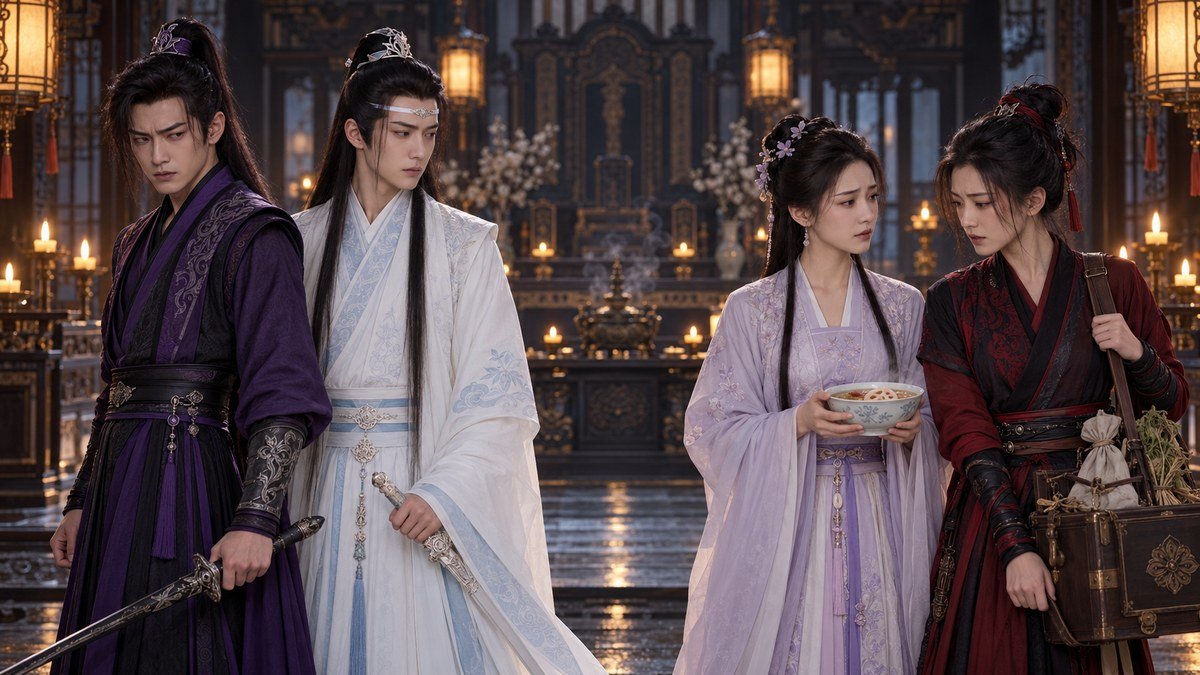
2. Love Under Pressure — Jiang Cheng, Lan Wangji, Jiang Yanli, and Wen Qing
Connection 2: Jiang Cheng and Lan Wangji carry loyalty differently
Jiang Cheng and Lan Wangji both care deeply for Wei Wuxian, but they carry that attachment through very different structures. Jiang Cheng’s love is tied to childhood, family survival, succession, and the expectation that two brothers will protect the same home. Lan Wangji’s loyalty grows through moral recognition and becomes increasingly independent of clan approval. Comparing them turns a familiar fandom argument into a more useful question: what happens when affection is asked to answer to duty?
Jiang Cheng experiences Wei Wuxian’s choices through accumulated loss. He is not only responding to one disagreement; he is trying to hold together a clan, a family memory, and a future that keeps narrowing. Lan Wangji also carries institutional expectations, but his position and temperament allow him to make resistance quieter and more sustained. The difference does not excuse every action or make their circumstances identical. It shows why similar devotion can produce protection in one moment and anger in another.
The drama’s broader web of loyalty is explored in The Untamed Relationship Analysis: 7 Powerful Insights. Through this lens, Jiang Cheng and Lan Wangji become parallel tests of whether love can survive shame, grief, and public pressure without turning into possession.
Connection 3: Jiang Yanli and Wen Qing make care an act of resistance
Jiang Yanli and Wen Qing are rarely treated as mirrors because their forms of strength look different. Jiang Yanli creates emotional shelter through patience, food, and an ability to see pain before it becomes speech. Wen Qing protects through medical skill, decisiveness, and clear-eyed responsibility. Yet both women practice care in worlds that repeatedly reward aggression more visibly than nurture.
Their tenderness is not passivity. Jiang Yanli’s calm presence interrupts cycles of comparison inside her family. Wen Qing’s competence preserves lives under conditions designed to make compassion dangerous. Each woman uses what she has—social warmth in one case, medical authority in the other—to defend people whose choices she cannot fully control.
This parallel also exposes the cost of being the person who keeps others functioning. Caregivers absorb fear, mediate conflict, and continue working while their own safety shrinks. Their stories lead naturally to two characters who receive and carry that care into the future.
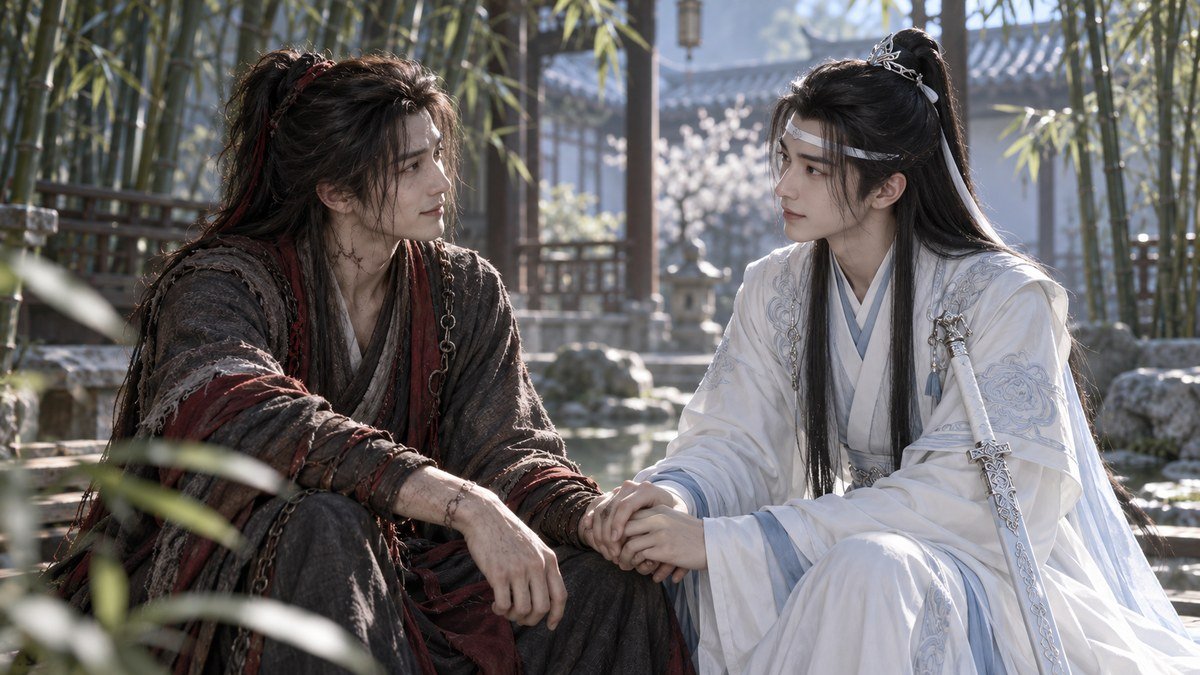
3. Wen Ning and Lan Sizhui — Gentleness That Survives Violence
Connection 4: Quiet strength without domination
Wen Ning and Lan Sizhui share a quality that The Untamed never treats as weakness: gentleness that persists after terror. Wen Ning begins shy and uncertain, yet his gratitude and loyalty repeatedly move him toward danger on behalf of others. Lan Sizhui is composed, courteous, and observant, but his calm does not prevent him from acting with courage. Neither needs dominance to prove strength.
Their connection is especially moving because violence attempts to rewrite both of them. After Wen Ning’s transformation, the cultivation world fears him and uses his existence as evidence against Wei Wuxian. Lan Sizhui grows up separated from his earliest identity and protected within a new family structure. One carries visible traces of what was done to him; the other carries memory in fragments. Still, compassion remains central to both.
A common fan reading sees their encounters as proof that the Wen remnants were never merely a tragic group from the past. Their values survive in people. Kindness becomes a form of continuity, linking a destroyed community to a young cultivator capable of meeting the world without inherited hatred.
Memory, identity, and the family they carry forward
The parallel does not erase the difference between Wen Ning’s burden and Lan Sizhui’s upbringing. Instead, it highlights two ways of living after catastrophe. Wen Ning remembers too much and must exist beside the labels imposed on him. Lan Sizhui remembers too little at first, then has to integrate recovered belonging with the life that raised him.
For both characters, identity extends beyond a public name or clan record. It lives in instinctive trust, in the choice to treat strangers with dignity, and in recognition that arrives before a full explanation. Such gentleness comes from experience rather than a sheltered life.
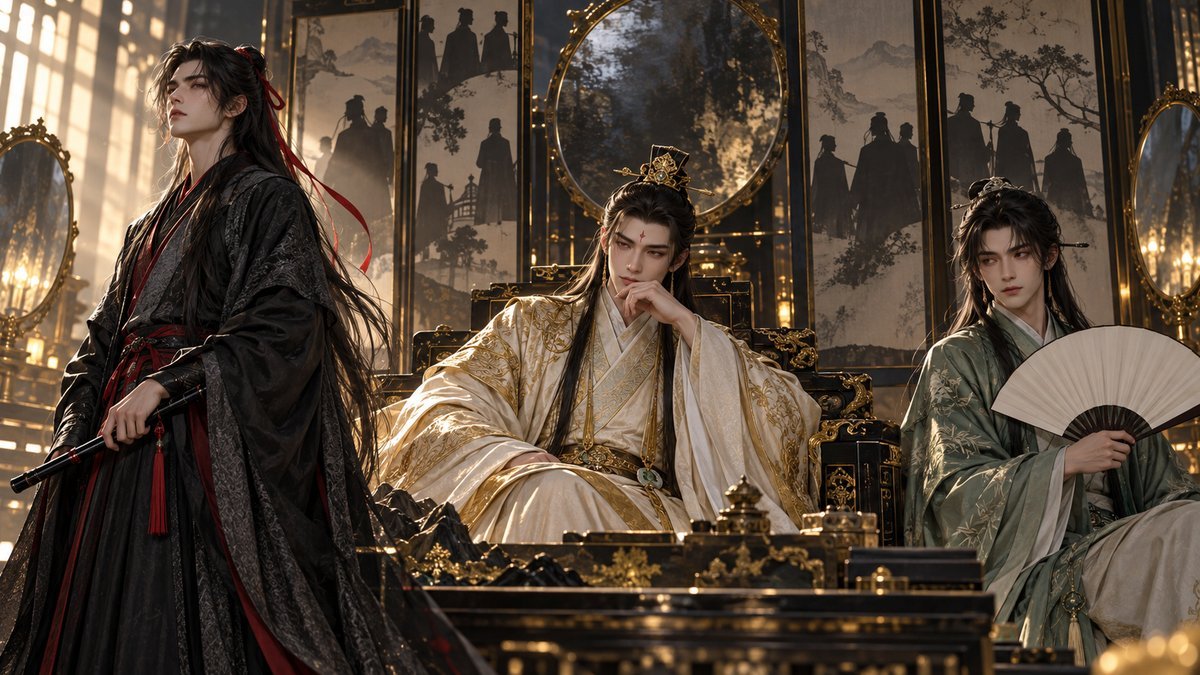
4. Reputation as a Weapon — Wei Wuxian, Jin Guangyao, and Nie Huaisang
Connection 5: Wei Wuxian and Jin Guangyao are judged through public stories
Wei Wuxian and Jin Guangyao both understand that the cultivation world rarely judges an action without first judging the person’s status. Rumor gathers around them, alliances determine which version of events sounds credible, and reputation can become stronger than direct evidence. This shared pressure makes them a powerful parallel, even though their responses move in sharply different moral directions.
Wei Wuxian increasingly refuses to manage how respectable society sees him. His defiance gives others room to simplify him into a threat, but he continues to act according to his own sense of justice. Jin Guangyao becomes intensely attentive to perception. Exclusion teaches him that courtesy, usefulness, and the right public mask can open doors that birth has closed. He does not merely endure the social story; he learns to edit it.
That difference is crucial. Similar wounds do not produce identical choices. The comparison invites empathy for the pressure without collapsing accountability for what follows. It also sharpens one of the drama’s central questions: when a society distributes trust according to rank, how easily can truth survive?
Readers who enjoy tracing small visual and behavioral clues may find additional context in The Untamed Hidden Details: 10 Secrets You Missed. Politeness, posture, who receives a seat, and who is allowed to speak often reveal the power surrounding a character before the plot states it openly.
Connection 6: Jin Guangyao and Nie Huaisang turn underestimation into strategy
Jin Guangyao and Nie Huaisang are also linked by performance. Both are underestimated, although for different reasons. Others dismiss Jin Guangyao because of his birth and apparent softness.Nie Huaisang cultivates the image of someone harmless, overwhelmed, and uninterested in power. Each learns that being overlooked can create room to observe.
Their intelligence works socially rather than through spectacular combat. They read hierarchy, emotion, timing, and the stories people want to believe. A smile, a hesitation, or a display of helplessness can move events as effectively as a sword. Yet the parallel again leads to divergence: similar tools can serve survival, ambition, revenge, or exposure.
Placing them side by side changes how viewers read apparently minor scenes. Competence is not always announced. Weakness may be genuine in one moment and strategically useful in another. The drama asks audiences to notice who benefits when everyone else stops paying attention.
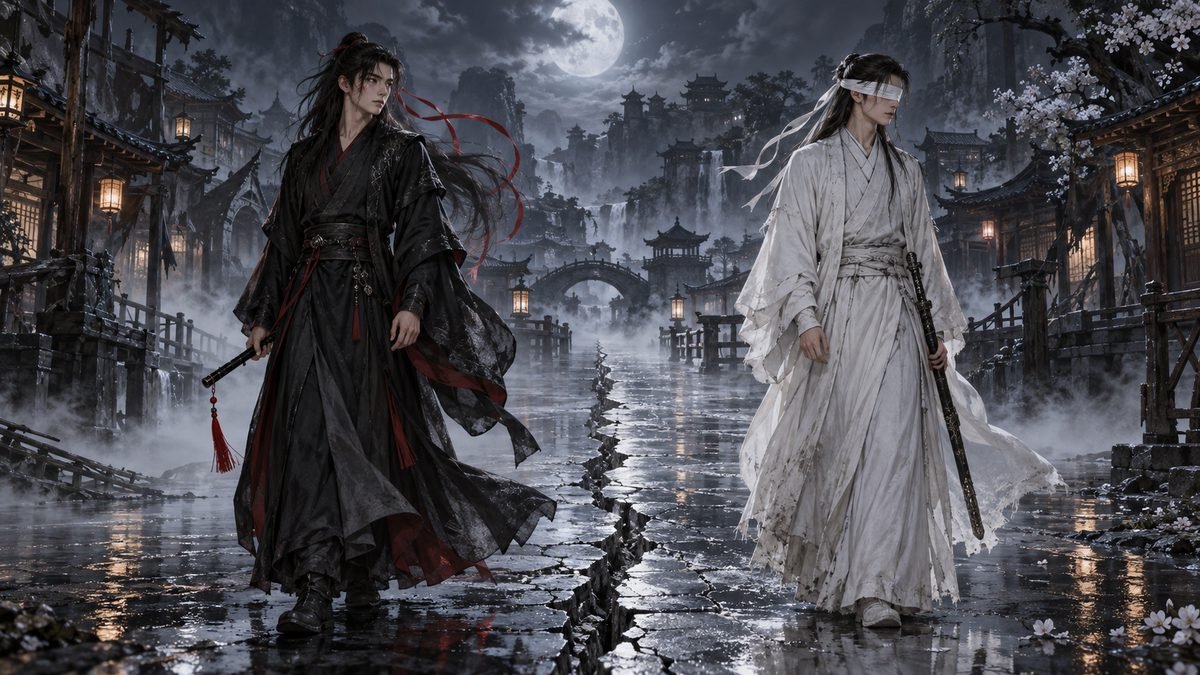
5. The Yi City Echo — Xiao Xingchen, Wei Wuxian, Song Lan, and Lan Wangji
Connection 7: Xiao Xingchen and Wei Wuxian pursue justice beyond institutions
The Yi City arc feels like a contained tragedy, but it echoes the main story through Xiao Xingchen’s idealism. Like Wei Wuxian, he wants righteousness to mean more than loyalty to established groups. He chooses a path outside conventional clan power and believes action should answer directly to suffering. That independence is admirable, yet it also leaves him exposed.
Both men discover that moral clarity does not guarantee control over consequences. Manipulators can exploit good intentions when people lack complete information, place their trust in the wrong person, or lose the support of their community. The parallel is not a claim that their stories or mistakes are identical. It shows how the drama tests independent virtue in a world where truth is fragmented and reputation travels faster than evidence.
The Yi City echo therefore deepens the main narrative without repeating it. Viewers see another version of the desire to help freely, another cost of isolation, and another warning about how cruelty exploits compassion. The arc asks what idealism needs in order to survive: not less kindness, but trustworthy connection and knowledge.
To revisit the Yi City storyline, watch Wei Ying Leads the Juniors Into Yi City and Discovers Xiao Xingchen’s Body. The scene provides a useful reference for exploring the arc’s themes of compassion, loss, and incomplete knowledge.
Connection 8: Song Lan and Lan Wangji express devotion through endurance
Song Lan and Lan Wangji offer a quieter parallel. Both are restrained cultivators whose attachment becomes legible through persistence rather than constant explanation. Separation does not erase loyalty. Grief changes the shape of their devotion, but neither treats absence as proof that the bond was meaningless.
This comparison should remain interpretive. The relationships, circumstances, and endings differ. What connects the two men is an emotional grammar: they carry memory through action, endure what cannot be repaired immediately, and continue when speech offers no easy release. Their silence contains commitment rather than emptiness.
Many of the drama’s early echoes become clearer through its use of setup and return. The Untamed Foreshadowing: 15 Hidden Clues Fans Missed offers a related way to watch for repeated images and choices. Yi City matters because it refracts themes from the larger story, allowing viewers to feel how a different combination of timing and knowledge can redirect similar hopes.
6. How Character Parallels Change a Rewatch
Look for repeated choices, not matching biographies
The most useful way to study The Untamed character parallels is to follow choices under pressure. Two characters do not need matching childhoods or identical personalities. Ask what each does when an institution fails, when love threatens status, when information is incomplete, or when grief makes kindness costly. The answer reveals both resemblance and difference.
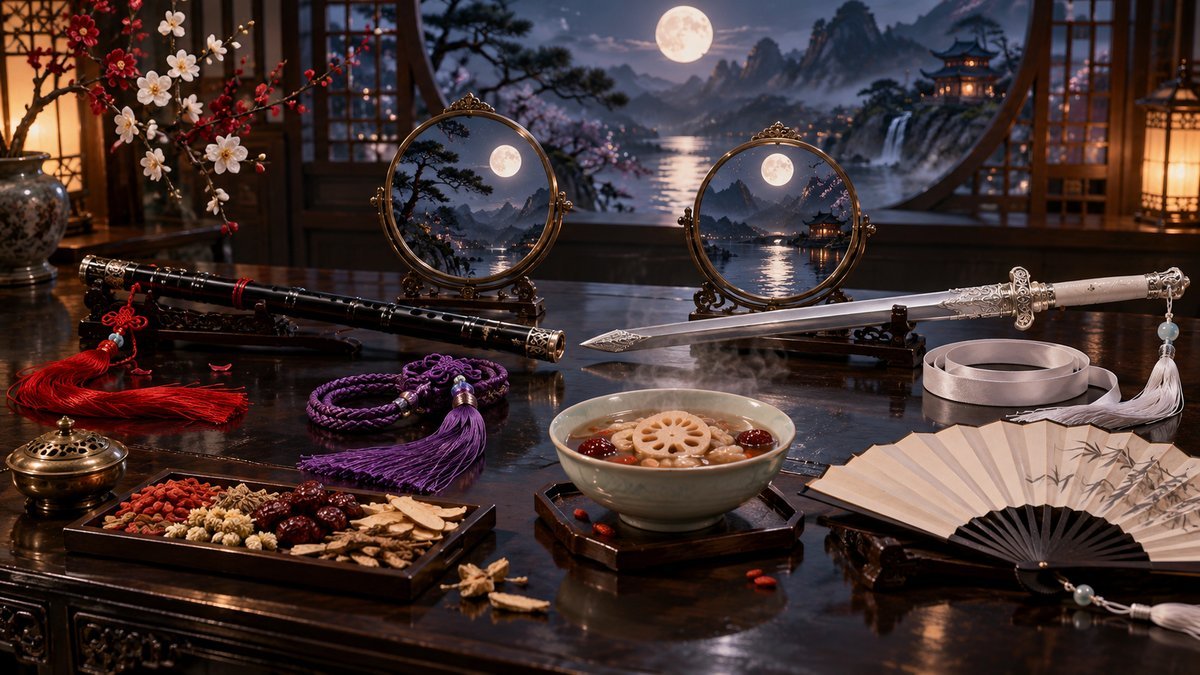
Visual details can support the comparison. Doorways separate private feeling from public duty. Weapons express discipline, inheritance, or unconventional power. Music allows memory and emotion to move where direct speech cannot. Costumes identify belonging while also showing how a person fits—or refuses to fit—inside it. These patterns are strongest when they remain connected to character action rather than becoming a hunt for secret codes.
Parallels preserve moral complexity
Comparison can make the drama more compassionate without making every choice equivalent. Jiang Cheng and Lan Wangji both love, yet their fear, responsibilities, and decisions differ. Wei Wuxian and Jin Guangyao both suffer public judgment, yet shared injury does not erase moral agency. Wen Ning and Lan Sizhui both survive violence, but they carry memory in different ways.
That balance explains why the series supports so much discussion. A parallel opens a question instead of closing it. What support did one character receive that another lacked? Which social privilege changed the cost of resistance? At what moment did self-protection become harm? Rewatching through these questions reveals a story designed around choices that echo without ever becoming simple copies.
Frequently Asked Questions
What are the most important character parallels in The Untamed?
The central parallel is Wei Wuxian and Lan Wangji: contrasting temperaments guided by a shared moral center. Other revealing mirrors include Jiang Cheng and Lan Wangji, Jiang Yanli and Wen Qing, Wen Ning and Lan Sizhui, Wei Wuxian and Jin Guangyao, Jin Guangyao and Nie Huaisang, Xiao Xingchen and Wei Wuxian, and Song Lan and Lan Wangji.
Are character parallels always intentional?
Not every resemblance can be confirmed as deliberate. A careful reading distinguishes visible patterns from claims about authorial intent. Repeated choices, images, and narrative situations can still create meaningful comparisons, but fans should frame uncertain connections as interpretations rather than proven production decisions.
Why compare Jiang Cheng and Lan Wangji?
Both men care for Wei Wuxian while carrying strong clan expectations, yet they respond differently when loyalty becomes publicly costly. The comparison reveals how grief, position, temperament, and responsibility shape devotion. It can deepen understanding without turning either character into a simple model of right or wrong.
How does the Yi City arc mirror the main story?
Yi City repeats themes of independent justice, incomplete knowledge, manipulation, separation, and enduring loyalty. Xiao Xingchen’s idealism recalls Wei Wuxian’s willingness to act outside institutions, while Song Lan’s persistence can echo Lan Wangji’s devotion. The arc changes the circumstances, allowing similar hopes to reach a more tragic result.
Do similar characters make the same moral choices?
No. Similar pressures can produce very different decisions, which is precisely why parallels are useful. Wei Wuxian and Jin Guangyao both experience judgment shaped by status and rumor, but they respond differently to power, truth, and accountability. A parallel clarifies agency instead of removing it.
What should viewers watch for on a rewatch?
Watch for repeated decisions and visual language: who crosses a threshold, who remains silent, who receives protection, and whose testimony is believed. Notice music, weapons, clothing, seating, and physical distance. These details can connect characters emotionally without requiring an exact one-to-one match.
Conclusion — Every Mirror Reveals a Choice
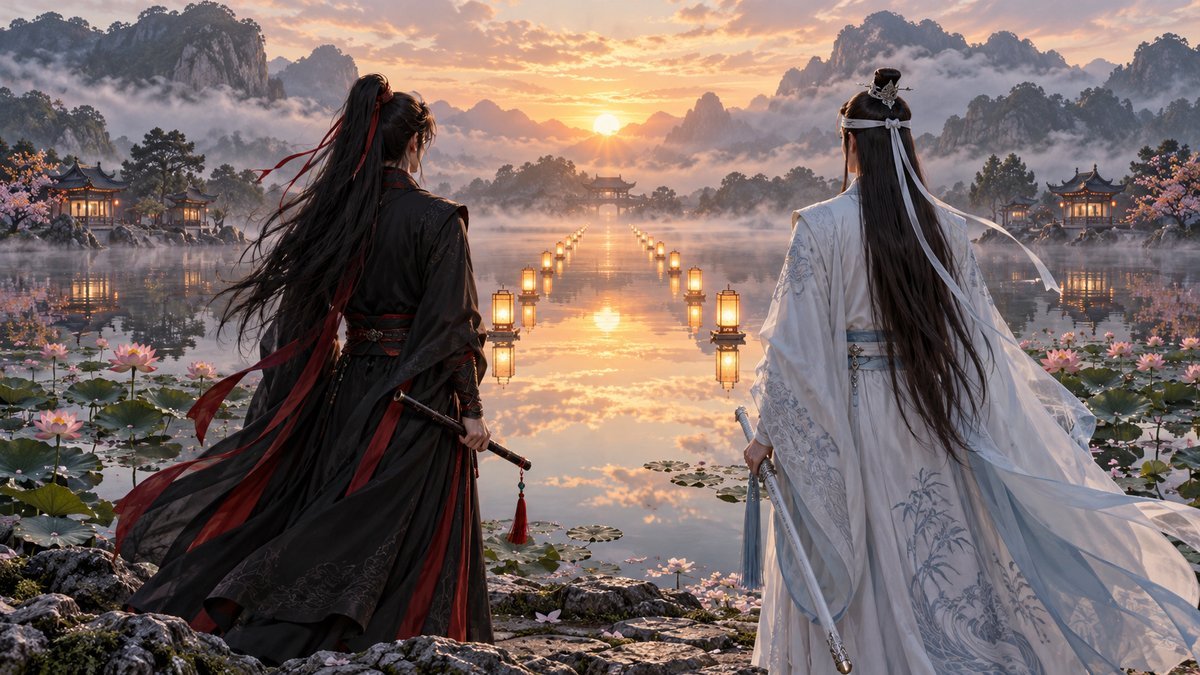
The eight connections in this article show why The Untamed character parallels remain so rewarding. Wei Wuxian and Lan Wangji reveal shared principle beneath contrasting styles. Jiang Cheng and Lan Wangji show devotion pressured by different forms of duty. Jiang Yanli and Wen Qing turn care into protection, while Wen Ning and Lan Sizhui prove that gentleness can survive violence.
The darker mirrors matter too. Wei Wuxian and Jin Guangyao demonstrate how public stories can decide who receives trust, even as their later choices resist any easy equivalence. Jin Guangyao and Nie Huaisang remind viewers that social intelligence often hides behind the appearance of weakness. In Yi City, Xiao Xingchen and Song Lan refract the main story’s idealism, separation, and endurance through a more fragile set of circumstances.
None of these parallels reduces a character to someone else’s copy. Each one preserves difference while revealing the pressure points that organize the drama: reputation, family, justice, memory, and the need to be understood. That is why a rewatch can feel like a new conversation. Once one echo becomes visible, another waits behind it.
Which character parallel changed the way you understood the story most?