The Untamed Editing Style: Why Pacing Works
The Opening Cut Turns Tragedy into a Question
Fragmented images create mystery
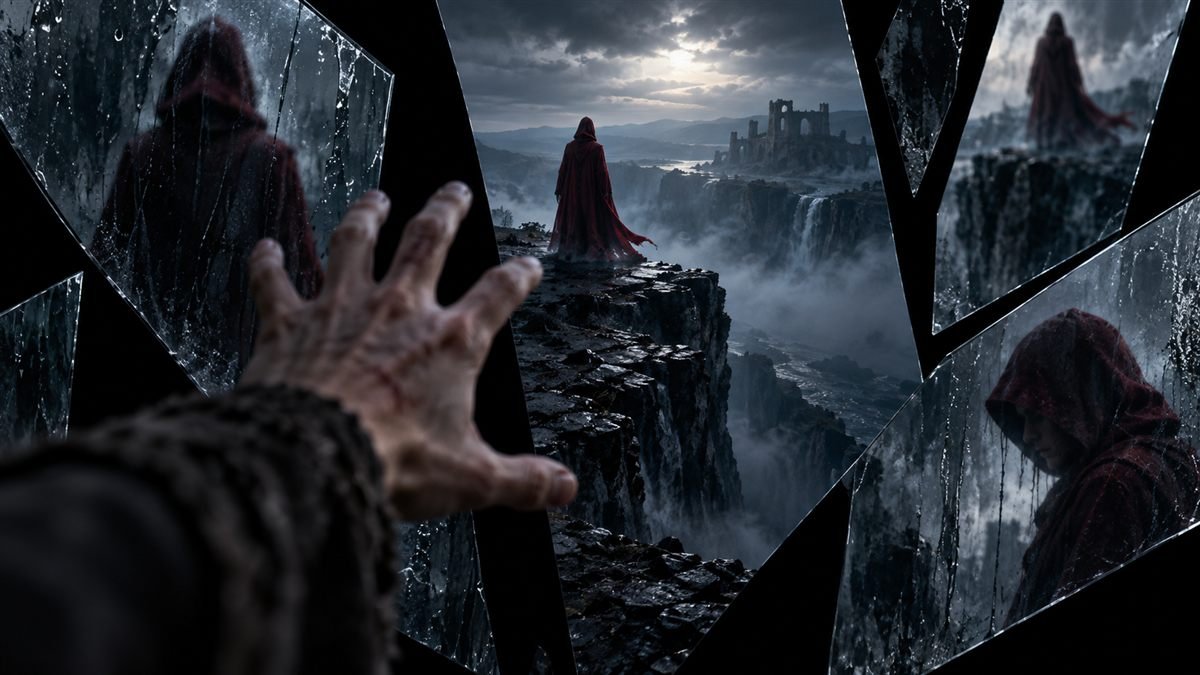
The opening does not offer a calm introduction to the clans, rules, or relationships. It gives us pieces. Wei Wuxian stands at the edge of catastrophe. Voices accuse him. Lan Wangji reaches for him. Jiang Cheng appears with anger that cannot yet be interpreted. The edit withholds the connective tissue between these images, so each face becomes an unanswered question.
This fragmentation immediately places viewers in a world where reputation travels faster than truth. We see the public version of a downfall before we know the private history behind it. The sequence therefore works like a visual rumor: emotionally forceful, incomplete, and dangerously persuasive. A companion guide such as The Untamed Timeline Explained: 7 Secrets You Missed can clarify chronology, but the initial uncertainty is not a failure to communicate. It is the point.
Beginning with consequence before cause
By showing the fall first, the drama transforms the past into an investigation. Every act of kindness, rivalry, compromise, and rebellion carries an invisible countdown. The audience watches young Wei Wuxian laugh in Cloud Recesses while remembering the isolated figure at the cliff. Joy becomes fragile because the edit has already revealed its eventual cost.
This is why the series’ central question is never merely “What happens next?” It is “How could all of this become that?” The technique turns character development into suspense. Even familiar genre beats—training, friendship, political alliances—feel charged because the future has contaminated them. The result complements the moral reversals examined in The Untamed Plot Analysis: 12 Shocking Twists: each revelation changes not only the plot but also our judgment of what we saw earlier.
Why early confusion is purposeful
New viewers often wonder whether they have missed an episode. Names, titles, clan colors, and political relationships arrive quickly, while the timeline refuses to settle immediately. Yet this temporary instability makes us active participants. We begin sorting testimony from fact and public condemnation from personal memory, just as the resurrected Wei Wuxian must navigate a world that has preserved a distorted version of him.
The opening is therefore a contract. It asks for patience and promises reinterpretation. When later scenes finally supply the missing causes, the satisfaction is more than informational. We experience the ache of recognition. The same images that once looked like evidence of guilt become evidence of abandonment, fear, and impossible choices.
The audience learns to distrust the official version
The first sequence also establishes a gap between what a crowd believes and what an image can prove. We hear certainty, but we see distress, hesitation, and competing motives. By cutting among those signals, the drama prevents the loudest accusation from becoming an objective account. That lesson matters throughout the series. Councils, rumors, and clan histories repeatedly offer clean explanations for messy human events, while the edit preserves contradictions at the edges of the frame.
Viewers gradually adopt a more careful way of watching. We look for the person who does not applaud, the pause before agreement, and the reaction that arrives after everyone else has turned away. In this sense, the opening is not only a hook; it trains the audience in the story’s ethics. Judgment delivered quickly may feel satisfying, but understanding requires duration. The series will spend dozens of episodes replacing certainty with context.
The Long Flashback Builds Emotional Cause and Effect
One sustained past timeline changes the viewing experience
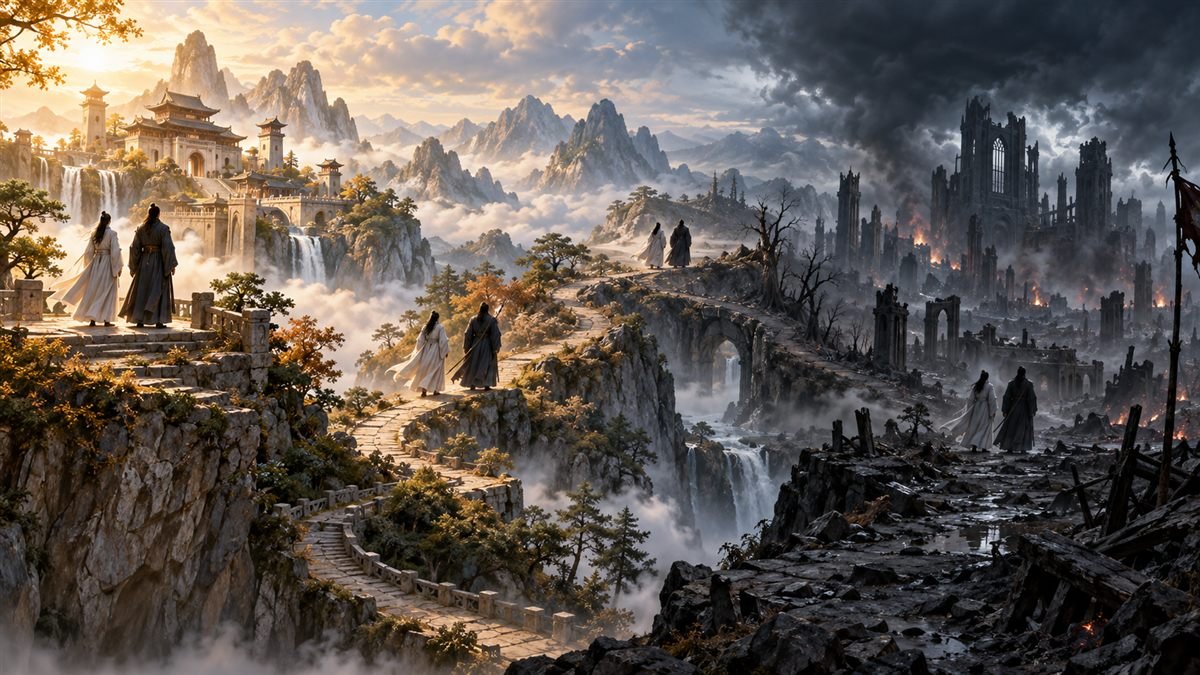
After briefly establishing the present, the drama enters an unusually long flashback and stays there. Instead of repeatedly cutting between “then” and “now,” it allows the past to become the viewer’s present. That decision reduces constant timeline hopping and gives relationships room to develop in sequence. We stop waiting for isolated explanations and begin living through the chain of causes ourselves.
The adaptation’s structure differs from the source novel’s more intricate movement through memory. The Untamed vs Novel: 9 Key Differences Fans Must Know helps explain that contrast. For television, the sustained flashback creates a broad tragic arc: innocence, discovery, conflict, separation, and collapse. It is easier to follow emotionally even when the cultivation politics remain dense.
Slow accumulation makes the fall hurt
The past does not race toward disaster. It lingers over lectures, night hunts, teasing, meals, family arguments, and small acts of protection. Some viewers experience this as slowness, but accumulation is the mechanism of grief. A tragedy hurts because we have watched ordinary life become precious before it disappears.
The The Untamed editing style frequently delays obvious payoff. A minor exchange may seem decorative until later consequences reveal it as the foundation of loyalty or resentment. This patient layering is part of why Mo Dao Zu Shi Adaptation: Why The Untamed Is a Global Hit resonates with viewers far beyond its original audience. The show makes its mythology accessible through emotional cause and effect.
Returning to the present resets the story
When the narrative finally returns to the present, the effect is startling. The older faces are no longer mysterious labels; they carry the weight of everything we witnessed. The pace also changes. Questions that once seemed enormous can now be pursued directly because the audience understands the hidden history behind them.
The return functions like a second beginning. Wei Wuxian has knowledge we share, while many people around him remain trapped in old narratives. The edit can therefore create tension through recognition rather than explanation. A glance toward Lan Wangji or a pause before a familiar name contains sixteen years of absence without requiring a speech.
The flashback gives secondary characters complete emotional arcs
A shorter or more fragmented return to the past might have reduced supporting characters to clues. The sustained structure instead allows Wen Qing, Wen Ning, Jiang Yanli, Jiang Cheng, Nie Huaisang, and others to exist before their choices become plot functions. We see habits, loyalties, irritations, and private tenderness accumulate. Later consequences hurt because the edit has given these people continuity.
This is especially important in a story about how institutions erase individuals. The cultivation world may label an entire group dangerous, but the flashback has already shown meals, medical care, jokes, fear, and family bonds. Editing becomes an argument against abstraction. By spending time with people before history turns them into symbols, the drama makes collective judgment feel morally inadequate.
Slow Pacing Makes Relationships Feel Lived In
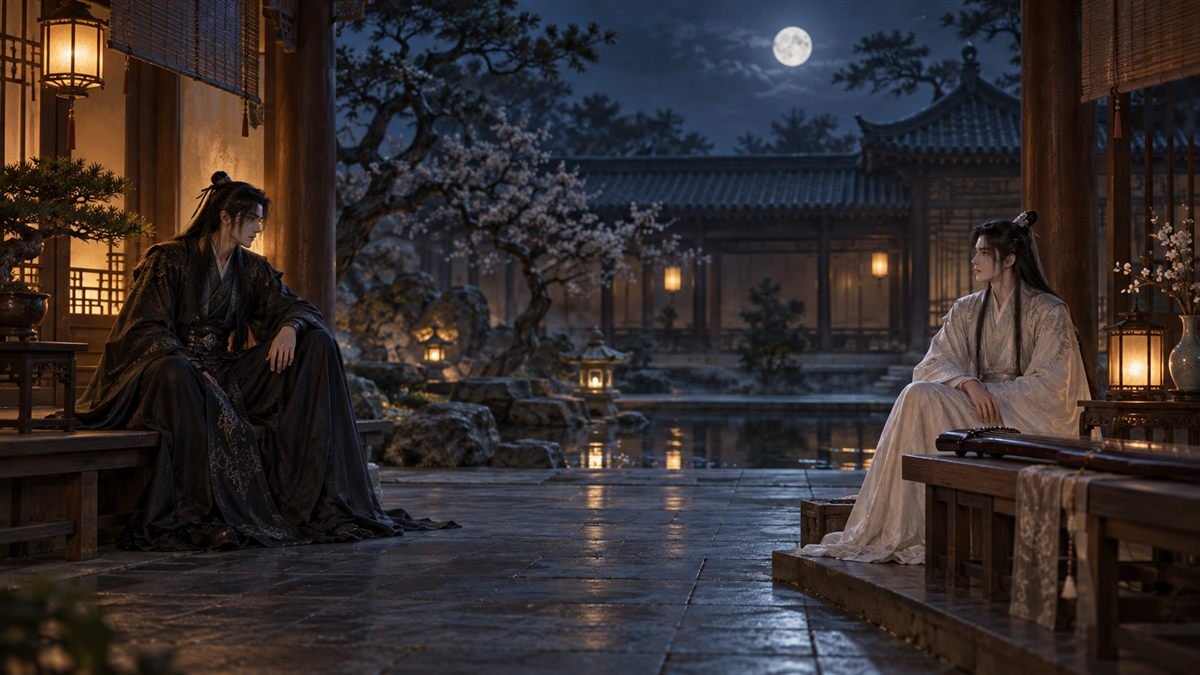
Pauses let WangXian meaning surface
Some of the drama’s most important relationship beats happen between lines. Lan Wangji looks, hesitates, and chooses restraint. Wei Wuxian jokes, notices the silence, and changes direction. The camera often remains after dialogue has finished, allowing discomfort or tenderness to arrive a fraction later than the words.
Those pauses are essential in a story where devotion is expressed through action and implication. The relationship analysis in The Untamed Relationship Analysis: 7 Powerful Insights becomes even clearer when we notice how often the edit protects silence instead of cutting away. Meaning lives in duration: a gaze held long enough to become a decision.
Reaction shots carry unspoken emotion
When one character speaks, the decisive shot often belongs to the listener. Lan Wangji’s controlled expression reveals concern before he intervenes. Jiang Cheng’s face records fear beneath anger. Jiang Yanli’s response can soften a room that has turned hostile. These reaction shots prevent dialogue from owning the entire truth.
The technique is especially powerful for WangXian because their bond develops through recognition. A chronological guide like WangXian Relationship Timeline: From Rivals to Soulmates tracks the major milestones, while the edit supplies the quieter connective tissue. Brief responses tell us when teasing becomes trust and when concern becomes unwavering commitment.
Quiet scenes balance political conflict
Clan politics could easily reduce the drama to councils, accusations, and battles. Instead, quiet interludes restore a human scale. Characters share food, walk through markets, sit beside water, or listen to music. These scenes are not breaks from the story; they show what the conflict threatens to destroy.
The pacing also lets different forms of love coexist. Sibling loyalty, mentorship, friendship, grief, and chosen companionship receive their own rhythms. By refusing to treat every scene as a rush toward plot, the series gives viewers time to inhabit the emotional world. That spaciousness is one reason separation later feels like the loss of a real place rather than the completion of a narrative beat.
Emotional rhythm replaces explicit declaration
The relationship between Wei Wuxian and Lan Wangji develops through a pattern: approach, resistance, recognition, separation, and return. Individual scenes rarely announce where the bond stands. Instead, their placement creates progression. A playful encounter may be followed much later by a protective action that recalls it, allowing viewers to feel change without receiving a summary.
The editing also protects difference between the characters. Wei Wuxian often fills silence with movement and humor; Lan Wangji lets silence remain. Cuts between those contrasting rhythms create chemistry. As their trust deepens, the rhythms begin to meet: Wei Wuxian becomes attentive to pauses, while Lan Wangji acts more decisively. Their connection is therefore visible not only in what they do, but in how scenes begin to share a tempo.
Faster Editing Raises Moral and Political Pressure
Cross-cutting connects private choices and public consequences
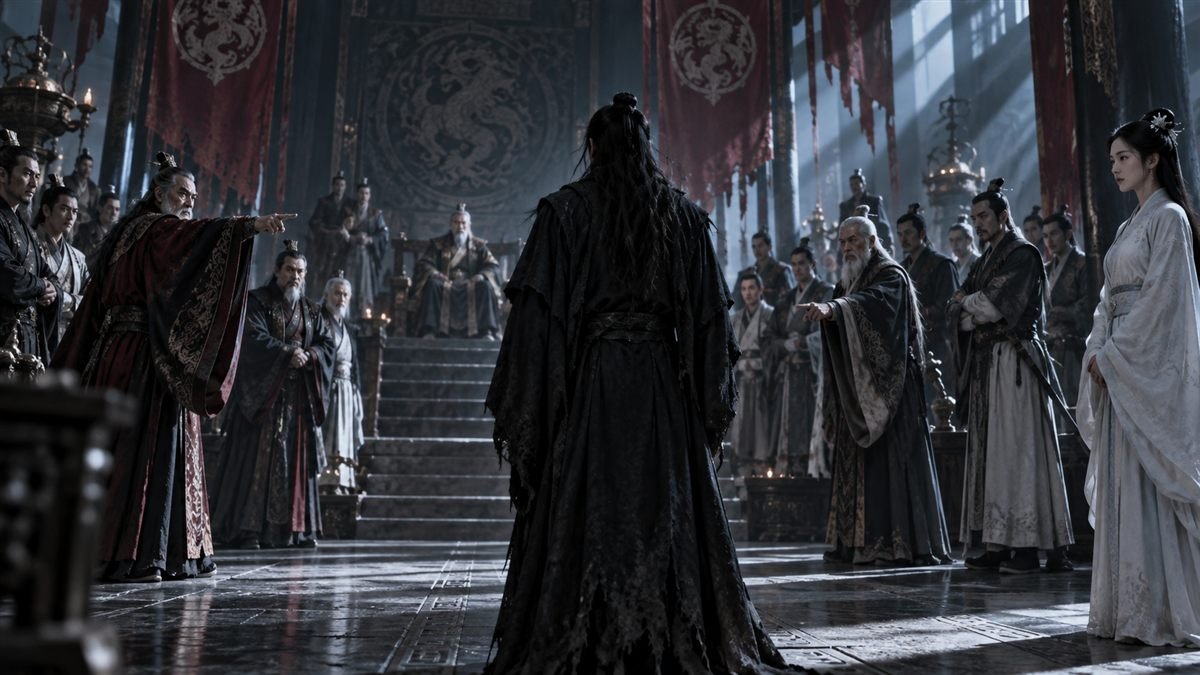
When pressure rises, the edit becomes less patient. It moves between an individual decision and the people interpreting it, revealing how quickly private motives become public narratives. Wei Wuxian may act to protect vulnerable people, but cuts to clan leaders, disciples, and frightened crowds show a competing story forming around him.
This cross-cutting enlarges the consequences of every choice. The drama’s most intense sequences, many collected in The Untamed Intense Moments: Top 15 Scenes, feel dangerous before weapons are raised because the social field has already shifted. The audience sees judgment accumulate from face to face.
Crowds and confrontations compress judgment
Public confrontations are edited as moral traps. A speaker makes an accusation; the camera finds agreement, discomfort, calculation, and silence around the room. No single reaction proves the claim, yet the rapid sequence creates the appearance of consensus. Reputation becomes an edited product assembled from repetition.
This is particularly effective because the cultivation world values visible righteousness. The edit exposes how performance replaces inquiry. A room full of people can reach a verdict without learning the whole story. By the time someone resists, the rhythm has already carried the crowd forward, making hesitation look like guilt.
Rhythm changes when control disappears
Battles and emotional breakdowns shorten the distance between action and reaction. Cuts accelerate, spatial continuity becomes harder to hold, and sound pushes one moment into the next. Viewers feel control slipping because the image no longer permits calm assessment.
Yet speed is used selectively. At the instant of irreversible loss, the series may suddenly slow down, isolate a face, or suspend motion. That contrast is devastating. Fast editing creates panic; the held aftermath forces comprehension. Instead of allowing spectacle to swallow grief, the drama makes us remain with the person who must carry it.
Action remains legible because emotion sets the pace
Even when battles become crowded, the most important cut is usually motivated by a character’s immediate fear or choice. The camera may follow a weapon, but the edit returns to the person whose loyalty is being tested. This keeps action from becoming detached choreography. Spatial clarity matters, yet emotional clarity matters more: viewers understand who is protecting whom and what failure would mean.
The pattern also explains why some confrontations feel breathless while others feel ceremonial. A duel can stretch through poised preparation when honor is at stake, then accelerate when anger breaks the rules. Editing translates moral stability into rhythm. Controlled characters receive balanced compositions and longer beats; panic fractures those patterns. The audience feels a collapse in order before the dialogue names it.

Transitions Turn Memory into Emotional Storytelling
Music and visual echoes bridge time
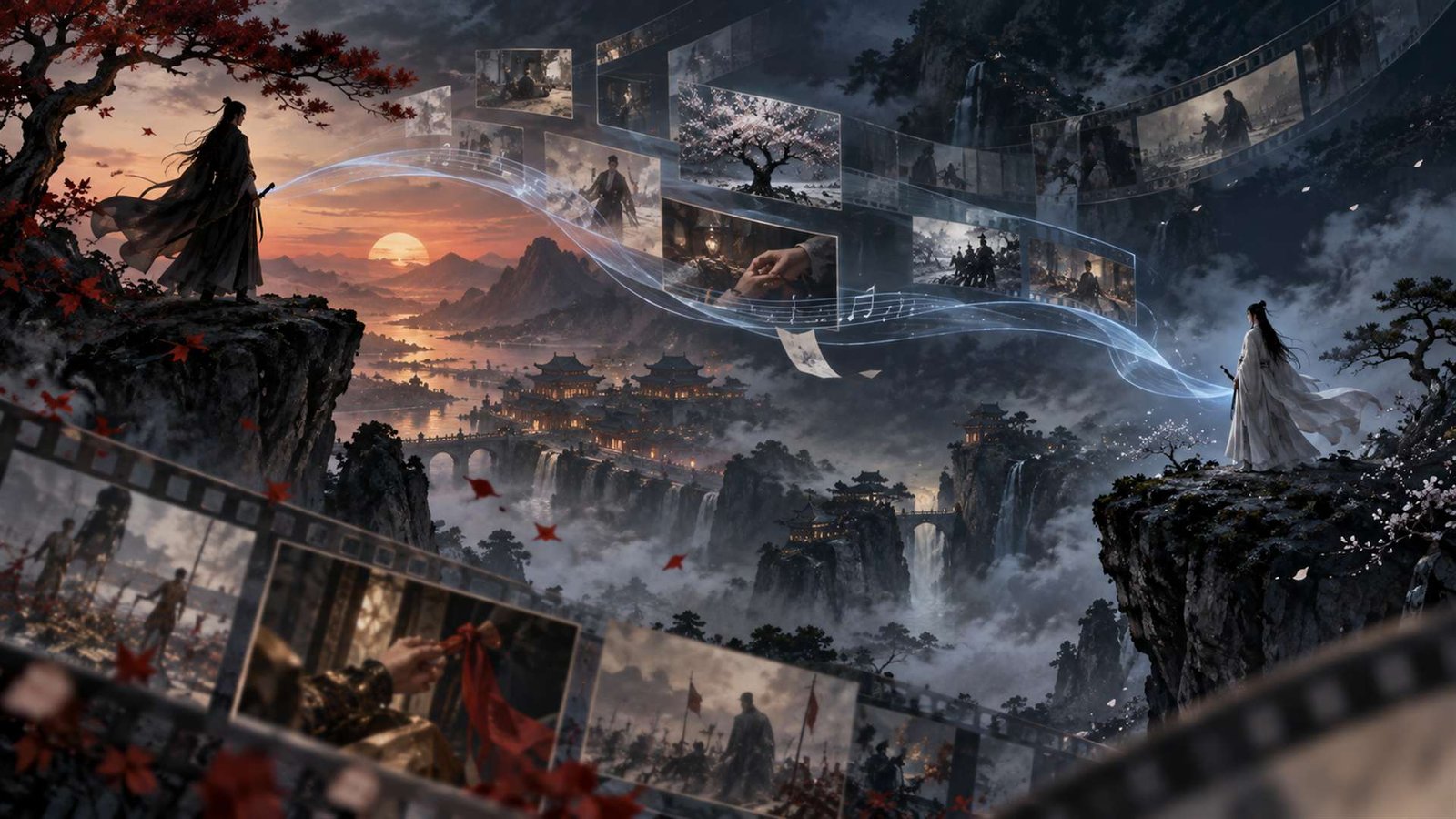
Transitions often connect scenes through feeling rather than literal continuity. A melody begins before the image changes. A landscape recalls an earlier journey. An object appears in different hands across time. These bridges suggest that memory is not stored in neat chronological boxes; it returns through sensation.
Music is especially important because it can cross a cut without breaking. The emotional role explored in The Untamed Music Emotional Impact: Why Every Note Lingers works hand in hand with editing. A theme can make two separated scenes feel like one continuing thought, allowing affection or grief to survive the movement between places and years.
Repeated images gain new meaning
The series repeatedly returns to hands reaching, figures turning away, musical instruments, rooftops, paths, and thresholds. Repetition creates visual memory. The first appearance establishes an image; the second alters it; the third may reveal what it has meant all along.
Production glimpses such as The Untamed Behind the Scenes: Unveiling the Secrets and this approved behind-the-scenes video remind us how deliberately individual pieces are staged. In the finished drama, editing turns those pieces into motifs. The same gesture can move from playful to painful because the surrounding context has changed.
Absence and silence become editorial choices
What the drama refuses to show can matter as much as what it shows. A cut may move away from violence toward the person hearing it. A reaction may be delayed. A silence may continue without explanatory music. These omissions create space for viewers to register emotional consequences instead of consuming events as spectacle.
The restraint gives grief a particular texture. Characters rarely receive perfect closure, and the edit does not manufacture it for them. Scenes end with unfinished feeling, so later scenes inherit emotional residue. The story lingers because many cuts behave like interrupted conversations.
Objects become cuts between inner and outer worlds
A flute, a sword, a ribbon, or a jar can move the narrative from public action into private memory. The object remains visually stable while its meaning changes around it. One scene presents it as practical; another makes it intimate; a later appearance turns it into evidence of absence. These object-based transitions let the series move inward without relying on explanatory monologue.
They also bind characters across distance. When two people cannot share a scene, a repeated possession or gesture can create an editorial relationship between them. The cut says that one person is present in the other’s thoughts even when the script cannot state it directly. Material details become emotional bridges, making the fantasy world feel both symbolically rich and personally inhabited.

Why The Untamed Editing Style Rewards Rewatching
Context transforms familiar cuts
On a first watch, viewers are busy learning names, rules, and timelines. On a rewatch, that cognitive pressure eases, and the edit becomes visible. An early pause suddenly points toward a secret. A cut to a supposedly minor character reveals political calculation. A transition that once seemed decorative now carries grief from one era into another.
This is where The Untamed editing style delivers its greatest reward: later knowledge does not merely solve earlier confusion; it changes the emotion of earlier scenes. The details catalogued in The Untamed Hidden Details: 10 Secrets You Missed become part of a wider pattern of planted reactions and visual echoes.
Hidden reactions become narrative clues
Rewatching frees us to look beyond whoever is speaking. Background faces reveal discomfort, recognition, jealousy, or fear. A reaction lasting only a second can foreshadow a later alliance or betrayal. Because the edit often places these clues without verbal emphasis, they feel discovered rather than announced.
That subtle construction supports the clues explored in The Untamed Foreshadowing: 15 Hidden Clues Fans Missed. The show trusts viewers to connect emotional evidence across episodes. Rewatching becomes an act of rereading faces.
Fan edits reveal a modular emotional design
Fan-made videos can reorganize the series around a relationship, a motif, or a single character and still preserve a powerful emotional arc. That flexibility exists because many scenes contain compact emotional units: a look, a choice, a musical cue, a repeated gesture. Editors can place these units beside one another and reveal patterns the broadcast chronology spaces far apart.
This does not mean the original can be reduced to highlights. Rather, fan edits demonstrate how carefully its moments rhyme. The full drama supplies context and accumulation; the remix makes one emotional thread visible. Both rely on the same architecture of recurring images, restrained reactions, and music that remembers what characters cannot say.
Rewatching changes the viewer’s own pacing
The first time through, many viewers hurry toward answers. On a second viewing, they know where the narrative is going and can remain inside moments they previously treated as obstacles. A political meeting becomes a study of shifting alliances. A comic interruption reveals anxiety. A long musical scene becomes a conversation conducted through performance.
This change is not entirely on screen; it happens in the viewer. Knowledge slows our attention even when the episode runs at the same speed. We notice that apparent detours establish emotional baselines and that repeated pauses mark decisions. The drama’s pacing therefore has two lives: the measured duration of the edit and the evolving duration of our attention. Few series make that second life so rewarding.
Frequently Asked Questions
Why does The Untamed begin in the middle of the story?
It begins with Wei Wuxian’s fall so the audience encounters consequence before cause. The opening creates mystery, but it also colors the long flashback with tragedy. Every youthful scene carries the knowledge that something will go terribly wrong, turning character development into emotional suspense.
How long is the main flashback?
The past occupies most of the first half of the drama, beginning after the present-day setup and continuing until the story catches up with Wei Wuxian’s fall. Rather than constantly jumping between eras, the adaptation lets viewers inhabit the past as a sustained tragic narrative.
Is The Untamed’s pacing slow?
Parts of it are deliberately slow, especially relationship building, political setup, and quiet scenes between crises. That patience can feel demanding on a first watch, yet it gives later losses their force. Action sequences and public confrontations use much faster rhythms, creating meaningful contrast.
Why does the editing feel clearer on a rewatch?
Once names, clans, and chronology are familiar, viewers can notice reaction shots, visual motifs, and early clues that were easy to miss. The The Untamed editing style frequently gives a moment new meaning after later information arrives, so a second viewing feels emotionally different rather than merely easier.
How is the drama’s timeline different from the novel?
The novel moves through the past in a more nonlinear pattern, while the drama groups much of the history into one long flashback. This creates a clearer television arc and allows causes to accumulate continuously, though it also makes the early portion feel like an extended journey away from the present.
Does the editing strengthen WangXian’s relationship?
Yes. Held glances, listener reactions, musical bridges, and pauses after dialogue allow their bond to develop beyond explicit words. The edit repeatedly gives viewers time to observe recognition and concern, making later acts of trust feel earned through hundreds of small emotional beats.
Conclusion — The Rhythm That Makes the Story Linger
Confusion becomes emotional inevitability
At first, the cliff feels like a puzzle assembled from accusation, panic, and missing information. By the time the long flashback returns us there, the image has changed. We know the loyalties, pressures, misunderstandings, and sacrifices compressed into that fall. The opening has not changed, but we have—and that transformation is the drama’s editorial design in miniature.
The The Untamed editing style teaches viewers how to watch it. It begins by withholding, then accumulates context slowly, lets reactions challenge spoken claims, accelerates when collective judgment becomes dangerous, and pauses when loss must be felt. Repeated images turn into memories. Music carries emotion across years. Silence allows devotion and grief to exist without being simplified.
A story whose pauses keep speaking
This rhythm explains why the series stays vivid after the final episode. Its impact does not depend only on twists or spectacle. It lives in the fraction of a second before Lan Wangji responds, in the cut toward someone who understands too late, and in the quiet after a crowd has made the wrong choice. Those moments continue internally because the edit never closes every emotional door.
That lingering quality is explored further in The Untamed Emotional Aftermath: Why It Lingers. If essays like this deepen your return to the story, you can also support BOXIAO on Ko-fi. Most of all, keep the conversation alive: which cut, pause, reaction, or transition changed meaning most dramatically for you when you watched The Untamed again?
Fan-Favorite Collectibles & Gifts